 By
By
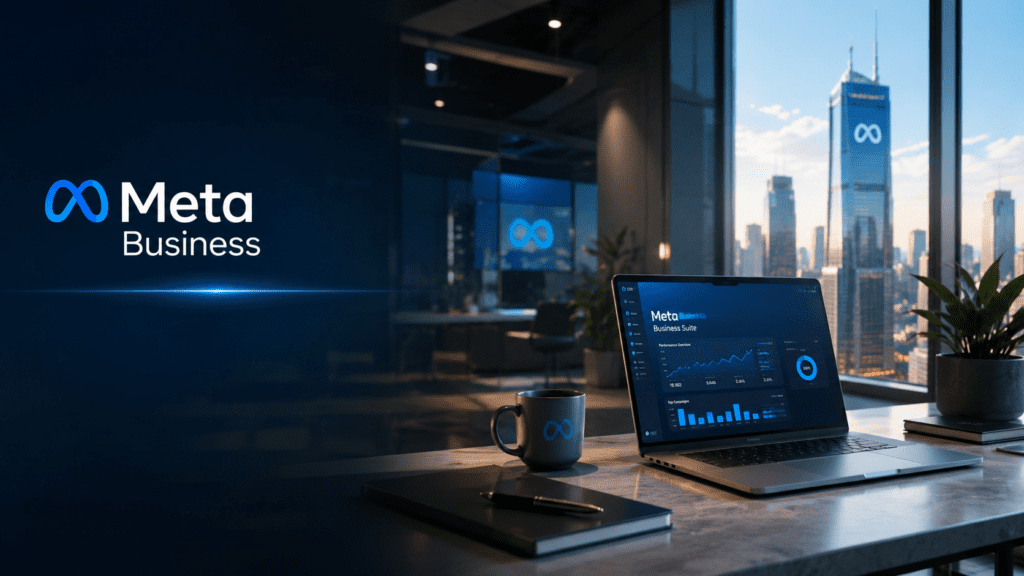
Meta Business Explained: How Businesses Use Meta to Reach Billions of Customers
Digital marketing has become increasingly complex. Brands are expected to engage audiences across multiple platforms, manage advertising campaigns efficiently, analyze customer behavior, and maintain consistent communication—all while competing for attention in crowded markets.
This challenge is precisely why Meta Business has become one of the most influential ecosystems in modern marketing.
From Facebook and Instagram to WhatsApp and Messenger, Meta provides businesses with access to some of the largest digital communities ever created. For startups, local businesses, ecommerce stores, creators, and multinational corporations alike, Meta’s business tools offer opportunities to attract customers, build brand awareness, generate leads, and drive sales at scale.
Yet many business owners remain confused about what “Meta Business” actually means. Is it Meta Business Suite? Is it Facebook advertising? Is it Instagram marketing? Or is it something larger?
The answer is all of the above.
Meta Business represents a comprehensive collection of platforms, advertising solutions, analytics tools, messaging services, and commerce features designed to help organizations manage their online presence and grow revenue.
Understanding how this ecosystem works can significantly influence marketing performance, customer acquisition costs, and long-term business growth.
This guide explores Meta Business in depth—covering its features, benefits, tools, strategies, challenges, and best practices—so businesses can make informed decisions and maximize their digital marketing potential.
What Is Meta Business?
Meta Business refers to the business-focused ecosystem developed by Meta Platforms, Inc., the parent company of Facebook, Instagram, WhatsApp, Messenger, and several other technologies.
The ecosystem includes:
- Meta Business Suite
- Facebook Business Manager
- Meta Ads Manager
- Instagram Business Tools
- Meta Pixel
- Meta Commerce Manager
- WhatsApp Business
- Audience Insights
- Meta Analytics and Reporting Solutions
Together, these tools allow businesses to:
- Manage social media accounts
- Create advertising campaigns
- Track customer behavior
- Generate leads
- Sell products online
- Communicate with customers
- Analyze marketing performance
Rather than operating each platform separately, Meta aims to provide businesses with a centralized environment where marketing and customer engagement activities can be managed efficiently.
The Evolution of Meta Business
Meta’s business infrastructure has evolved dramatically over the past decade.
Initially, Facebook Pages served as the primary business presence. Companies would post updates, share content, and engage followers organically.
As competition increased and advertising opportunities expanded, Facebook introduced:
- Business Manager
- Advanced audience targeting
- Facebook Pixel
- Conversion tracking
- Ecommerce integrations
The company’s rebranding from Facebook to Meta reflected a broader vision encompassing social networking, messaging, artificial intelligence, virtual experiences, and digital commerce.
Today, businesses can operate integrated marketing campaigns across multiple Meta-owned platforms from a single dashboard.
Core Components of the Meta Business Ecosystem
1. Meta Business Suite
Meta Business Suite serves as the central hub for managing business activities.
Key functions include:
Content Management
Businesses can:
- Schedule posts
- Publish content
- Manage stories
- Plan campaigns
Messaging
The platform combines messages from:
- Messenger
This unified inbox improves customer support efficiency.
Performance Monitoring
Business owners can monitor:
- Reach
- Engagement
- Follower growth
- Content performance
- Advertising results
Team Collaboration
Organizations can assign:
- Administrators
- Editors
- Analysts
- Advertisers
This improves workflow management and security.
2. Meta Ads Manager
Meta Ads Manager is the company’s advertising platform.
It allows businesses to create campaigns across:
- Messenger
- Audience Network
Advertisers can select objectives such as:
| Campaign Goal | Purpose |
|---|---|
| Awareness | Brand visibility |
| Traffic | Website visitors |
| Engagement | Likes, comments, shares |
| Leads | Customer acquisition |
| App Promotion | Mobile app installs |
| Sales | Revenue generation |
This objective-based structure helps businesses align campaigns with specific outcomes.
3. Instagram Business Tools
Instagram remains one of Meta’s most powerful business assets.
Features include:
Professional Profiles
Businesses gain access to:
- Contact buttons
- Insights
- Promotions
- Category labels
Shopping Features
Brands can:
- Tag products
- Create catalogs
- Direct users to purchase pages
Reels Marketing
Short-form video content has become a major growth driver.
Many brands achieve substantial organic reach through strategic Reel creation.
4. WhatsApp Business
WhatsApp Business enables direct customer communication.
Popular features include:
- Business profiles
- Product catalogs
- Automated responses
- Quick replies
- Customer support messaging
For many regions, WhatsApp has become a primary customer service channel.
5. Meta Pixel
Meta Pixel is a website tracking tool.
It records user behavior after visitors interact with Meta advertisements.
Businesses can track:
- Purchases
- Form submissions
- Page visits
- Cart additions
- Checkout activity
This data supports campaign optimization and remarketing strategies.
Why Businesses Use Meta
Several factors explain Meta’s dominance in digital marketing.
Massive Audience Reach
Meta’s platforms collectively connect billions of users globally.
Businesses can access audiences based on:
- Age
- Location
- Interests
- Behaviors
- Purchase intent
- Device usage
Few advertising ecosystems offer comparable scale.
Advanced Targeting Capabilities
One of Meta’s greatest strengths is audience targeting.
Advertisers can build:
Core Audiences
Based on demographics and interests.
Custom Audiences
Based on:
- Website visitors
- Customer lists
- App users
Lookalike Audiences
Meta identifies users similar to existing customers.
This often improves acquisition efficiency and conversion rates.
Cost-Effective Advertising
Compared with many traditional advertising channels, Meta campaigns can be launched with relatively modest budgets.
Small businesses can start with:
- Daily budgets
- Geographic targeting
- Niche audience segments
This accessibility makes Meta attractive to startups and local companies.
How Meta Business Supports Ecommerce Growth
Ecommerce brands rely heavily on Meta’s ecosystem.
A typical customer journey may look like:
- User discovers a product on Instagram.
- Watches a Reel demonstration.
- Clicks a product tag.
- Visits website.
- Leaves without purchasing.
- Receives retargeting advertisement.
- Returns and completes purchase.
This integrated journey explains why Meta remains central to many ecommerce growth strategies.
Meta Business for Small Businesses
Small businesses often face limitations including:
- Budget constraints
- Limited staff
- Lack of technical expertise
Meta Business addresses many of these challenges.
Benefits include:
Local Advertising
Businesses can target nearby customers.
Appointment Generation
Service providers can attract bookings.
Lead Collection
Lead forms simplify customer acquisition.
Community Building
Local brands can establish loyal audiences through consistent engagement.
Meta Business for Large Enterprises
Enterprise organizations use Meta differently.
Their focus often includes:
- Multi-market campaigns
- Large-scale audience segmentation
- Advanced analytics
- Brand awareness initiatives
- Customer lifecycle management
Sophisticated integrations with CRM systems allow enterprise marketers to connect Meta campaigns with broader customer data strategies.
Expert Analysis: Why Meta Remains a Marketing Powerhouse
Despite increasing competition from platforms such as TikTok, YouTube, and emerging social networks, Meta continues to command significant advertising investment.
The reason goes beyond audience size.
Meta possesses three critical advantages:
Data Infrastructure
Meta has spent years refining audience modeling and advertising optimization.
Cross-Platform Integration
Businesses can manage campaigns across multiple channels from one ecosystem.
AI-Powered Optimization
Machine learning systems continuously improve:
- Ad delivery
- Audience matching
- Conversion prediction
- Budget allocation
This automation allows marketers to achieve stronger results without manually adjusting every campaign variable.
Common Meta Business Use Cases
Lead Generation
A real estate agency may use Meta ads to collect:
- Buyer inquiries
- Seller consultations
- Property viewing requests
Ecommerce Sales
An online clothing retailer may use:
- Product catalogs
- Dynamic ads
- Retargeting campaigns
Brand Awareness
A startup launching a new product can rapidly reach targeted audiences.
Customer Service
A restaurant can handle reservations and customer questions through Messenger or WhatsApp.
Meta Business Strategy Framework
Businesses that achieve strong results typically follow a structured approach.
Step 1: Define Objectives
Determine whether the goal is:
- Awareness
- Leads
- Sales
- App installs
- Engagement
Step 2: Understand Audience
Research:
- Demographics
- Interests
- Behaviors
- Pain points
Step 3: Create High-Quality Content
Effective content usually includes:
- Clear messaging
- Strong visuals
- Relevant offers
- Clear calls to action
Step 4: Install Tracking
Implement Meta Pixel and conversion tracking.
Step 5: Optimize Continuously
Monitor:
- Click-through rates
- Conversion rates
- Cost per acquisition
- Return on ad spend
Common Meta Business Mistakes
Many businesses fail to achieve results because of avoidable errors.
Targeting Too Broadly
Broad audiences can waste advertising budgets.
Ignoring Creative Quality
Poor visuals often reduce engagement and conversions.
Lack of Testing
Businesses frequently launch one advertisement and expect immediate success.
Successful advertisers test:
- Headlines
- Images
- Videos
- Audience segments
- Offers
No Conversion Tracking
Without tracking, optimization becomes largely guesswork.
Overlooking Mobile Users
Most Meta users access platforms through mobile devices.
Mobile-first design is essential.
Meta Business Best Practices
Focus on Video Content
Video consistently drives stronger engagement than static content.
Use Retargeting Campaigns
Retargeting often generates some of the highest conversion rates.
Maintain Consistent Branding
Visual consistency improves recognition and trust.
Respond Quickly to Messages
Faster response times enhance customer satisfaction.
Monitor Analytics Weekly
Regular analysis helps identify trends before performance declines.
Meta Business vs Other Advertising Platforms
| Feature | Meta | Google Ads | LinkedIn Ads | TikTok Ads |
| Audience Size | Excellent | Excellent | Moderate | Large |
| Visual Content | Excellent | Moderate | Moderate | Excellent |
| Lead Generation | Strong | Strong | Very Strong B2B | Moderate |
| Ecommerce | Excellent | Strong | Limited | Strong |
| Cost Efficiency | Strong | Variable | Expensive | Moderate |
| Retargeting | Excellent | Excellent | Moderate | Moderate |
Each platform serves different objectives, but Meta remains one of the most versatile options available.
The Future of Meta Business
Several trends are shaping Meta’s future business offerings.
Artificial Intelligence
AI-driven campaign optimization continues to expand.
Advertisers increasingly rely on automated systems for:
- Audience targeting
- Creative testing
- Budget allocation
Conversational Commerce
Messaging-based purchasing experiences are becoming more common.
Integrated Shopping Experiences
Meta is steadily reducing friction between product discovery and purchase.
Enhanced Business Automation
Automation tools are expected to handle more customer interactions, lead qualification, and support processes.
Businesses that adapt early to these developments may gain a competitive advantage.
Meta Business Checklist
Before launching campaigns, ensure the following:
Business Setup Checklist
Meta Business account created
Facebook Page optimized
Instagram Business profile connected
WhatsApp Business configured
Meta Pixel installed
Conversion events configured
Audience research completed
Content strategy developed
Ad creatives prepared
Analytics monitoring established
Frequently Asked Questions
What is Meta Business?
Meta Business is a collection of tools and services from Meta that help organizations manage marketing, advertising, customer communication, analytics, and ecommerce activities across Facebook, Instagram, WhatsApp, Messenger, and related platforms.
Is Meta Business Suite free?
Yes. Meta Business Suite is generally free to use. Businesses only pay when running advertising campaigns or using certain advanced services.
What is the difference between Meta Business Suite and Ads Manager?
Meta Business Suite manages overall business activities such as content publishing and messaging, while Ads Manager focuses specifically on advertising campaigns and performance optimization.
Can small businesses benefit from Meta Business?
Absolutely. Small businesses often use Meta for local advertising, lead generation, customer engagement, and brand awareness with relatively low budgets.
What is Meta Pixel used for?
Meta Pixel tracks website activity, allowing businesses to measure conversions, optimize campaigns, and build retargeting audiences.
Is Meta Business useful for ecommerce stores?
Yes. Ecommerce brands frequently use Meta for product promotion, catalog advertising, customer acquisition, and remarketing campaigns.
Does Meta Business include Instagram marketing?
Yes. Instagram is fully integrated into Meta’s business ecosystem, allowing businesses to manage content, advertising, analytics, and commerce activities.
How much should a business spend on Meta ads?
Budgets vary widely depending on goals, competition, industry, and audience size. Many businesses begin with modest daily budgets and scale based on performance.
Is Meta Business suitable for B2B companies?
Yes. While often associated with consumer marketing, Meta can be highly effective for lead generation, awareness campaigns, and customer relationship development in B2B sectors.
What is the biggest advantage of Meta Business?
Its ability to combine audience reach, advanced targeting, advertising automation, analytics, and cross-platform integration within a single ecosystem.
Final Thoughts
Meta Business has evolved into far more than a social media management solution. It functions as a comprehensive digital growth platform that combines advertising, customer communication, analytics, ecommerce capabilities, and AI-powered optimization tools.
For small businesses, it offers accessible marketing opportunities. For large enterprises, it provides sophisticated audience targeting and campaign management capabilities. For ecommerce brands, it creates seamless pathways from discovery to purchase.
Success with Meta Business does not come from simply running advertisements. It comes from understanding customer behavior, building meaningful engagement, leveraging data intelligently, and continuously refining strategy.
Businesses that treat Meta as a complete growth ecosystem rather than a standalone advertising channel are often the ones that achieve sustainable, long-term results.