
 By
By
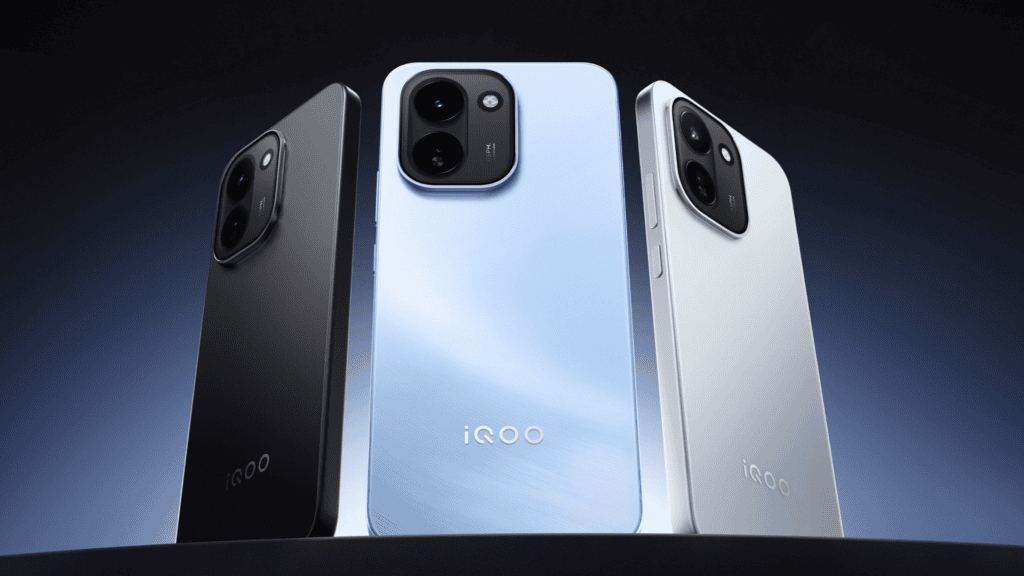
iQOO Z11 5G: The Complete Guide to Specs, Price, and Whether It’s Worth Buying
If you’ve landed here, you’ve probably already seen the headline number: a 9,020mAh battery stuffed into a phone that’s still slim enough to use with one hand. That’s the entire personality of the iQOO Z11 in a sentence — but it’s not the whole story, and the details that don’t fit into a spec sheet are exactly the ones that decide whether this phone is right for you.
The Z11 sits in an unusual spot in iQOO’s lineup. It’s positioned above the budget-focused Z11x but below the company’s Neo and flagship-adjacent 15-series phones, aiming at buyers who want near-flagship battery life and a smooth high-refresh display without paying flagship prices. It launched first in China, followed by Malaysia, with an India debut that iQOO’s own India CEO has publicly teased for mid-2026. If you’re comparing this phone to the still-unreleased “iQOO Z12” that’s floating around rumor sites, this is the phone actually worth your attention right now — it exists, it ships, and its specs are confirmed rather than guessed at by leakers.
This guide covers everything: full specifications, real-world performance expectations, camera behavior, battery math, direct comparisons with its closest rivals, common buying mistakes, and the questions people actually ask before purchasing.
What Is the iQOO Z11 5G, Exactly?
The iQOO Z11 is the standard model in iQOO’s 11th-generation Z-series, sitting alongside the cheaper Z11x and the gaming-tuned Z11 Turbo. Where the Z11x cuts costs with an LCD screen and a smaller battery, the standard Z11 upgrades to AMOLED, a faster refresh rate, and one of the largest battery cells ever put in a phone this size.
There’s a chipset wrinkle worth knowing about upfront: the China variant runs MediaTek’s Dimensity 8500 Full Power Edition, while the global variant sold in Malaysia (and expected in India) switches to the Snapdragon 7s Gen 4. Same phone, same design language, different silicon depending on where you buy it — this is a common practice for Chinese OEMs balancing chip supply and regional pricing, and it means “iQOO Z11 benchmarks” you find online may not match the exact unit sold in your market.
Core Specifications at a Glance
| Component | Specification |
|---|---|
| Display | 6.83″ LTPS/AMOLED, 1.5K resolution, 165Hz refresh rate, up to 5,000 nits peak brightness |
| Chipset | MediaTek Dimensity 8500 Full Power Edition (China) / Snapdragon 7s Gen 4 (global) |
| RAM / Storage | Up to 16GB RAM / 512GB storage |
| Rear Camera | 50MP primary (Sony IMX882) with OIS |
| Front Camera | 16MP (global variant); India variant expected to offer 32MP |
| Battery | 9,020mAh silicon-carbon cell |
| Charging | 90W wired FlashCharge, with Bypass Charging support |
| Cooling | 7,000mm² vapor chamber |
| Build | IP68 + IP69 dual water/dust resistance, 8.25mm thick, 216.5g |
| Software | Android 16 with OriginOS 6 |
| Fingerprint | In-display optical sensor |
| Connectivity | 5G, Bluetooth 5.4, NFC |
The Battery: Why 9,020mAh Actually Matters
It’s easy to see a battery number like this and assume it’s a marketing gimmick, but the engineering context makes it more interesting. For comparison, a Samsung Galaxy S26 Ultra carries roughly 5,000mAh, and even a battery-focused phone like the iQOO 15R sits around 7,600mAh. The Z11’s cell is in a different category entirely — closer to what you’d expect from a dedicated power bank than a phone.
What this translates to in daily use: reviewers of phones in this capacity class typically report three to four days of moderate use, or a comfortable two full days of heavy gaming and streaming. That’s not an incremental improvement over typical flagships — it changes how you think about carrying a charger at all.
The trade-off question people always ask is charging speed. Silicon-carbon batteries of this size paired with 90W charging bring the phone from empty to full in roughly 75–80 minutes. That’s slower than the fastest 120W+ chargers on the market, but reasonable given the sheer amount of energy being pushed into the cell. iQOO also includes Bypass Charging, which routes power directly to the system during heavy gaming sessions rather than cycling through the battery — a small but meaningful detail for anyone who games while plugged in.
Display and Design: Where the Money Actually Went
The 6.83-inch 1.5K AMOLED panel with a 165Hz refresh rate is genuinely above what you’d expect at this price tier. Most competitors in the same bracket top out at 120Hz on an LCD panel; the Z11 pairs a faster panel with better contrast and true blacks. Peak brightness claims of up to 5,000 nits (in specific high-brightness modes, not sustained full-screen output) should keep the display readable in direct sunlight, which matters more than most spec sheets suggest for outdoor use.
What’s more surprising is the industrial design decision: despite carrying that oversized battery, iQOO kept the phone to an 8.25mm profile and 216.5g weight. Phones with batteries this large often balloon past 220–230g and 9mm+ thickness. The engineering trade-off here is battery chemistry (silicon-carbon cells are denser than standard lithium-ion) rather than simply making the phone bigger — worth knowing if you’ve been burned by “huge battery, huge brick” phones before.
Camera System: Solid, Not the Priority
The Z11’s 50MP primary camera uses a Sony IMX882 sensor with OIS, which is a genuinely good sensor choice for this price bracket — you’ll get usable stabilization for handheld video and low-light shots without the blur that plagues cheaper single-camera setups. The front camera differs by market: the global (Malaysia) units carry a 16MP selfie camera, while leaks and iQOO’s own India-specific pattern for past Z-series phones suggest the India variant will likely bump this to 32MP.
Here’s the honest assessment: this is not a camera-first phone, and iQOO isn’t positioning it as one. If photography is your primary concern, you’re better served by a phone in the Neo or numbered flagship series. The Z11’s camera is competent for social media, everyday shots, and casual video — not for low-light architecture photography or portrait work that demands a dedicated telephoto lens.
Performance and Gaming
The chipset story is more nuanced than a single benchmark number. The Dimensity 8500 Full Power Edition (China variant) and Snapdragon 7s Gen 4 (global variant) are both upper-midrange chips capable of running current mobile games at high settings, though neither competes with true flagship silicon like a Snapdragon 8 Elite. For the price bracket this phone occupies — sub-₹30,000 in India, roughly CNY 2,299 in China — that’s an appropriate and expected trade-off.
The 7,000mm² vapor chamber cooling system is worth noting specifically for gamers: sustained performance during long sessions depends far more on thermal management than raw benchmark scores, and a cooling system this size (relative to phone dimensions) suggests iQOO is targeting buyers who’ll run demanding titles for hours, not just users who game occasionally.
Software and Long-Term Support
The Z11 ships on Android 16 with iQOO’s OriginOS 6 skin. Based on iQOO’s stated support patterns for this generation of Z-series devices, expect a multi-year update commitment covering both OS upgrades and security patches — check iQOO’s official announcement for your specific region at launch, since update policies can vary between the China, Malaysia, and India variants.
iQOO Z11 vs. iQOO Z11x: Which One Should You Actually Buy?
This comparison comes up constantly because both phones share a name and a launch window, but they serve different buyers.
| Feature | iQOO Z11 | iQOO Z11x |
|---|---|---|
| Display | 6.83″ AMOLED, 165Hz | 6.76″ LCD, 120Hz |
| Chipset | Dimensity 8500 / Snapdragon 7s Gen 4 | MediaTek Dimensity 7400 Turbo |
| Battery | 9,020mAh | 7,200mAh |
| Charging | 90W | 44W |
| Front Camera | 16MP (32MP expected in India) | 32MP |
| Price segment | Mid-range (~₹30,000–40,000 expected in India) | Budget (₹18,999–22,999 in India) |
| Best for | Buyers wanting AMOLED quality + maximum battery | Buyers prioritizing price over display quality |
If your budget stretches to it, the standard Z11’s AMOLED panel and faster charging justify the price gap for most people. The Z11x makes sense specifically for buyers who’ve decided battery life and durability matter more than screen quality and are working with a tighter budget.
Common Mistakes When Buying the iQOO Z11
Assuming all regional variants are identical. The chipset swap between the China and global (Snapdragon) versions is the single most overlooked detail in casual research. If you’re importing a unit or reading Chinese benchmark scores, don’t assume they’ll match the phone sold in your country.
Ignoring the charging speed trade-off. A 9,020mAh battery at 90W takes noticeably longer to fill than a smaller battery at 120W+. If you regularly need a fast top-up rather than all-day endurance, factor in the roughly 75–80 minute full charge time before buying on battery size alone.
Expecting flagship camera performance. The IMX882 sensor is good for the price, but this isn’t a camera-first device. Buyers coming from a numbered flagship should adjust expectations, particularly for low-light and zoom performance.
Buying before checking India-specific final specs. As of publication, official India pricing and final specs (particularly the front camera resolution) hadn’t been confirmed by iQOO. Leaked and “expected” figures circulating online are estimates, not final numbers — wait for the official launch event before comparing prices against competitors.
Buying Checklist
- Confirm which chipset variant is sold in your region (Dimensity vs. Snapdragon) before comparing benchmarks
- Check current official pricing on iQOO’s regional site or Amazon rather than relying on “expected price” articles
- Decide whether AMOLED + 165Hz (Z11) or a lower price with LCD + 120Hz (Z11x) fits your priorities better
- If gaming for long sessions matters, prioritize this model’s vapor chamber cooling over marginally faster chipsets elsewhere
- Factor in the ~75–80 minute charge time if you need fast top-ups during the day, not just overnight charging
Future Outlook: What Comes Next in the Z-Series
iQOO has kept a fast cadence on its Z-series, with the Z11 family following closely behind the Z10 generation and arriving alongside a Z11 Turbo variant for gaming-focused buyers. Rumors of a successor — often referred to online as the “iQOO Z12” — have already begun circulating, though as of this writing those reports remain speculative, with sources describing expected rather than confirmed specifications. Buyers weighing “should I wait for the next model” against “should I buy now” should treat next-generation rumors with caution until iQOO makes an official announcement.
Conclusion and Key Takeaways
The iQOO Z11 makes one of the clearest arguments in its price segment: if all-day (or multi-day) battery life matters more to you than best-in-class cameras or flagship benchmarks, few phones compete with a 9,020mAh cell in an 8.25mm body. Paired with a genuinely good 165Hz AMOLED display, IP68/IP69 durability, and a vapor chamber built for sustained gaming, it’s a complete package for buyers who know what they’re prioritizing.
Key takeaways:
- Massive 9,020mAh battery delivers multi-day endurance for moderate users
- 6.83″ 165Hz AMOLED display outperforms most phones at this price
- Chipset varies by region — verify which variant you’re buying
- Camera is competent, not class-leading — plan accordingly
- India pricing and final specs were still pending official confirmation at publication
Frequently Asked Questions
Is the iQOO Z11 available in India? As of publication, iQOO had teased an India launch without confirming exact pricing or a firm date. It’s already available in China and Malaysia. Check iQOO’s official India site for the latest launch status before making purchase plans.
What’s the difference between the iQOO Z11 and Z11x? The Z11 uses an AMOLED display, faster 165Hz refresh rate, larger 9,020mAh battery, and 90W charging. The Z11x is the budget option with an LCD screen, 120Hz refresh rate, smaller 7,200mAh battery, and 44W charging.
Does the iQOO Z11 support wireless charging? No official wireless charging capability has been confirmed for this model; it relies on 90W wired FlashCharge.
How long does the iQOO Z11 battery actually last? Based on comparable phones in this battery capacity class, expect three to four days of moderate daily use, or roughly two full days under heavy gaming and streaming.
Which chipset does the iQOO Z11 use? It depends on region: the China variant uses the MediaTek Dimensity 8500 Full Power Edition, while the global variant (Malaysia, and expected India units) uses the Qualcomm Snapdragon 7s Gen 4.
Is the iQOO Z11 good for gaming? Yes, within its price bracket. The upper-midrange chipset plus a 7,000mm² vapor chamber cooling system support sustained performance during long gaming sessions, though it won’t match true flagship-tier chips.
Does the iQOO Z11 have water resistance? Yes, it carries dual IP68 and IP69 certification for dust and water resistance.
How fast does the iQOO Z11 charge? The 90W FlashCharge system takes approximately 75–80 minutes to charge the 9,020mAh battery from empty to full.
What camera does the iQOO Z11 use? A 50MP Sony IMX882 primary sensor with OIS on the rear, and a 16MP front camera on global units (India variant expected to feature 32MP).
Should I buy the iQOO Z11 or wait for the next model? Reports of a successor phone remain speculative and unconfirmed as of this writing. Unless you have a specific reason to wait, the Z11’s confirmed specs and existing availability make it the safer near-term choice over an unreleased phone with unverified rumored specs.
[…] Read Also: iQOO Z11 5G Review: Price, Specs & Should You Buy It? […]