
 By
By
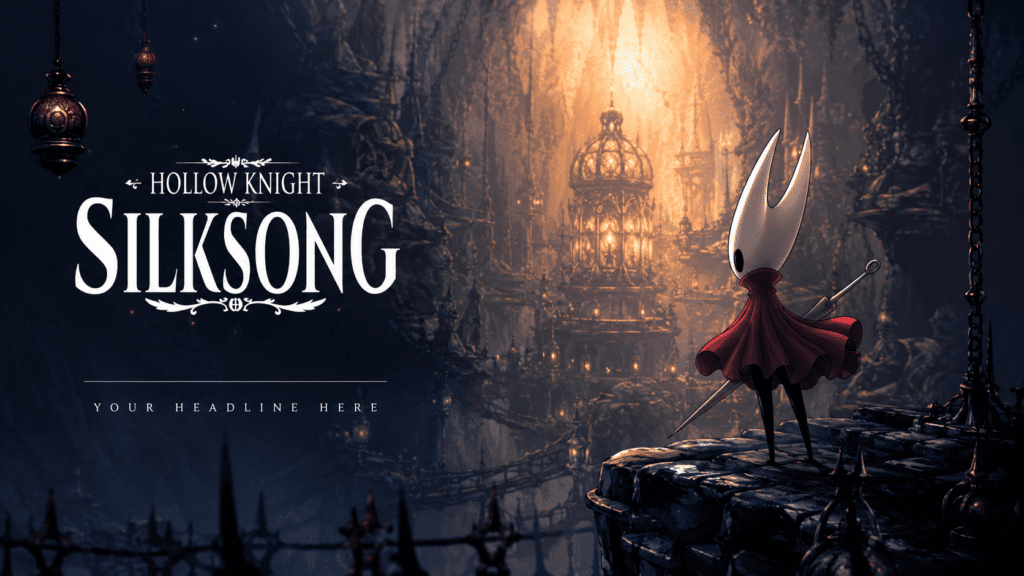
The Seven-Year Wait That Changed Everything
Few games in modern history have carried the weight of expectation quite like Hollow Knight: Silksong.
For years, the game existed in a strange space between anticipation and myth. Originally announced as an expansion for the beloved 2017 indie masterpiece Hollow Knight, the project eventually grew into a full-fledged sequel. What followed was one of the longest and most discussed waiting periods in gaming.
The result? A launch that transformed Silksong from a highly anticipated sequel into a genuine cultural event within the gaming community.
Released on September 4, 2025, Hollow Knight: Silksong finally delivered players back into the beautifully dangerous world created by Team Cherry, this time placing them in control of Hornet, one of the most beloved characters from the original game. The sequel introduced a new kingdom, faster combat, expanded traversal mechanics, deeper quest systems, and a scale that exceeded even the ambitious expectations of longtime fans.
But Silksong is more than just another successful indie game.
It represents a case study in how small studios can compete with major publishers through craftsmanship, artistic identity, and unwavering design philosophy.
This article explores everything players need to know about Hollow Knight: Silksong—its story, gameplay innovations, world design, critical reception, long development journey, and why it continues to dominate conversations long after release.
What Is Hollow Knight: Silksong?
Hollow Knight: Silksong is a Metroidvania action-adventure game developed and published by Team Cherry.
Unlike the original game, where players controlled the mysterious Knight, Silksong places players in the role of Hornet, the princess-protector of Hallownest.
After being captured and transported to a mysterious new kingdom known as Pharloom, Hornet must climb through a vast vertical world filled with hostile creatures, hidden secrets, powerful bosses, and ancient mysteries.
At its core, Silksong remains faithful to the principles that made Hollow Knight legendary:
- Exploration-driven progression
- Challenging combat
- Interconnected world design
- Environmental storytelling
- Rewarding discovery
- Hand-crafted artistic direction
Yet nearly every system has been expanded.
The result feels familiar enough for returning fans while offering substantial innovations that prevent it from feeling like a simple retread.
Why Was Silksong So Highly Anticipated?
To understand the significance of Silksong, it’s important to understand the legacy of its predecessor.
The original Hollow Knight became one of the most celebrated indie games ever created. What started as a modest Kickstarter project evolved into a genre-defining title praised for:
- Exceptional level design
- Rich lore
- Tight combat mechanics
- Atmospheric worldbuilding
- Outstanding value
Many players consider it one of the greatest Metroidvania games ever made.
When Team Cherry announced that Hornet would receive her own adventure, excitement was immediate.
Then came years of silence.
The extended development cycle created a phenomenon often referred to by fans as “Silksanity”—a period where every gaming showcase, Nintendo Direct, Xbox presentation, and industry event triggered speculation about release dates and announcements.
The unusually long wait only amplified interest.
By the time the game launched, anticipation had reached levels rarely seen for an independent title.
The Kingdom of Pharloom: A New World Built for Exploration
One of the most remarkable achievements in Silksong is its world design.
Pharloom differs dramatically from Hallownest.
Where Hallownest often felt like a kingdom in decline, Pharloom presents a civilization shaped by silk, industry, ritual, and ambition.
The kingdom rises vertically toward an enigmatic summit.
This design choice fundamentally changes exploration.
Players are no longer descending into forgotten depths.
Instead, they are climbing toward answers.
That simple directional reversal creates a different emotional experience.
Throughout the journey, players encounter:
- Ancient cities
- Abandoned temples
- Industrial districts
- Dangerous wilderness regions
- Hidden underground chambers
- Forgotten civilizations
Every area feels distinct while maintaining visual cohesion.
This is where Team Cherry’s environmental storytelling excels.
Rather than explaining every detail through dialogue, the game encourages players to interpret architecture, enemy designs, visual motifs, and item descriptions.
The world feels discovered rather than presented.
Hornet Changes Everything
Perhaps the most transformative aspect of Silksong is its protagonist.
Hornet is fundamentally different from the Knight.
She is faster.
More agile.
More expressive.
More aggressive.
This shift affects nearly every gameplay system.
Instead of relying on deliberate movement and cautious positioning, Hornet excels at:
- Rapid mobility
- Acrobatic combat
- Aggressive engagements
- Aerial maneuvers
- Precision attacks
Her signature needle-and-thread weapon creates combat encounters that feel dynamic and fluid.
Players can chain movements together more naturally, creating a sense of momentum rarely seen in the genre.
This isn’t simply a new character.
It’s an entirely different combat philosophy.
Combat: Faster, Sharper, More Demanding
Combat in Silksong retains the precision that defined Hollow Knight while pushing it toward greater speed.
Enemy encounters require:
- Faster reactions
- Better positioning
- More movement
- Enhanced pattern recognition
Boss battles remain a central attraction.
Many encounters feel almost like intricate dances, demanding players learn attack patterns through observation and repetition.
What makes Team Cherry’s boss design special is fairness.
Defeats rarely feel arbitrary.
Players generally understand why they failed and how they can improve.
That feedback loop creates a powerful sense of progression.
Instead of relying on character levels or statistical advantages, success largely depends on mastery.
The game rewards skill development rather than grinding.
The Quest System Brings New Structure
One of the most notable additions in Silksong is its expanded quest system.
Traditional Metroidvania games often leave players entirely to their own devices.
While this freedom can be rewarding, it sometimes creates confusion.
Silksong introduces more structured objectives without sacrificing exploration.
Players encounter:
- Side quests
- Character requests
- Optional missions
- Hidden objectives
- Story-driven tasks
These systems help guide exploration while preserving player agency.
Importantly, the quests rarely feel like generic checklist content.
Most contribute to worldbuilding, lore, or character development.
This helps the kingdom feel inhabited rather than merely populated.
Artistic Direction Remains Industry-Leading
Graphics technology continues advancing every year.
Photorealism dominates marketing campaigns.
Yet Silksong demonstrates why artistic direction often matters more than technical complexity.
The game’s hand-drawn visual identity remains among the strongest in modern gaming.
Every frame looks intentionally crafted.
Character animations feel alive.
Backgrounds communicate history.
Color palettes establish mood.
Visual storytelling supports narrative themes without requiring exposition.
Many larger-budget games possess superior technical specifications.
Few possess stronger artistic coherence.
That distinction explains why screenshots from Silksong remain instantly recognizable.
Sound Design and Music: Christopher Larkin’s Masterpiece Continues
A discussion of Silksong would be incomplete without mentioning its soundtrack.
Composer Christopher Larkin returns, delivering music that enhances every aspect of the experience.
His compositions accomplish several difficult goals simultaneously:
- Building atmosphere
- Supporting exploration
- Enhancing emotional moments
- Amplifying boss encounters
- Reinforcing world identity
The soundtrack never feels intrusive.
Instead, it becomes part of the environment.
Players often remember locations not just visually but musically.
This connection strengthens immersion and emotional investment.
Few indie games utilize music as effectively.
How Silksong Expands the Metroidvania Genre
The Metroidvania genre has become increasingly crowded.
Many titles attempt to replicate the success of classics like Super Metroid, Castlevania: Symphony of the Night, and Hollow Knight itself.
Few successfully evolve the formula.
Silksong expands the genre through:
| Feature | Traditional Approach | Silksong’s Approach |
|---|---|---|
| Movement | Methodical exploration | High-speed acrobatics |
| Questing | Minimal structure | Guided but flexible objectives |
| Combat | Ground-focused | Highly mobile encounters |
| World Design | Horizontal progression | Strong vertical progression |
| Character Design | Silent protagonist archetype | Expressive protagonist |
These changes feel evolutionary rather than disruptive.
The game respects genre traditions while introducing meaningful innovation.
Why Players Connect So Strongly with Hornet
Hornet possesses something many protagonists lack.
Personality.
The Knight served as an intentionally blank character.
Hornet does not.
She speaks.
She reacts.
She demonstrates emotion.
This creates stronger narrative engagement.
Players are no longer merely observing events.
They are experiencing them through a protagonist with clear motivations and identity.
The result is a story that feels more personal without sacrificing mystery.
Expert Analysis: The Real Reason Silksong Succeeded
Many discussions focus on combat, visuals, or exploration.
Those elements matter.
But they are not the primary reason for the game’s success.
The deeper reason lies in trust.
Team Cherry earned extraordinary goodwill from players through the original Hollow Knight.
Instead of rushing a sequel to capitalize on popularity, the studio spent years refining its vision.
That decision carried risk.
Extended development cycles often create impossible expectations.
Yet Silksong largely avoided the fate that affects many highly anticipated games.
Why?
Because Team Cherry focused on quality rather than marketing momentum.
The game feels designed by creators who cared more about the final experience than quarterly deadlines.
Players notice that difference.
Even when they cannot articulate it directly.
Common Misconceptions About Hollow Knight: Silksong
Misconception 1: It’s Just More Hollow Knight
Not true.
While the sequel shares DNA with the original, its movement, combat pacing, quest structure, and protagonist create a substantially different experience.
Misconception 2: You Must Play Hollow Knight First
Playing the original enriches the experience.
However, newcomers can still enjoy Silksong independently.
The game provides enough context to stand on its own.
Misconception 3: It’s Only for Hardcore Players
The game is challenging.
But challenge alone does not define it.
Exploration, discovery, atmosphere, and storytelling remain equally important.
Many players stay engaged because of curiosity rather than combat mastery.
Misconception 4: Indie Games Can’t Match AAA Quality
Silksong serves as evidence that production value is not solely determined by budget.
Creativity, cohesion, and craftsmanship often matter more.
Practical Tips for New Players
Explore Beyond the Main Path
Some of the game’s best content exists off the critical route.
Hidden areas frequently contain:
- Valuable upgrades
- Lore discoveries
- Powerful abilities
- Memorable encounters
Learn Enemy Patterns
Button mashing rarely works.
Observe first.
Attack second.
Many difficult encounters become manageable once patterns are understood.
Use Movement Aggressively
Hornet thrives on mobility.
New players often play too cautiously.
Mastering movement is as important as mastering combat.
Pay Attention to NPC Dialogue
Characters often provide subtle clues about hidden areas, secrets, and progression routes.
Don’t Rush Bosses
Every boss teaches something.
Patience usually proves more valuable than aggression.
The Future of Hollow Knight: Silksong
The game’s story does not end with launch.
Team Cherry has already discussed post-launch support, including the free expansion known as Sea of Sorrow, which is scheduled to arrive in 2026. Recent announcements also confirmed a physical edition launching in October 2026.
This ongoing support suggests that Pharloom may continue expanding for years.
For fans, that means the journey is far from over.
Frequently Asked Questions
When was Hollow Knight: Silksong released?
The game launched on September 4, 2025 across PC and major console platforms.
Who is the main character in Silksong?
Players control Hornet, the princess-protector of Hallownest and a major character from the original game.
Is Silksong a sequel or a DLC?
It began as planned DLC but expanded into a full standalone sequel during development.
What genre is Hollow Knight: Silksong?
It is primarily a Metroidvania action-adventure game with exploration, platforming, combat, and RPG-inspired progression systems.
Is Silksong harder than Hollow Knight?
Many players consider it similarly challenging, though Hornet’s increased mobility creates a different gameplay dynamic.
Do I need to play Hollow Knight first?
No. While prior knowledge enhances certain story elements, Silksong can be enjoyed as a standalone experience.
Will Silksong receive DLC?
Yes. Team Cherry has announced the free Sea of Sorrow expansion planned for 2026.
Is Hollow Knight: Silksong available on Game Pass?
Yes. The game launched on Game Pass alongside its broader release.
How long is Hollow Knight: Silksong?
Completion time varies significantly depending on exploration habits, side quests, and optional content.
Why is Silksong considered such an important indie game?
Because it demonstrates how independent studios can achieve world-class quality through artistic vision, thoughtful design, and long-term commitment to craftsmanship.