
 By
By
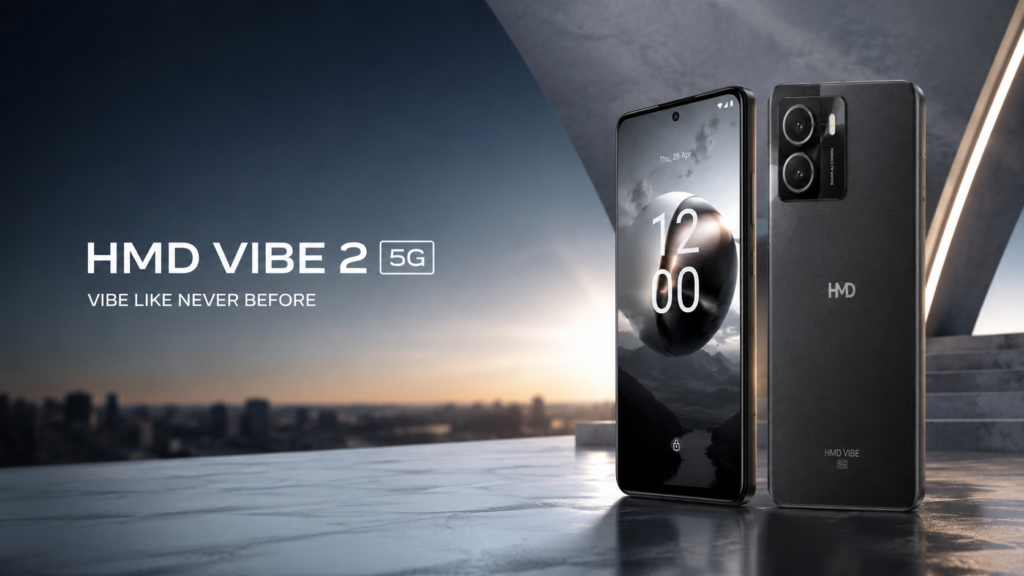
The budget smartphone market has changed dramatically. A few years ago, buying an affordable device often meant accepting compromises—slow performance, weak cameras, outdated software, or battery life that barely survived a workday.
That tradeoff is becoming less acceptable.
Consumers shopping below premium pricing increasingly expect smoother displays, capable cameras, long battery endurance, modern connectivity, and software experiences that do not feel stripped down. The pressure on smartphone brands has intensified, especially in competitive markets where buyers compare specifications with extraordinary precision.
The HMD Vibe 2 5G enters precisely that battlefield.
Built by HMD, the company responsible for carrying forward Nokia’s smartphone legacy, the Vibe 2 5G targets users who want practical performance without flagship-level spending. It arrives with 5G connectivity, a large battery, Android 16, AI-focused software additions, and hardware choices clearly designed around value-conscious buyers.
The central question consumers are asking is simple:
Does the HMD Vibe 2 5G deliver genuine value—or is it another budget phone overloaded with marketing language and limited real-world capability?
This deep analysis examines specifications, design choices, performance expectations, battery endurance, camera capabilities, software experience, market positioning, strengths, weaknesses, and whether this device deserves consideration in 2026.
Search Intent Analysis: What Buyers Want to Know About HMD Vibe 2 5G
People searching for “HMD Vibe 2 5G” generally fall into several categories:
Primary Search Intent
- Specifications and hardware details
- Price information
- Feature breakdown
- Battery and camera quality
- Performance expectations
Secondary Search Intent
- Whether it is worth buying
- Comparisons against competitors
- Gaming capability
- Software support lifespan
Emotional Intent
Budget smartphone buyers typically want reassurance.
They are trying to avoid buyer’s remorse.
A phone under a certain price bracket often becomes a daily productivity tool, entertainment device, navigation system, communication hub, and camera—all in one purchase. People want confidence that their money is going toward something reliable.
This article addresses that directly.
HMD Vibe 2 5G at a Glance
| Feature | HMD Vibe 2 5G |
|---|---|
| Display | 6.75-inch HD+ IPS LCD |
| Refresh Rate | Up to 120Hz |
| Processor | Unisoc T8200 |
| RAM | 4GB / 6GB |
| Storage | 64GB / 128GB |
| Expandable Storage | Up to 1TB microSD |
| Rear Camera | 50MP AI Dual Camera |
| Front Camera | 8MP |
| Battery | 6000mAh |
| Charging | 18W Wired |
| Operating System | Android 16 |
| Connectivity | 5G |
| Security | Side-mounted fingerprint sensor |
| Colors | Cosmic Lavender, Nordic Blue, Peach Pink |
| Weight | 210g |
Specifications officially published by HMD indicate a value-oriented configuration aimed at affordability rather than premium performance.
Design Philosophy: Premium Looks Without Premium Pricing
One of the first things budget smartphone buyers notice is whether a device feels inexpensive.
The HMD Vibe 2 5G appears engineered to avoid that perception.
HMD emphasizes design aesthetics with cleaner camera housing styling and modern flat-edge visual language. Available color variants include:
- Cosmic Lavender
- Nordic Blue
- Peach Pink
The phone measures approximately:
- Height: 168 mm
- Width: 77.7 mm
- Thickness: 8.6 mm
- Weight: 210 grams
The design strategy seems intentional.
Budget devices increasingly compete emotionally—not only technically. Buyers want a phone that feels contemporary rather than obviously entry-level.
The Vibe 2 5G leans into that trend.
Display Analysis: Large Screen Experience Prioritized
The smartphone includes a 6.75-inch HD+ IPS LCD display with refresh rates reaching up to 120Hz depending on configuration and implementation.
Why Refresh Rate Matters
Higher refresh rates create:
- Smoother scrolling
- Better UI responsiveness
- Improved gaming perception
- Reduced visual stutter
Budget phones historically stayed around 60Hz.
120Hz changes the experience noticeably.
Strengths
Large viewing area
Fluid navigation
Better social media scrolling experience
More modern visual responsiveness
Potential Tradeoff
The display resolution remains HD+ rather than Full HD.
For many users:
- YouTube viewing remains acceptable
- Social browsing feels fine
- Daily productivity remains comfortable
Power users who prioritize pixel density may notice limitations.
HMD likely prioritized battery efficiency and affordability instead.
Performance Breakdown: Can Unisoc T8200 Keep Up?
The Vibe 2 5G runs on the Unisoc T8200 chipset, paired with:
- 4GB RAM
- 6GB RAM variants
- 64GB or 128GB storage options
- MicroSD expansion support up to 1TB
Real-World Usage Expectations
Expected daily performance profile:
Good For:
- Social media
- Messaging
- Video streaming
- Light gaming
- Web browsing
- Navigation apps
- Productivity applications
Moderate Capability:
- Casual multiplayer gaming
- Photo editing
- Multitasking
Potential Limitations:
- High-end 3D gaming
- Intensive content creation
- Heavy multitasking with many background apps
Budget smartphone buyers often misunderstand processor positioning.
Not every chip targets power users.
The T8200 appears designed around efficiency, affordability, and mainstream usability.
Android 16 Experience: Clean Software Matters More Than Specs
One area increasingly influencing smartphone longevity is software.
The HMD Vibe 2 5G ships with Android 16 out of the box. HMD also promises two years of security updates.
That matters.
Consumers frequently focus on processors and cameras while overlooking software quality.
A clean Android experience often means:
- Less bloatware
- Faster updates
- Better responsiveness
- Lower storage consumption
- Longer usable lifespan
HMD has increasingly positioned itself around cleaner software philosophy.
For users frustrated by heavily customized Android skins, this becomes a meaningful advantage.
AI Features: Indus by Sarvam AI Integration
One of the most interesting positioning choices is HMD marketing the Vibe 2 5G as featuring Indus by Sarvam AI integration.
AI has become a major smartphone trend.
Flagship devices increasingly rely on AI for:
- Photography enhancement
- Search functionality
- Smart text assistance
- Productivity improvements
- Language capabilities
Budget devices adopting AI-focused experiences could become an important shift.
The broader industry movement suggests affordable AI smartphones will become increasingly common.
HMD appears to be positioning early.
Camera Performance Analysis
The HMD Vibe 2 5G includes:
Rear Camera
- 50MP primary sensor
- AI dual camera system
- LED flash support
Front Camera
- 8MP selfie camera
What Buyers Should Realistically Expect
Budget smartphone camera marketing often creates unrealistic expectations.
Megapixels matter less than:
- Sensor quality
- Image processing
- Dynamic range
- Software optimization
The likely real-world profile:
Strong Scenarios
Outdoor photography
Social media uploads
Video calls
Casual photography
Challenging Scenarios
Extreme low-light photography
Professional content creation
Advanced computational photography
The camera system appears targeted toward mainstream users rather than photography enthusiasts.
That aligns with pricing strategy.
Battery Life: Potentially the Biggest Selling Point
Battery capacity often determines satisfaction more than benchmark scores.
The HMD Vibe 2 5G includes a 6000mAh battery with 18W charging support.
This capacity stands out.
Expected Usage Patterns
Light Users
Potentially 2-day endurance
Moderate Users
Likely full-day comfort
Heavy Users
Expected day-long reliability
Large batteries create emotional confidence.
People dislike battery anxiety.
A phone that reliably survives long workdays often produces higher satisfaction than slightly faster performance.
The compromise appears to be charging speed.
18W charging remains practical but not class-leading.
Connectivity and Everyday Features
The device includes:
- 5G support
- Bluetooth 5.0
- Dual SIM
- USB Type-C
- Wi-Fi ac
- GPS support
- Side fingerprint scanner
- Face unlock
- 3.5mm headphone jack
- MicroSD expansion support
The headphone jack deserves special mention.
Premium phones increasingly remove practical features.
Budget buyers often still value wired audio compatibility.
HMD kept it.
That decision reflects understanding actual consumer priorities.
Who Should Buy HMD Vibe 2 5G?
Ideal Buyers
Students
Long battery life plus affordable pricing creates strong value.
First-Time 5G Users
Entry-level access to modern connectivity.
Parents Buying Secondary Devices
Reliable specifications without overspending.
Casual Smartphone Users
Social media, browsing, streaming, messaging.
Battery-Focused Buyers
6000mAh capacity becomes particularly appealing.
Who Should Skip It?
Mobile Gamers
If gaming performance drives your purchase decisions, stronger processors elsewhere may offer better long-term satisfaction.
Camera Enthusiasts
Photography-focused buyers may prefer higher-tier camera systems.
Power Users
Heavy multitasking and professional workloads could push this hardware beyond its intended audience.
HMD Vibe 2 5G Pros and Cons
| Pros | Cons |
|---|---|
| Massive 6000mAh battery | HD+ display only |
| Android 16 out of box | 18W charging feels modest |
| Clean software approach | Not designed for intensive gaming |
| Expandable storage | Budget chipset limitations |
| 120Hz refresh rate | Camera system targets casual users |
| 5G support | Display technology remains LCD |
Common Buyer Mistakes
Mistake 1: Judging Only Processor Names
Real-world optimization matters.
Software efficiency influences experience heavily.
Mistake 2: Overvaluing Megapixels
Camera quality extends beyond sensor resolution.
Mistake 3: Ignoring Battery Priorities
Battery reliability affects daily satisfaction dramatically.
Mistake 4: Buying Features You Will Never Use
Not every buyer needs flagship hardware.
Practical needs should guide purchases.
Competitive Positioning
The HMD Vibe 2 5G competes in a crowded segment where value matters more than prestige.
Its strongest positioning pillars appear to be:
- Battery life
- Clean Android software
- Affordable 5G
- Smooth display experience
- Practical feature retention
HMD is not attempting flagship disruption.
It is attempting something arguably more difficult:
Delivering enough value that average consumers feel they made a smart decision.
Expert Assessment
The HMD Vibe 2 5G demonstrates a budget-phone strategy increasingly common across the industry.
Rather than chasing one standout specification, it balances multiple priorities:
- Endurance
- Affordability
- Connectivity
- Simplicity
- Modern software
The biggest strength may not appear on specification sheets.
It is predictability.
A phone targeting practical reliability often ages better than devices built entirely around marketing numbers.
For budget-focused consumers prioritizing battery life and everyday usability, HMD’s approach appears strategically sound.
Frequently Asked Questions (FAQ)
Is HMD Vibe 2 5G good for gaming?
Casual gaming should perform reasonably well. High-end gaming workloads may expose chipset limitations.
Does HMD Vibe 2 5G support expandable storage?
Yes. Storage expansion up to 1TB via microSD is supported.
What Android version does HMD Vibe 2 5G run?
The device ships with Android 16.
Does HMD Vibe 2 5G include a headphone jack?
Yes. The smartphone retains a 3.5mm headphone jack.
How large is the battery?
The phone includes a 6000mAh battery.
Does HMD Vibe 2 5G support 5G networks?
Yes. The smartphone supports 5G connectivity.
Is HMD Vibe 2 5G suitable for students?
Its battery life, affordability, and practical feature set make it a strong candidate for students.
How many years of updates does HMD provide?
HMD lists two years of quarterly security updates.