 By
By
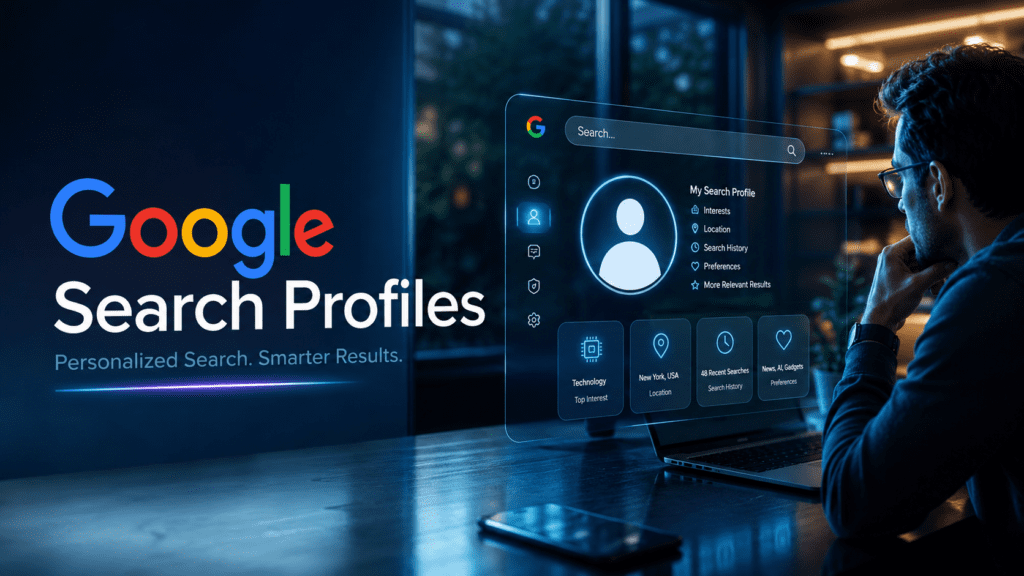
Google Search Profiles Introduce a New Era of Digital Identity
For years, Google Search has been designed primarily to surface content. Articles, videos, websites, social posts, and business listings have competed for visibility in a search ecosystem built around information retrieval.
Now, Google is experimenting with something different.
Instead of merely ranking content, Google is beginning to highlight the people behind it.
The introduction of Google Search Profiles marks one of the most interesting shifts in how creators, publishers, journalists, researchers, entrepreneurs, and industry experts can establish authority directly within Google Search.
At first glance, Search Profiles may appear to be another profile feature similar to social media bios. Looking closer reveals a much larger strategic move. Google is effectively creating a framework that helps users understand who is creating content, what expertise they possess, where they publish, and how they can be discovered across the web.
For creators struggling to build visibility, publishers seeking stronger attribution, and professionals hoping to strengthen personal branding, Search Profiles could become a significant development.
The timing is not accidental.
As artificial intelligence floods the internet with content, authenticity, expertise, and trust have become increasingly valuable signals. Search users are no longer evaluating content alone—they are evaluating the people behind it.
Google Search Profiles appear designed to address that challenge.
What Are Google Search Profiles?
Google Search Profiles are a new experimental feature introduced through Google Search Labs.
The feature allows eligible users to create a public profile that can appear within Google Search and showcase:
- Personal expertise
- Professional background
- Websites
- Social media accounts
- Published content
- Areas of specialization
- Creator information
Rather than forcing users to visit multiple platforms to verify a creator’s credentials, Search Profiles consolidate important information into a single searchable identity layer.
Think of it as a professional identity card embedded within Google Search itself.
When users discover content online, they can potentially learn more about the creator through their Search Profile, providing valuable context and credibility.
This initiative aligns closely with Google’s increasing emphasis on:
- Expertise
- Experience
- Authority
- Trustworthiness
These principles are commonly known within SEO circles as E-E-A-T.
Why Google Is Launching Search Profiles Now
The internet is facing an identity problem.
Content creation has become easier than ever.
AI tools can generate thousands of articles, social posts, videos, and marketing assets within hours. While this has increased content volume dramatically, it has also made it harder for users to determine:
- Who created the content
- Whether the creator is credible
- What expertise the author possesses
- Whether the information can be trusted
Google has spent years combating low-quality content through algorithm updates focused on helpfulness, expertise, and authenticity.
Search Profiles appear to be another step in that evolution.
Instead of evaluating content in isolation, Google is increasingly interested in understanding the individuals and entities producing that content.
This approach benefits:
Users
Users gain transparency regarding content creators.
Publishers
Publishers can highlight expert contributors.
Independent Creators
Creators gain a direct visibility channel inside Google Search.
Google strengthens trust signals across its search ecosystem.
How Google Search Profiles Work
The system allows creators to build a searchable profile connected to their online presence.
A profile may include:
| Feature | Purpose |
|---|---|
| Name | Creator identification |
| Bio | Expertise summary |
| Website Links | Verification and traffic generation |
| Social Profiles | Cross-platform identity |
| Published Work | Portfolio showcase |
| Topics of Expertise | Authority signals |
| Professional Background | Trust-building information |
When someone searches or encounters content associated with that creator, Google may surface profile information that provides additional context.
This creates a richer information ecosystem where users can evaluate both content and creator credibility.
The Bigger SEO Implications
Search Profiles are not merely a creator feature.
They have potentially major SEO implications.
For more than two decades, SEO has largely focused on:
- Keywords
- Backlinks
- Technical optimization
- Content relevance
While these factors remain important, Google has increasingly shifted toward entity-based search.
Instead of understanding only pages, Google seeks to understand:
- People
- Brands
- Organizations
- Relationships
- Expertise
Search Profiles fit perfectly into this evolution.
They provide structured signals that help Google connect:
- Authors to articles
- Experts to topics
- Creators to websites
- Individuals to expertise areas
This creates stronger entity recognition.
For SEO professionals, that is a major development.
Search Profiles and Google’s E-E-A-T Framework
One of the most important aspects of Search Profiles is their relationship with E-E-A-T.
E-E-A-T stands for:
- Experience
- Expertise
- Authoritativeness
- Trustworthiness
Google repeatedly emphasizes these quality signals when evaluating content.
Search Profiles could help strengthen each component.
Experience
Creators can demonstrate practical involvement in their field.
Expertise
Professional knowledge becomes more visible.
Authoritativeness
Published work can be linked directly to the creator.
Trustworthiness
Users can verify identities through connected websites and social accounts.
In many ways, Search Profiles function as a trust layer for the modern web.
How Content Creators Benefit
Creators often face a difficult challenge.
Building an audience requires visibility.
Building visibility requires trust.
Building trust often requires an audience.
Search Profiles may help bridge that gap.
Benefits include:
Increased Discoverability
People can find creators more easily.
Stronger Personal Branding
Creators gain a centralized identity presence.
Better Attribution
Published work can be connected directly to the creator.
Enhanced Credibility
Professional expertise becomes more visible.
Cross-Platform Visibility
Users can navigate to websites and social accounts from a single profile.
For independent creators, this may be one of the most important opportunities introduced through Google Search in recent years.
Why Publishers Should Pay Attention
Many publishers focus heavily on content production while underinvesting in author visibility.
That strategy may become increasingly outdated.
Modern audiences want to know:
- Who wrote the article?
- What expertise do they have?
- Why should they be trusted?
Publishers that invest in identifiable expert contributors may gain advantages in both user trust and search visibility.
Search Profiles encourage a stronger connection between content and creator.
That connection could become increasingly important as search evolves.
The Relationship Between Search Profiles and AI Content
Artificial intelligence has dramatically increased content production.
At the same time, it has created growing concerns about authenticity.
Users increasingly ask:
“Was this written by a real expert?”
“Who is responsible for this information?”
“What credentials support these claims?”
Search Profiles may help answer those questions.
Rather than relying solely on content quality signals, Google can provide greater transparency regarding the creator behind the content.
This shift may become especially important in areas such as:
- Health
- Finance
- Education
- Technology
- Legal information
Trust becomes increasingly valuable when AI-generated content becomes abundant.
Practical Examples of Search Profile Use Cases
Example 1: Independent Journalist
A journalist publishes articles across multiple websites.
A Search Profile allows readers to:
- View credentials
- Explore previous work
- Visit professional websites
- Verify expertise
Example 2: Technology Expert
A cybersecurity specialist contributes articles, speaks at conferences, and maintains a personal website.
Search Profiles create a centralized authority hub.
Example 3: Educational Creator
A teacher producing educational content can connect:
- Blog posts
- YouTube videos
- Social accounts
- Educational resources
This strengthens discoverability and trust.
Example 4: Startup Founder
Founders can showcase expertise, publications, and thought leadership content in one place.
Common Misconceptions About Google Search Profiles
Misconception 1: It Is Just Another Social Profile
Search Profiles are fundamentally different because they exist within Google’s search ecosystem.
Misconception 2: Only Influencers Benefit
Experts, researchers, educators, consultants, journalists, and business owners can benefit as well.
Misconception 3: Profiles Automatically Improve Rankings
Google has not stated that Search Profiles directly boost rankings.
However, stronger authority and trust signals may contribute to broader visibility over time.
Misconception 4: Personal Branding Doesn’t Matter for SEO
Entity-based search increasingly rewards recognizable creators and trusted experts.
Personal branding has become deeply connected to modern SEO.
How to Optimize a Google Search Profile
If eligible for the feature, creators should approach optimization strategically.
1. Complete Every Available Field
Partial profiles reduce credibility.
Provide:
- Bio
- Websites
- Social accounts
- Expertise categories
2. Maintain Consistent Identity Signals
Use the same:
- Name
- Headshot
- Professional descriptions
- Branding elements
Across platforms.
Consistency strengthens entity recognition.
3. Highlight Real Expertise
Avoid exaggerated claims.
Specific expertise builds trust.
4. Connect Authoritative Sources
Link:
- Professional websites
- Publications
- Portfolios
- Verified social profiles
5. Keep Information Updated
Outdated profiles reduce credibility.
Regular maintenance is essential.
What Search Profiles Mean for the Future of SEO
The SEO industry has gradually moved through several eras:
Era 1: Keywords
Visibility depended heavily on keyword targeting.
Era 2: Links
Backlinks became dominant ranking signals.
Era 3: Content Quality
Helpful content became increasingly important.
Era 4: Entities and Trust
Search engines now seek to understand real-world people and expertise.
Search Profiles fit directly into this fourth era.
The future may involve:
- Stronger creator recognition
- More author-centric search experiences
- Enhanced expertise verification
- Greater transparency around content ownership
The websites that thrive may be those supported by identifiable experts rather than anonymous content production.
Expert Analysis: Why Search Profiles Could Become a Major Ranking Ecosystem Signal
Although Google has not announced direct ranking benefits, the strategic significance is difficult to ignore.
Search Profiles help Google answer questions that algorithms increasingly care about:
- Who created this content?
- Is this person qualified?
- What expertise do they possess?
- Can their identity be verified?
- Do they consistently publish trustworthy information?
These are precisely the types of questions modern search systems are trying to solve.
As AI-generated content expands, creator identity may become one of the most valuable trust signals available.
Search Profiles appear positioned to support that objective.
Google Search Profiles Checklist
Before creating or optimizing a Search Profile, review this checklist:
| Task | Status |
| Complete profile bio | □ |
| Add professional website | □ |
| Connect social accounts | □ |
| Define expertise areas | □ |
| Maintain branding consistency | □ |
| Showcase published work | □ |
| Update profile regularly | □ |
| Verify identity information | □ |
| Align profile with author pages | □ |
| Strengthen personal brand presence | □ |
Final Thoughts
Google Search Profiles represent far more than a simple profile feature.
They reflect a broader shift in how search engines evaluate credibility, expertise, and digital identity.
For creators, the opportunity is visibility.
For publishers, the opportunity is trust.
For users, the benefit is transparency.
As search continues moving toward entity understanding and creator verification, the individuals behind the content may become just as important as the content itself.
Those who establish clear expertise, maintain consistent online identities, and build authentic authority are likely to be better positioned for the next phase of search.
The web is becoming increasingly focused on people, not just pages—and Google Search Profiles may be one of the clearest signals of that transformation.
Frequently Asked Questions (FAQ)
What are Google Search Profiles?
Google Search Profiles are a Search Labs feature that allows creators and professionals to showcase expertise, websites, social accounts, and published work directly within Google Search.
Who can create a Google Search Profile?
Availability currently depends on eligibility and regional rollout through Google’s Search Labs program.
Do Google Search Profiles improve SEO rankings?
Google has not confirmed direct ranking benefits. However, stronger authority, trust, and entity recognition may provide indirect SEO advantages.
Why did Google introduce Search Profiles?
The feature aims to improve transparency, help users evaluate creator credibility, and strengthen trust within search results.
Are Search Profiles similar to social media profiles?
Not exactly. Search Profiles are integrated into Google’s search ecosystem and focus on creator identity, expertise, and content attribution.
How do creators benefit from Search Profiles?
Creators can improve discoverability, strengthen personal branding, showcase expertise, and connect audiences with their broader online presence.
What role do Search Profiles play in E-E-A-T?
They help demonstrate Experience, Expertise, Authoritativeness, and Trustworthiness by connecting creators to their work and professional credentials.
Can businesses use Google Search Profiles?
The feature is primarily creator-focused, but business leaders, founders, experts, and public-facing professionals may benefit from participation.
Are Search Profiles related to AI-generated content concerns?
Yes. The feature aligns with Google’s growing emphasis on identifying and validating the people behind online content.
Why are Search Profiles important for the future of search?
They support Google’s shift toward entity-based search, creator verification, and trust-focused information discovery.