
 By
By
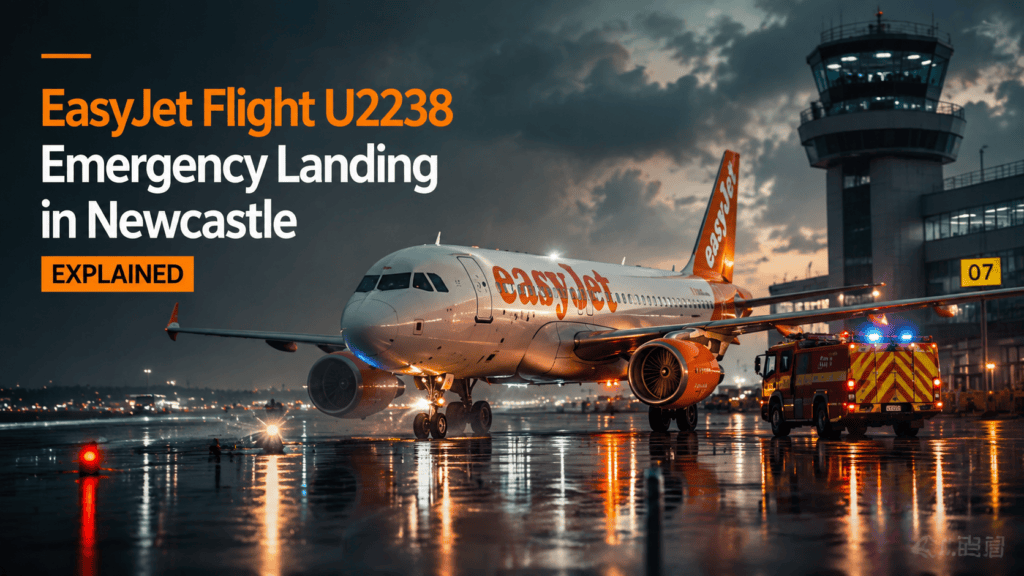
Passengers aboard EasyJet Flight U2238 experienced an unexpected diversion after the aircraft declared an emergency and landed safely at Newcastle International Airport instead of its scheduled destination, Manchester. The incident attracted significant attention online as travelers searched for answers about what caused the diversion and whether anyone was injured.
The good news is that the aircraft landed safely, emergency services responded as a precaution, and there were no reports of injuries to passengers or crew. Early reports indicate the diversion was prompted by a passenger requiring urgent medical attention, rather than a technical fault with the aircraft.
This guide explains everything currently known about the incident, how emergency diversions work, and what passengers should know.
Quick Facts
| Detail | Information |
|---|---|
| Flight | EasyJet U2238 (EZY2238) |
| Airline | easyJet |
| Route | Copenhagen → Manchester |
| Diversion Airport | Newcastle International Airport |
| Aircraft | Airbus (easyJet fleet aircraft operating the route) |
| Outcome | Safe emergency landing |
| Reported Cause | Passenger medical emergency |
| Injuries | None reported |
What Happened to EasyJet Flight U2238?
Flight U2238 departed from Copenhagen later than scheduled and was en route to Manchester when the crew declared an emergency.
Instead of continuing to Manchester, pilots diverted the aircraft to Newcastle International Airport, where emergency medical personnel were waiting.
According to EasyJet, the diversion occurred because a customer onboard required urgent medical attention. The aircraft landed safely, allowing emergency responders to assist the affected passenger immediately.
Why Was Newcastle Chosen?
Commercial aircraft are trained to divert to the nearest suitable airport whenever an emergency develops.
Pilots evaluate several factors including:
- Distance
- Runway availability
- Weather conditions
- Emergency services
- Medical facilities
- Air traffic
Newcastle met those operational requirements, making it the safest diversion option at the time.
Was It a Technical Problem?
Based on available verified information:
No.
There is no official evidence that Flight U2238 experienced:
- Engine failure
- Cabin depressurization
- Fire
- Hydraulic failure
- Fuel leak
- Landing gear malfunction
Instead, EasyJet stated that the diversion was caused by a medical emergency involving a passenger.
Understanding Emergency Landings
The phrase “emergency landing” often sounds alarming, but it covers many situations.
These include:
| Type | Example |
|---|---|
| Medical | Passenger illness or cardiac event |
| Technical | Aircraft system malfunction |
| Smoke | Cabin smoke investigation |
| Security | Passenger disturbance |
| Weather | Severe storms |
| Fuel | Precautionary diversion |
Many emergency landings are precautionary rather than life-threatening.
Airline Response
EasyJet confirmed that the diversion was necessary so the passenger could receive urgent medical treatment.
The airline emphasized that:
- Passenger safety is always the highest priority.
- The aircraft landed safely.
- Medical personnel met the aircraft on arrival.
- The flight later continued toward Manchester after the situation was resolved.
How Flight Crews Handle Medical Emergencies
Commercial airline crews receive extensive emergency training.
Typical procedures include:
- Assess the passenger.
- Request assistance from medical professionals onboard.
- Contact ground medical advisors.
- Monitor the patient’s condition.
- Decide whether diversion is necessary.
- Coordinate with air traffic control.
- Prepare emergency services before landing.
These procedures are standardized across major airlines.
Passenger Safety During Diversions
During an unexpected diversion, passengers should:
- Stay seated.
- Follow crew instructions immediately.
- Keep aisles clear.
- Avoid speculation.
- Wait until instructed before using electronic devices.
- Allow emergency responders priority access.
Following cabin crew instructions helps ensure the safest possible outcome.
Expert Analysis
Medical diversions are among the most common reasons commercial aircraft alter their routes.
Although such events receive significant media attention, they demonstrate that aviation safety systems function as intended:
- Pilots identify the issue.
- Air traffic control coordinates priority routing.
- Airports prepare emergency services.
- Medical teams respond immediately.
The successful handling of Flight U2238 reflects these established aviation safety procedures.
Common Misconceptions
“Emergency landing means the plane was about to crash.”
False.
Many emergency landings are precautionary and occur because medical assistance is needed quickly.
“Emergency vehicles always indicate a major accident.”
Not necessarily.
Emergency services routinely attend declared emergencies, including medical diversions.
“The aircraft becomes unsafe afterward.”
Not usually.
If no mechanical issue exists, the aircraft may continue service once operational and safety checks are complete.
Timeline of the Incident
| Stage | Event |
|---|---|
| Departure | Flight departed Copenhagen |
| En Route | Passenger required urgent medical attention |
| Emergency Declared | Pilots requested priority handling |
| Diversion | Aircraft diverted to Newcastle |
| Landing | Safe landing completed |
| Medical Response | Emergency teams assisted passenger |
| Continuation | Flight later continued toward Manchester |
Future Outlook
Airlines continue investing in:
- Improved onboard medical equipment
- Enhanced crew training
- Real-time communication with ground physicians
- Faster emergency response coordination
- Predictive health support technologies
These improvements aim to reduce response times and improve passenger outcomes during in-flight medical emergencies.
Key Takeaways
- EasyJet Flight U2238 diverted from Copenhagen to Newcastle.
- The aircraft landed safely.
- The reported reason was an onboard medical emergency.
- No injuries to passengers or crew have been reported.
- Emergency responders met the aircraft upon arrival.
- Safety procedures worked as designed.
Frequently Asked Questions
Why did EasyJet Flight U2238 land in Newcastle?
The flight diverted because a passenger required urgent medical attention, according to EasyJet.
Was the aircraft experiencing technical problems?
There is no official indication of any technical fault.
Were passengers injured?
No injuries have been reported.
Did emergency services meet the aircraft?
Yes. Medical personnel were waiting after the aircraft landed.
Did the flight continue afterward?
Yes, the flight later continued to Manchester after the emergency response.
Are emergency landings common?
While uncommon, medical diversions occur regularly across commercial aviation and are part of established safety procedures.
Is flying still safe after incidents like this?
Yes. Commercial aviation remains one of the safest forms of transportation, and diversions are designed to protect passengers and crew.
[…] Read Also: easyJet Flight U2238 Emergency Landing in Newcastle Explained […]