 By
By
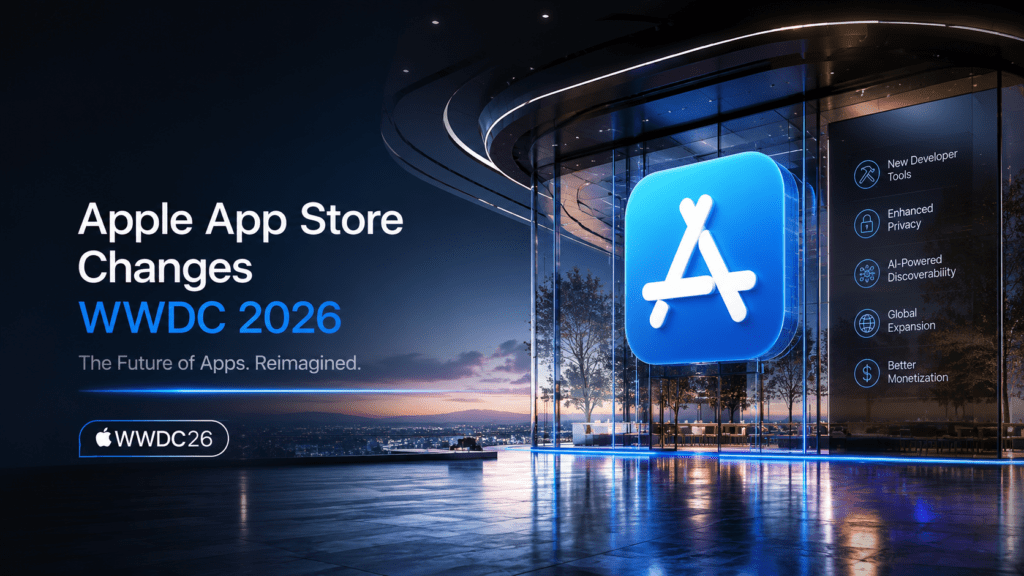
The App Store has undergone many updates since its launch in 2008. Few of them, however, have fundamentally changed how developers acquire users, monetize products, and retain subscribers.
WWDC 2026 may be remembered as one of those rare turning points.
Apple unveiled a sweeping set of App Store enhancements that affect nearly every stage of the app lifecycle—from discovery and marketing to subscriptions, enterprise sales, retention, and app promotion. For developers, publishers, startups, SaaS companies, gaming studios, and subscription businesses, these announcements represent far more than feature updates.
They signal a strategic shift in how Apple wants the App Store economy to evolve.
For years, developers have struggled with three major challenges:
- Rising user acquisition costs
- Subscription fatigue
- Discoverability in an increasingly crowded marketplace
Apple’s WWDC 2026 announcements directly target all three.
The result is an App Store that looks increasingly like a sophisticated commerce platform rather than simply an app marketplace.
This guide breaks down every major App Store change announced at WWDC 2026, explains why it matters, analyzes the broader implications, and explores how developers can adapt to stay competitive.
Search Intent Analysis: Why People Are Searching for Apple App Store Changes WWDC 2026
Before diving into the details, it’s worth understanding what users actually want to know.
Primary Intent
People want a complete explanation of the new App Store features announced at WWDC 2026.
Secondary Intent
Developers want to know:
- How these changes affect revenue
- Whether App Store Optimization (ASO) strategies must change
- What new marketing opportunities exist
- How subscriptions and bundles will work
Emotional Intent
Many developers are asking:
- Will discovery become easier?
- Will smaller studios benefit?
- Can these features help reduce customer acquisition costs?
- Is Apple finally addressing subscription fatigue?
Common Confusion
Several announcements introduced entirely new concepts:
- Cross-developer bundles
- Personalized Collections
- App Notes
- Asset Library
- Retention Messaging
- Group subscriptions
Understanding how these systems work requires more context than Apple’s keynote provided.
Why WWDC 2026 Matters More Than Previous App Store Updates
The last truly transformative App Store update occurred in 2016 when Apple expanded subscription support and adjusted revenue-sharing incentives for long-term subscribers.
WWDC 2026 introduces changes that reach beyond pricing.
Apple is now redesigning three core pillars:
Discovery
Monetization
Retention
Instead of treating these areas separately, Apple is creating a connected ecosystem where apps can be promoted, bundled, sold, and retained more effectively.
1. Cross-Developer Subscription Bundles
Perhaps the most surprising announcement was the introduction of cross-developer subscription bundles.
Developers can now collaborate and package subscriptions together into a discounted offering.
What It Means
Imagine:
- A fitness app
- A nutrition app
- A meditation app
Previously, these companies operated independently.
Now they can offer a combined subscription package through the App Store.
Users receive a lower overall price while participating developers gain access to each other’s audiences.
Why This Is Significant
Subscription fatigue has become a major issue.
Consumers are increasingly unwilling to manage dozens of recurring payments.
Bundles simplify decision-making.
This model resembles:
- Streaming service bundles
- Telecom packages
- Software suites
But it has never existed at scale within Apple’s ecosystem.
Potential Winners
- Independent developers
- Niche SaaS products
- Productivity tools
- Educational platforms
- Wellness apps
Small developers may suddenly gain distribution opportunities that previously required massive advertising budgets.
2. Group Subscriptions and Team Purchasing
Apple also announced expanded subscription models designed for organizations, schools, and teams.
The Previous Problem
Most App Store subscriptions were built around individual users.
This limited adoption for:
- Businesses
- Educational institutions
- Teams
- Agencies
The New Opportunity
Group purchasing enables:
- Multi-user subscriptions
- Team licensing
- Enterprise volume purchases
Organizations can purchase access for multiple members through streamlined workflows.
Strategic Impact
This dramatically expands the App Store’s addressable market.
Developers previously forced into complex enterprise sales processes can now leverage App Store infrastructure for larger customer accounts.
3. Personalized Collections: Apple’s AI-Powered Discovery Engine
Discovery remains one of the hardest challenges in mobile software.
Apple’s answer is Personalized Collections.
What Are Personalized Collections?
Personalized Collections use on-device intelligence to recommend apps based on:
- User interests
- Download history
- Usage behavior
- Existing app ecosystem
Rather than relying solely on charts and keyword rankings, Apple is building a recommendation layer similar to what users experience on:
- Netflix
- Spotify
- YouTube
Why It Matters
Traditional App Store discovery often favors:
- Large brands
- Established publishers
- Apps with substantial marketing budgets
Personalized recommendations create additional pathways for exposure.
Developers with strong engagement metrics may benefit even if they lack massive advertising spend.
4. App Notes: Apple’s Push for Transparent Recommendations
Another discovery-focused feature is App Notes.
What App Notes Do
Users will see explanations describing why an app appears in recommendations.
Examples might include:
- Similar apps already installed
- Relevant interests
- Recent activity patterns
Why This Is Important
Recommendations become more trustworthy when users understand the reasoning behind them.
This transparency could improve:
- Click-through rates
- Install rates
- User confidence
It also reduces the “black box” nature of algorithmic recommendations.
5. Creative Assets: A Major Upgrade for App Marketing
For years, App Store listings relied heavily on screenshots.
WWDC 2026 changes that.
What Are Creative Assets?
Creative Assets allow developers to showcase:
- Rich images
- Promotional visuals
- Enhanced branding
- Video experiences
These assets can appear:
- On product pages
- Within search results
- Across promotional placements
Why Marketers Are Excited
Visual presentation directly influences conversion.
Users often decide within seconds whether an app looks trustworthy.
The introduction of larger visual surfaces means:
- Better storytelling
- Stronger brand identity
- More persuasive product positioning
Industry discussions immediately highlighted how these creative surfaces could reshape App Store Optimization strategies.
6. Asset Library: Centralized Creative Management
Apple also introduced Asset Library inside App Store Connect.
Key Benefits
Developers can now:
- Store creative assets centrally
- Reuse materials across campaigns
- Manage screenshots and videos efficiently
- Submit creative updates independently
Why This Matters
Historically, updating promotional content could be cumbersome.
Asset Library transforms creative optimization into a more agile process.
Developers can iterate marketing materials faster without tying every change to a full app release.
7. Retention Messaging: Fighting Subscription Churn
Acquiring subscribers is expensive.
Keeping them is even harder.
Apple’s new Retention Messaging tools are designed to address this challenge.
What Retention Messaging Does
Developers gain opportunities to communicate with users during cancellation flows.
Instead of losing subscribers immediately, developers can:
- Offer incentives
- Present alternative plans
- Highlight value propositions
Why This Is Powerful
A small reduction in churn often produces larger revenue gains than acquiring new customers.
For subscription businesses, retention is one of the highest-leverage growth strategies available.
8. New Subscription Models Continue Expanding
WWDC 2026 builds on Apple’s broader subscription initiatives.
Earlier in 2026, Apple introduced monthly subscriptions tied to a twelve-month commitment, allowing users to access discounted annual pricing while paying monthly.
The Strategic Direction
Apple is clearly investing in subscription flexibility.
Developers now have more ways to:
- Structure pricing
- Improve affordability
- Increase retention
- Encourage long-term commitments
This reflects a growing recognition that subscription success depends on reducing friction for customers.
How App Store Optimization (ASO) Changes After WWDC 2026
Many ASO strategies are about to evolve.
Old ASO Priorities
- Keywords
- Ratings
- Reviews
- Screenshots
- Conversion rates
New ASO Priorities
- Creative asset quality
- Visual storytelling
- Recommendation relevance
- Bundle partnerships
- Retention performance
- Engagement signals
Developers who focus solely on keyword rankings may find themselves at a disadvantage.
The App Store is becoming increasingly recommendation-driven.
Practical Examples of How Developers Can Benefit
Productivity Startup
A note-taking app partners with a calendar app and task manager.
Together they launch a bundled subscription.
Result:
- Higher perceived value
- Reduced acquisition costs
- Cross-promotion opportunities
Fitness Ecosystem
Three independent developers create:
- Workout tracking
- Nutrition planning
- Recovery coaching
A combined subscription becomes more compelling than three separate purchases.
Educational Software
Schools purchase group licenses through App Store infrastructure.
Administrative complexity decreases while adoption increases.
Common Misconceptions About the WWDC 2026 App Store Changes
Myth 1: These Updates Only Help Large Developers
Reality:
Cross-developer bundles may benefit smaller developers even more than large publishers.
Myth 2: ASO Is Less Important Now
Reality:
ASO remains essential.
The skill set is simply expanding beyond keywords.
Myth 3: Personalized Discovery Eliminates Marketing
Reality:
Better recommendations improve visibility, but marketing remains critical.
Strong products still need compelling positioning.
Myth 4: Bundles Will Replace Individual Subscriptions
Reality:
Many users will continue purchasing standalone subscriptions.
Bundles add another monetization option rather than replacing existing models.
Developer Action Plan for 2026
Use this checklist to prepare for the new App Store environment.
| Priority | Action |
|---|---|
| High | Audit subscription offerings |
| High | Upgrade visual assets |
| High | Improve retention strategy |
| High | Explore bundle partnerships |
| Medium | Review onboarding flows |
| Medium | Optimize engagement metrics |
| Medium | Prepare enterprise pricing options |
| Medium | Monitor recommendation performance |
Expert Analysis: Apple’s Bigger Vision
The most revealing aspect of WWDC 2026 isn’t any individual feature.
It’s the direction they collectively point toward.
Apple appears to be transforming the App Store into a sophisticated commerce ecosystem where:
- Discovery becomes personalized
- Marketing becomes visual
- Subscriptions become flexible
- Retention becomes measurable
- Partnerships become scalable
The company is also responding to broader market realities.
The App Store contains millions of apps competing for attention, while AI-assisted development continues lowering barriers to entry. Increased competition makes discovery and retention more important than ever.
Apple’s solution is to improve the mechanisms that connect quality apps with relevant users.
Whether that vision succeeds will depend on execution, but the strategic intent is clear.
Frequently Asked Questions
What were the biggest App Store announcements at WWDC 2026?
The major updates include cross-developer subscription bundles, group subscriptions, Personalized Collections, App Notes, Creative Assets, Asset Library, and Retention Messaging.
What are Personalized Collections?
They are AI-powered recommendation collections that use user interests, downloads, and activity to surface relevant apps.
What is App Notes in the App Store?
App Notes explain why an app is being recommended, improving transparency and user trust.
Can developers bundle subscriptions with other companies?
Yes. WWDC 2026 introduced cross-developer subscription bundles that allow developers to package services together.
What is Asset Library?
Asset Library is a centralized management system for screenshots, videos, and promotional materials in App Store Connect.
How do Creative Assets improve App Store marketing?
They provide larger and richer visual surfaces in listings and search results, enabling stronger branding and higher-converting presentations.
What is Retention Messaging?
Retention Messaging gives developers tools to communicate with users during cancellation processes and potentially reduce churn.
Will WWDC 2026 change App Store Optimization?
Yes. ASO will increasingly emphasize visual assets, recommendation relevance, engagement quality, and retention performance in addition to traditional keyword optimization.
Final Thoughts
WWDC 2026 introduced one of the most ambitious App Store updates in years. Rather than focusing on a single feature, Apple redesigned the entire customer journey—from app discovery and evaluation to subscription management and long-term retention.
For developers, the opportunity is significant. Those who adapt quickly to personalized discovery, richer creative assets, collaborative subscription models, and retention-focused growth strategies may gain a substantial advantage as the App Store enters its next era.
The message from Apple is unmistakable: the future of app growth will depend less on being found and more on being recommended, understood, and retained.