
 By
By
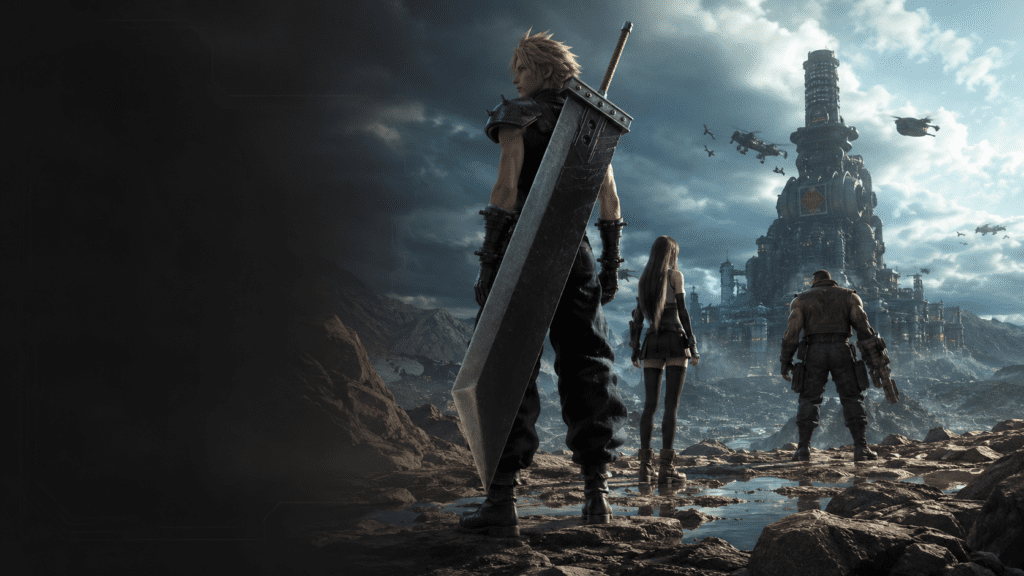
Introduction — Why Final Fantasy VII Rebirth Feels Like More Than a Sequel
There are very few video games that carry the weight of expectation the way Final Fantasy VII does. The original 1997 release didn’t just define a generation of RPGs—it reshaped how stories could be told in games. Decades later, Square Enix made the bold decision to reimagine the classic as a multi-part saga, beginning with Final Fantasy VII Remake and continuing with Final Fantasy VII Rebirth.
What makes Rebirth so fascinating is not just that it continues a beloved story, but that it actively reshapes what players think they already know. It sits at a strange intersection: nostalgia and reinvention, familiarity and uncertainty, linear storytelling and open-world freedom. Few modern RPGs attempt such a balancing act.
At its core, players aren’t just asking “What happens next?” They’re also asking deeper questions:
How far can a remake go before it becomes something entirely new?
Can a classic narrative survive when its structure is fundamentally altered?
And perhaps most importantly—does it still feel like Final Fantasy VII?
The answer Rebirth offers is layered. It’s a game that expands the world beyond Midgar, opens the horizon to sprawling regions, and deepens character relationships in ways the original only hinted at. Yet it also introduces narrative ambiguity that challenges long-time fans.
For newcomers, it’s an expansive RPG with cinematic storytelling, hybrid combat, and one of the most visually detailed worlds ever built on modern hardware. For returning players, it’s a reinterpretation that constantly asks them to reconsider what they thought they knew.
This is not just a continuation—it is a reconstruction of memory, emotion, and legacy.
STEP 1 — SEARCH INTENT ANALYSIS (MANDATORY)
Understanding why people search for Final Fantasy VII Rebirth reveals a surprisingly wide spectrum of intent.
Primary Search Intent
Most users want a comprehensive understanding of the game, including:
- What Final Fantasy VII Rebirth actually is
- Whether it is a sequel or a standalone game
- How it differs from Final Fantasy VII Remake
- Gameplay mechanics and combat system
- Story scope and progression
Secondary Intent
A large portion of search behavior focuses on:
- Is it worth playing on PlayStation 5?
- How long is the game?
- Is it open-world or linear?
- Does it follow the original FF7 story?
- Performance, graphics, and optimization
Emotional Intent
This keyword carries strong emotional signals:
- Nostalgia from original FF7 fans
- Curiosity about narrative changes
- Anxiety about “ruining” a classic
- Excitement for modern AAA RPG design
User Expectations
Users expect:
- Honest breakdown (not marketing fluff)
- Clear explanation of story structure
- Comparison with Remake and original FF7
- Real gameplay insight, not surface-level description
Key Information Gaps
Most existing content fails to fully explain:
- The hybrid structure (linear + open zones)
- The evolving narrative divergence from the original timeline
- The depth of combat synergy mechanics
- Character development differences from the original game
Audience Levels
- Beginners: Want clarity on what the game is
- Returning fans: Want lore and story divergence analysis
- Gamers considering purchase: Want performance + value assessment
Purpose Classification
This keyword is primarily informational with strong commercial intent, leaning toward purchase decision-making.
What Final Fantasy VII Rebirth Actually Is
Final Fantasy VII Rebirth is the second major entry in Square Enix’s ambitious Final Fantasy VII Remake Project. It continues directly from Final Fantasy VII Remake and expands the story beyond Midgar into the wider world of Gaia.
Unlike traditional sequels, it does not simply extend the narrative—it reconstructs it.
The game follows Cloud Strife and his companions as they leave the oppressive megacity of Midgar and explore vast regions filled with political tension, ecological themes, and evolving threats tied to Shinra and Sephiroth’s growing influence.
Published by Square Enix and developed exclusively for Sony Interactive Entertainment hardware, the game is built specifically for PlayStation 5, leveraging high-speed loading, detailed environments, and cinematic presentation.
Narrative Direction — A Story That Knows You Already Know It
One of the most debated aspects of Rebirth is its narrative approach.
Instead of faithfully retelling the original Final Fantasy VII, the game introduces subtle deviations that gradually reshape expectations. The presence of “Whispers” in Remake hinted that fate itself was resisting change. Rebirth expands this idea further.
Key Narrative Shifts
- Events do not always unfold as fans remember
- Character interactions feel more dynamic and unpredictable
- The timeline appears less rigid, more interpretive
- Sephiroth’s awareness of events is unusually pronounced
This creates a layered storytelling effect:
Players are simultaneously experiencing a familiar journey and an alternate possibility of it.
The emotional result is complex. Long-time fans constantly question what will stay true to the original and what will diverge entirely.
Gameplay Design — Freedom Within Structure
Unlike the corridor-heavy design of Midgar in Remake, Rebirth introduces large explorable regions. However, it does not fully adopt a traditional open-world formula.
Instead, it uses a structured open-zone system, where each region:
- Contains main story arcs
- Includes side quests and world activities
- Encourages exploration without overwhelming freedom
Core Gameplay Pillars
- Real-time combat with tactical pause elements
- Party-based synergy mechanics
- Region exploration with fast travel systems
- Mini-games and world interactions
Combat System — The Evolution of Active Strategy
Combat in Rebirth refines the hybrid system introduced in Remake. It blends real-time action with strategic command input.
Key Features
- Character switching during battle
- ATB (Active Time Battle) gauge for abilities
- Synergy abilities between party members
- Enemy weakness exploitation
- Enhanced aerial combat responsiveness
The standout addition is the Synergy System, where characters perform combined attacks or defensive maneuvers based on relationship dynamics and battle context.
This adds a psychological layer to combat—it is not just about mechanics, but about party cohesion.
Character Development — Deeper Emotional Anchoring
Rebirth places significant emphasis on character relationships.
Cloud is no longer just a mysterious mercenary; his psychological instability is explored with more nuance. Tifa and Aerith’s roles are expanded with more agency, while Barret’s ideological motivations receive deeper exploration.
Even secondary characters are given more narrative weight, transforming what was once a linear party dynamic into a more emotionally reactive ensemble.
World Design — A Living Planet Beyond Midgar
The world of Gaia is significantly expanded in Rebirth. Each region feels distinct, with its own ecological identity, political tension, and cultural atmosphere.
Environmental Variety Includes
- Grasslands with dynamic weather systems
- Coastal regions with naval influence
- Industrial zones under Shinra control
- Mythic ruins tied to ancient civilizations
Exploration is not just visual—it is tied to progression, character bonding, and resource gathering.
Expert Analysis — Why Rebirth Feels Structurally Different
From a design perspective, Rebirth is not just a continuation—it is a hybrid narrative architecture experiment.
What Makes It Structurally Unique
- It balances linear storytelling with semi-open exploration
- It reframes a known narrative into a variable timeline model
- It prioritizes emotional pacing over strict plot accuracy
- It uses gameplay mechanics to reflect narrative uncertainty
This design approach is risky. It can alienate purists of the original while deeply engaging players who enjoy reinterpretation.
But that tension is intentional.
Practical Examples — How Players Experience the Game
Exploration Loop
A player enters a new region expecting main story progression but instead encounters:
- Optional side quests
- Character bonding moments
- Environmental storytelling clues
Combat Scenario
A boss fight requires:
- Switching between Cloud and Tifa mid-combo
- Using synergy abilities to break stagger thresholds
- Managing healing under pressure
Narrative Choice Perception
Even when choices are not explicitly branching, the game creates the feeling of divergence through altered pacing and event sequencing.
Common Misconceptions About Final Fantasy VII Rebirth
1. “It’s just a remake of the original game again”
Not accurate. It continues a restructured timeline rather than repeating events.
2. “It is fully open-world”
It is not. It uses region-based open zones with guided structure.
3. “You must have played the original to understand it”
Not required, but prior knowledge adds emotional depth.
4. “It ruins the original story”
It doesn’t replace it—it reinterprets it, which is a design choice rather than a contradiction.
Actionable Tips for New Players
- Take time exploring each region—side content enriches character arcs
- Experiment with synergy attacks early in combat
- Don’t rush the main story; pacing is part of the experience
- Pay attention to environmental storytelling clues
- Rotate party members frequently to unlock combat depth
Comparison Table — Rebirth vs Remake
| Feature | Remake | Rebirth |
|---|---|---|
| Setting | Midgar only | Multiple regions of Gaia |
| Structure | Linear | Semi-open zones |
| Combat | Action + ATB | Expanded synergy system |
| Story Scope | Intro arc | Mid-saga expansion |
| Exploration | Limited | Extensive |
Conclusion — A Reimagining That Refuses to Stay Still
Final Fantasy VII Rebirth stands as one of the most ambitious reinterpretations in modern gaming. It doesn’t simply continue a story—it re-examines what that story means when time, memory, and expectation are no longer fixed.
Some players will embrace its willingness to deviate. Others will struggle with its refusal to remain predictable. But almost no one will walk away feeling indifferent.
It is a game built not just on nostalgia, but on tension—the tension between what was, what is remembered, and what might be changing underneath it all.
That tension is exactly what makes it unforgettable.
FAQ — Final Fantasy VII Rebirth
1. Is Final Fantasy VII Rebirth a sequel or remake?
It is the second part of a multi-game remake project that significantly reinterprets the original timeline.
2. Do I need to play Final Fantasy VII Remake first?
Yes. It directly continues from the events of the first installment.
3. Is the game open-world?
It features large explorable regions but not a fully seamless open world.
4. How long is the gameplay?
A full playthrough including side content can extend well beyond 60–100 hours.
5. What platform is it available on?
It is a PlayStation 5 exclusive developed for next-gen hardware performance.
6. Does it follow the original FF7 story exactly?
No. It introduces narrative changes and timeline variations.
7. How is the combat different from Remake?
It expands synergy mechanics and improves character coordination systems.
8. Is it beginner-friendly?
Yes, though familiarity with Remake enhances understanding.
9. Does it include mini-games?
Yes, multiple mini-games and side activities are integrated into exploration.
10. Is it worth buying for RPG fans?
For fans of narrative-driven RPGs with cinematic presentation, it is one of the strongest modern entries in the genre.