
 By
By
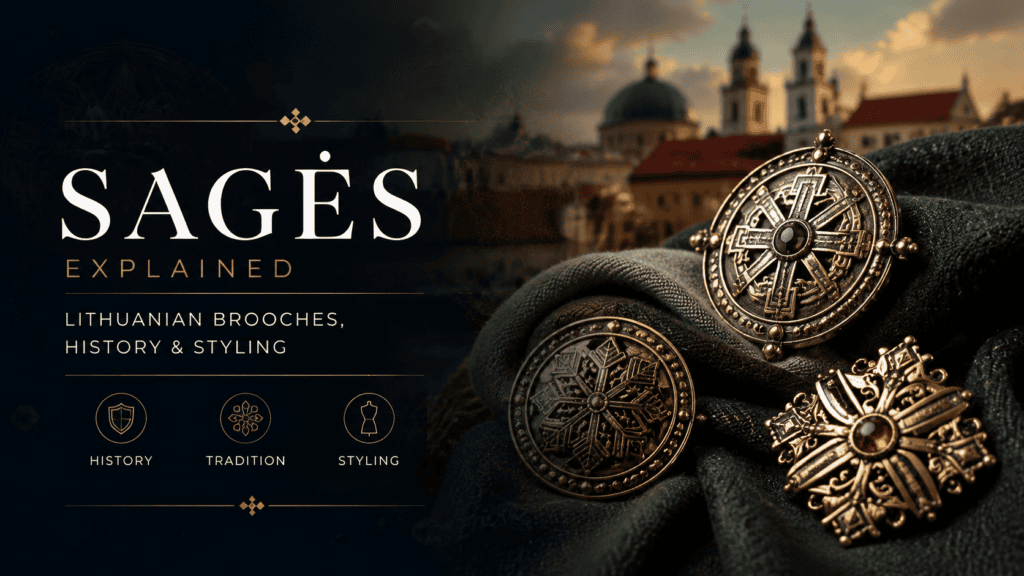
Introduction
A small metal pin, no bigger than a coin, once decided whether a Baltic tunic stayed fastened through a Lithuanian winter. That pin had a name — sagė — and centuries later, the word still carries weight in fashion, folklore, and family heirlooms alike.
If you’ve come across the term and wondered whether it’s a jewelry trend, a language lesson, or a piece of cultural history, the honest answer is: all three. Sagės (the plural of sagė) are Lithuania’s answer to the brooch — but reducing them to “just a brooch” misses why collectors, designers, and heritage-minded shoppers keep searching for the term specifically rather than settling for the generic English word.
This guide covers what a sagė actually is, where the tradition comes from, how the pieces are made, what they mean when worn today, and how to choose or style one — whether you’re buying your first piece or trying to understand a family heirloom passed down from a Lithuanian grandmother.
What Exactly Is a Sagė?
At its core, a sagė is a decorative pin with a clasp mechanism on the back, worn on the front of a garment. Structurally, it’s nearly identical to what English speakers call a brooch: a metal body on the front carries the design, while a hinge-and-pin assembly on the reverse holds it to fabric.
The word itself is simply the Lithuanian noun for “brooch” — there’s no mystical distinction in the mechanics. The distinction that matters is cultural and historical. Where “brooch” in English-speaking fashion contexts often signals antique or formal jewelry, “sagė” in Lithuania carries the weight of folk costume, regional identity, and, in some pieces, spiritual or protective symbolism tied to pre-Christian Baltic belief systems.
Quick answer for featured snippets: A sagė is a traditional Lithuanian brooch — a decorative metal pin with a clasp back, historically used to fasten cloaks and tunics and now worn as a symbolic or fashion accessory.
Why the Lithuanian Term Persists
Fashion and heritage communities increasingly use the native word rather than translating it, for the same reason people say “kimono” instead of “robe” or “dirndl” instead of “dress.” The term signals origin. A search for “sagės” is rarely someone wanting any brooch — it’s someone specifically curious about the Baltic tradition, an inherited piece, or an authentic regional design.
The History: From Cloak Fastener to Cultural Symbol
Before Buttons Existed
Long before buttons or zippers, Baltic peoples needed a reliable way to close heavy woolen cloaks and tunics against cold, wind-driven climates. A simple pin-and-loop mechanism solved that problem functionally, and metalworkers quickly began treating the fastener as a canvas.
Archaeological finds across the Baltic region show pin-brooches dating back well over a thousand years, made first from bronze and later from silver and gold as metalworking skill advanced. This mirrors a broader pattern seen across Northern Europe — Scandinavian and Viking-era cultures independently developed similar cloak-pins for the same practical reason, cold weather and heavy woven fabric.
From Function to Status
As metalworking guilds matured in the medieval and early modern periods, sagės stopped being purely functional. Ornamentation grew more elaborate, and the size, material, and craftsmanship of a person’s sagė began signaling social standing. A farmer’s iron or bronze pin and a noblewoman’s filigree silver piece served the same mechanical purpose but told very different stories about the wearer.
Folk Costume and National Identity
By the 19th and early 20th centuries, sagės had become a fixed element of Lithuanian folk dress, worn at festivals, weddings, and national celebrations. Patterns frequently drew on nature — sun motifs, plant forms, geometric interlace — echoing older pagan Baltic symbolism around fertility, protection, and the natural world. Wearing a sagė at a national event wasn’t just decorative; it was a quiet assertion of Lithuanian identity, particularly meaningful during periods when Lithuanian culture faced outside pressure (including periods of Russification and Soviet occupation).
The Modern Revival
Over the past decade, sagės have re-entered mainstream fashion conversation, both within Lithuania and internationally. This tracks a broader shift toward artisanal, heritage-rooted accessories — the same instinct driving renewed interest in hand-thrown pottery, natural dye textiles, and other slow-fashion categories. Independent Baltic jewelers now sell modernized sagės through international marketplaces, and stylists have started pairing traditional pieces with contemporary blazers, coats, and scarves.
Materials and Craftsmanship
Understanding what a sagė is made of tells you a lot about its origin, age, and value.
Bronze and iron — the earliest sagės, largely archaeological or reproduction pieces today. Simple geometric forms, valued more for historical authenticity than shine.
Silver filigree — the hallmark of traditional Lithuanian jewelry craft. Thin threads of silver are twisted and soldered into lace-like patterns, often incorporating sun wheels, stars, or floral motifs. This technique remains the most recognizable “classic sagė” style.
Gold and gemstone pieces — historically reserved for wealthier households or ceremonial wear; today more common in fine jewelry reproductions and bridal accessories.
Cameo-style sagės — carved reliefs, typically in shell, coral, or stone, set into a metal frame. This style became popular in the 18th and 19th centuries and reflects a broader European brooch fashion of that era rather than being exclusively Baltic.
Contemporary materials — modern designers now work with oxidized silver, mixed metals, resin, and even 3D-printed bases, aiming to keep the folk motifs recognizable while lowering cost and weight.
A Note on Craftsmanship Quality
Genuine filigree work is time-intensive — a single silver sagė can take a skilled artisan several hours to solder by hand. Mass-produced pieces often replicate the look using cast or stamped metal rather than hand-twisted wire. Neither approach is “wrong,” but the price difference (and the value as an heirloom) depends heavily on which technique was used, so it’s worth asking a seller directly if authenticity matters to you.
What a Sagė Symbolizes
Meaning isn’t uniform across every piece, but a few themes recur consistently in Baltic folk tradition:
- Protection — sun and star motifs were historically associated with warding off misfortune, tied to older Baltic pagan cosmology.
- Fertility and nature — floral and plant patterns connected the wearer to the agricultural cycle central to rural Baltic life.
- Regional and family identity — specific patterns were, and sometimes still are, associated with particular Lithuanian regions or family lineages, similar to how tartan patterns function in Scottish tradition.
- Rite of passage — sagės were (and in some families still are) given at weddings, christenings, or coming-of-age celebrations, making inherited pieces genuinely sentimental rather than purely decorative.
It’s worth being careful here: not every modern sagė carries symbolic intent. A tourist-market piece bought as a souvenir is not the same as an heirloom passed down with a specific family story attached. If you’ve inherited one and want to understand its specific motif, a Lithuanian folk-art museum or a knowledgeable jeweler is a better source than a general internet search — regional pattern meanings can be quite specific.
Sagės vs. Brooches: Is There a Real Difference?
Mechanically and visually, no — a sagė and a Western brooch are the same object. The differences that matter are contextual:
| Aspect | Sagė (Lithuanian context) | Generic Western Brooch |
|---|---|---|
| Cultural association | Baltic folk costume, national identity | Varies widely by country/era |
| Common motifs | Sun wheels, geometric interlace, plant forms | Florals, cameos, bows, insects |
| Typical materials | Silver filigree, amber accents | Gold, gemstones, enamel |
| Occasion | Folk festivals, national holidays, heirloom wear | Formal wear, vintage collecting |
| Gender association | Traditionally worn by all genders | Historically skewed toward women’s fashion in 20th-century Western use |
The takeaway: if you’re shopping specifically for a sagė rather than “a brooch,” you’re looking for the cultural and motif specificity, not a structurally different object.
How to Style a Sagė Today
On outerwear — a single sagė on a wool coat lapel reads as intentional and a little unexpected compared to a standard lapel pin, especially in silver-toned filigree against dark fabric.
On scarves — traditionally one of the most common uses, since a sagė can gather and secure scarf fabric while doubling as the visual focal point.
On knitwear — a heavier sagė can weigh down thin knit fabric, so lighter filigree pieces work better than dense cast-metal designs on sweaters.
As a bag accent — smaller or vintage sagės are increasingly used as decorative pins on canvas totes or structured handbags, a modern use with no direct historical precedent but a natural extension of the “wearable art” idea.
Common styling mistake: treating a large ceremonial-style sagė as an everyday accessory. Statement filigree pieces were historically reserved for festivals and celebrations; wearing one daily on casual clothing can visually overwhelm a simple outfit. Save the largest pieces for occasions that match their original ceremonial weight.
Buying a Sagė: What to Look For
If you’re purchasing rather than inheriting, a few practical checks help distinguish quality:
- Ask about the metal — genuine silver will be marked (usually with a fineness stamp); unmarked “silver-tone” pieces are typically plated base metal.
- Check the clasp mechanism — a well-made pin should sit flush and lock securely; loose or misaligned clasps suggest lower-quality manufacturing.
- Ask whether the pattern has regional meaning — reputable Baltic jewelers can usually tell you if a motif is tied to a specific region or is a generic decorative pattern.
- Compare hand-filigree vs. cast reproduction — neither is inherently better, but the price should reflect which technique was used.
- Buy from Baltic makers when authenticity matters — Lithuanian and broader Baltic independent jewelers selling internationally are the most reliable source for pieces with genuine cultural grounding, as opposed to mass-market “ethnic-inspired” reproductions.
Common Misconceptions
“Sagės are only for women.” Historically and traditionally, sagės were gender-neutral — men wore them to fasten cloaks just as often as women did. The association with women’s fashion is a more recent, Western-influenced shift.
“A sagė is a specific type of brooch design.” It isn’t a design category — it’s the Lithuanian word for the entire object class. A sagė can be filigree, cameo, geometric, or modern minimalist; the word describes origin and cultural context, not shape.
“Older always means more valuable.” Age matters less than craftsmanship and material. A well-preserved 20th-century hand-filigree piece can be worth more than a poorly maintained 19th-century one with damaged clasps or replaced stones.
Future Outlook
Interest in sagės is following the same trajectory as other heritage crafts caught up in the broader slow-fashion and artisanal-jewelry movement: growing international demand, more independent Baltic makers selling online, and increasing crossover into mainstream accessory design rather than staying confined to folk-costume contexts. Museums and cultural organizations in Lithuania have also become more active in documenting regional pattern meanings, which should make it easier over time for buyers to verify authenticity and provenance rather than relying on guesswork.
Key Takeaways
- A sagė is the Lithuanian word for a decorative clothing brooch, structurally identical to a Western brooch.
- The tradition dates back over a thousand years, evolving from a practical cloak-fastener into a symbol of status, regional identity, and national pride.
- Silver filigree is the most iconic traditional material and technique.
- Motifs often carry symbolic meaning tied to nature, protection, and pre-Christian Baltic belief.
- Sagės are traditionally gender-neutral and were worn by all genders historically.
- When buying, check the metal, clasp quality, and whether the piece was hand-filigreed or cast.
Frequently Asked Questions
What does “sagė” mean in English? It translates directly to “brooch” — a decorative pin used to fasten or accent clothing.
Are sagės only worn in Lithuania? No. While the tradition is Lithuanian, international jewelry collectors and fashion designers now wear and sell sagės-inspired pieces well beyond the Baltic region.
What materials are traditional sagės made from? Historically bronze and iron, later silver (especially filigree work) and gold, sometimes combined with amber, a material closely associated with the Baltic coast.
Can men wear sagės? Yes — traditionally sagės were gender-neutral, used by anyone needing to fasten a cloak or tunic.
How can I tell if an inherited sagė has a specific symbolic meaning? Consult a Lithuanian folk-art museum, cultural heritage organization, or an experienced Baltic jeweler; regional and family-specific motifs are often too specific for general research to confirm.
Is a sagė the same as an amber brooch? Not necessarily. Amber is a common accent material in Baltic jewelry generally, but a sagė specifically refers to the brooch form itself — it may or may not include amber.
Where can I buy an authentic sagė? Independent Baltic jewelers, Lithuanian craft markets, and specialty online marketplaces featuring verified regional makers are more reliable sources than generic “ethnic jewelry” retailers.
Do modern designers still make new sagės, or are they only antiques? Both markets are active — antique and vintage pieces circulate among collectors, while contemporary Baltic jewelers continue producing new designs that blend traditional motifs with modern materials.
[…] TechRidy offers a compelling solution for businesses seeking to unify project management, CRM, billing, and analytics. Its native integration, particularly between service delivery and billing, provides genuine efficiency gains that standalone tools cannot match. […]
[…] 720p streaming represents a rational, practical choice in a world where internet speeds vary enormously and data isn’t always unlimited. It offers a quality compromise that works for the vast majority of viewers, content creators, and platforms. […]