
 By
By
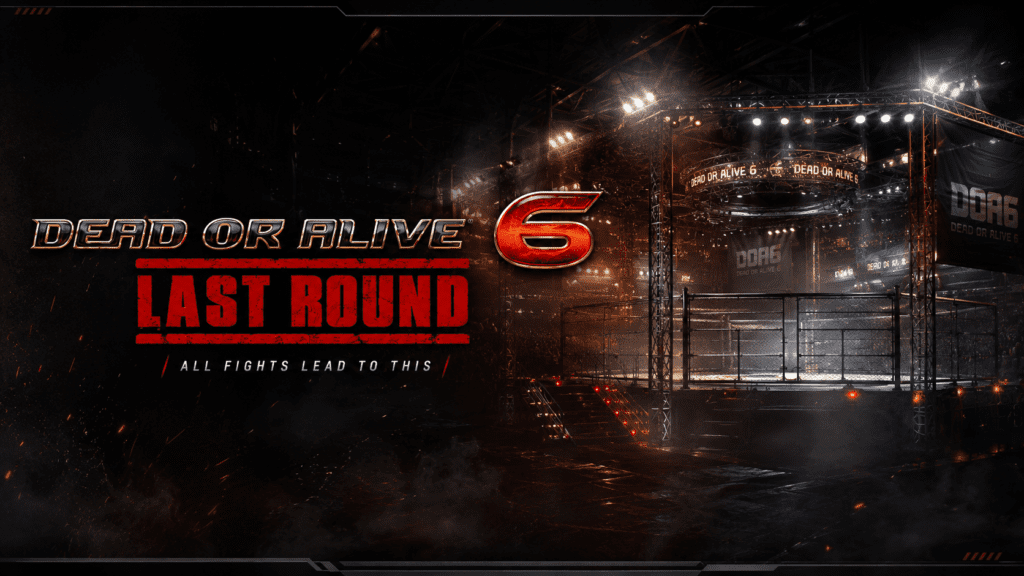
Seven years is a long time to wait for a fighting game to feel complete. When Dead or Alive 6 launched in 2019, it arrived carrying the weight of a series struggling to redefine itself — a game that wanted to be taken seriously as a competitive fighter while shedding the oversexualized reputation that had followed it for decades. The reception was mixed. The core combat was sharp. The DLC monetization was not. The netcode was poor. The community persevered anyway, keeping the game alive through tournaments and sheer devotion while the broader fighting game world moved on.
Now, on June 25, 2026, Dead or Alive 6 Last Round has arrived. Developed by Team Ninja and published by Koei Tecmo, this is the definitive edition of the 2019 game — optimized for PS5, Xbox Series X/S, and PC, bundled with previously paywalled DLC characters, and equipped with two headline features: a deeply functional Photo Mode and a new lighting system called OBORO. There’s also a new original character, Minato, announced at launch and arriving later this summer.
Whether you’re a lapsed fan deciding whether to return, a newcomer who missed the original run, or a competitive player hoping rollback netcode finally made it in (it didn’t), this guide covers everything you need to know before spending a dollar.
What Exactly Is Dead or Alive 6 Last Round?
The naming convention here follows franchise tradition. Dead or Alive 5 received two enhanced versions — DOA5 Ultimate in 2013 and DOA5 Last Round in 2015 — each adding characters, modes, and content. DOA6 Last Round follows that playbook, though the scale of additions sits closer to the lower end of expectations.
This is not a sequel. The story, gameplay mechanics, stages, and modes are carried over directly from the 2019 release, which itself shipped around 900,000 copies worldwide according to Koei Tecmo’s own figures. What Last Round offers is a curated re-entry point: the complete base roster, five previously DLC-only characters now folded into the package, visual upgrades, and the aforementioned new features.
For anyone who never played DOA6, this is unambiguously the best way to experience it. For existing owners, the calculus is more complicated — and the absence of an upgrade path (you cannot pay the difference from the original; you must purchase the new version outright) has been a point of frustration in the community.
The free-to-play Core Fighters edition is also available, letting players access Marie Rose, Honoka, and NiCO from launch, along with Photo Mode and the online DOA Quest and DOA Central modes. It’s a genuine entry point that lets curious players test the waters without spending anything upfront.
The Combat System: What Makes Dead or Alive Different
Before addressing what’s new, it helps to understand what Dead or Alive fundamentally is — because it operates on a logic that separates it from Tekken, Street Fighter, and most of its 3D fighting contemporaries.
At the core is a triangle system: strikes beat throws, throws beat holds, and holds beat strikes. Simple to describe, genuinely difficult to master, because every exchange is a guessing game layered over whatever combo you’re currently executing. Unlike some fighters that let you simply outlearn your opponent through memorized optimal punishes, DOA forces a real-time mind game that never fully resolves. A player with perfect frame data knowledge can still lose because they guessed wrong on a hold.
The Break Gauge, introduced in DOA6, adds a super meter that fills as you deal and receive damage. Burning it on a Break Blow extends combos into cinematic, highly damaging finishers. The Break Hold uses the same meter to catch incoming strikes — high, mid, or low — at the cost of ending your offensive momentum. A third option, activated by directional input and the special button, triggers a side-step that avoids attacks entirely. These three options layer on top of the triangle system rather than replacing it, which means Last Round’s depth ceiling is legitimately high.
The interactive stage design has always been DOA’s visual signature. Wrestling rings where ropes can be used for rebounds. Laboratories with electric floor hazards. The “Unforgettable” stage — an absurdist museum of classic DOA arenas mashed into one — which reviewers have called one of the most ambitious stage designs ever put into a 3D fighter. These hazards aren’t cosmetic. A knock into a danger zone can extend combos in ways that completely shift round economy.
For newcomers, the Fatal Rush mechanic (a simplified combo string accessible with repeated button presses) ensures the first hour isn’t spent staring at a move list in confusion. It’s not the most efficient combat option, but it communicates what the game feels like before you’ve committed anything to muscle memory.
The Full Roster: Who’s Playable in Last Round
Dead or Alive 6 Last Round launches with 29 characters. The base game’s original 24 are all present, joined by five fighters who were previously sold as paid DLC: Nyotengu, Phase 4, Momiji, Rachel, and Tamaki.
Notably absent from the launch roster — though listed on the character select screen — are Mai Shiranui and Kula Diamond, the crossover fighters from SNK’s King of Fighters XIV. These two characters are presumably held back due to ongoing licensing arrangements and will arrive as future paid DLC. Seeing slots occupied by characters you cannot yet play is an odd design choice, but it’s at least honest about what’s coming.
Minato, an entirely new original character who doesn’t appear in any prior DOA or Dead or Alive Xtreme Venus Vacation entry, was teased at the end of the launch trailer and announced for arrival later this summer. The reveal generated genuine excitement — a brand-new character built specifically for this edition, rather than a transplant from another Team Ninja property, is the kind of announcement that signals longer-term investment.
Several characters, including Kasumi and Marie Rose, receive new costumes inspired by other Team Ninja titles: Ninja Gaiden 3: Razor’s Edge and Dead or Alive Xtreme Venus Vacation among them.
Core Roster Breakdown at a Glance:
| Category | Characters |
|---|---|
| Original 24 (base game) | Kasumi, Hayate, Ryu Hayabusa, Helena, Zack, Bayman, Lisa, Jann Lee, Lei Fang, Hitomi, Bass, Tina, Christie, Brad Wong, Kokoro, Eliot, Gen Fu, La Mariposa, Rig, Mila, Nyotengu*, Phase 4*, NiCO, Honoka, Diego, Marie Rose |
| DLC added to base | Nyotengu, Phase 4, Momiji, Rachel, Tamaki |
| Upcoming paid DLC | Mai Shiranui, Kula Diamond |
| New character | Minato (summer 2026) |
*Some original DLC characters were sold separately; Last Round consolidates them.
OBORO: The New Lighting System Explained
The most technically ambitious addition to Last Round is OBORO — a new lighting system built into Koei Tecmo’s proprietary Katana Engine. Think of it as the game’s equivalent of ray tracing: more realistic illumination, natural ambient light and shadow interaction, and dramatically improved water reflections.
The demonstration stage is Lost Paradise, a lush outdoor arena chosen well. With OBORO enabled, the water in Lost Paradise becomes genuinely impressive: reflections of characters and stage elements ripple convincingly, ambient light reacts to movement, and the overall sense of environmental depth shifts perceptibly. The stage, already visually appealing in the 2019 version, looks meaningfully different with the new system engaged.
On PC, OBORO pairs with NVIDIA DLSS and AMD FSR support, which helps maintain performance at higher visual settings. On Steam Deck, it’s a different story — OBORO tanks frame rate to the low 20s even with FSR set to Performance mode, making it essentially unusable on Valve’s handheld without significant compromises.
The catch — and it is a significant one — is that OBORO only applies to Lost Paradise at launch. Every other stage runs on the original Katana Engine lighting. Team Ninja has confirmed that additional stages will receive OBORO support through free post-launch updates, with the system described by some reviewers as a testing ground for visual technology that will be fully deployed in the next mainline entry. That framing is intellectually satisfying but doesn’t change the fact that you’re paying for a lighting upgrade that covers roughly one-twenty-ninth of the stage roster on day one.
Photo Mode: The Genuine Standout Feature
If OBORO is a preview, Photo Mode is a fully realized addition. And for a series with the visual presentation and character design emphasis that Dead or Alive has always carried, it lands exactly as intended.
Rather than a pause-menu screenshot capture system, Last Round makes Photo Mode its own dedicated mode accessible through DOA Central. You enter a fight, but you control everything: character placement anywhere on the stage, which combat animation each fighter performs, whether one character is hidden entirely for solo shots, facial expression adjustments, dirt and impact effect details, depth of field, tilt, and camera zoom.
The ability to make attacks appear to land — choosing a specific animation frame and composing around it — means the results look less like screenshots and more like production stills. Several reviews noted the potential for virtual photography content creation specifically with this game, and that’s not a coincidence. Team Ninja designed this for a community that already produces significant fan-created visual content around these characters.
The limitation is access: Photo Mode lives outside of online matches and cannot be activated mid-fight. You cannot pause a ranked match and compose a shot. That’s a reasonable design compromise for competitive integrity, but some players will find it limits spontaneous capture of genuinely exciting moments.
DOA Quest: The Best Single-Player Spine
Beyond the story campaign — which covers the same narrative as 2019, centering on Kasumi’s return to the tournament circuit and the ongoing conflict around MIST and Victor Donovan — the most engaging solo content is DOA Quest.
Last Round ships with 155 to 160 character-based missions (figures vary slightly by platform and version). Each mission assigns you a specific fighter and asks you to complete up to three objectives: land a specific type of attack, win within a time limit, use certain moves a fixed number of times. Success unlocks cosmetic rewards — costumes, hairstyles, background music tracks, title cards for your online profile.
The mode functions as a secondhand character tutorial. You’re forced into fighters you might never voluntarily touch, against an AI that, while imperfect, tests whether you understand the assigned character’s basic kit. Most of the meaningful reward flow passes through DOA Quest rather than other modes.
For Core Fighters players specifically, DOA Quest allows testing of characters not included in the free roster, providing a no-cost method to evaluate whether a fighter suits your style before purchasing. That’s a genuine differentiator.
Online Play: The Elephant in the Room
Let’s be direct: the online experience in Dead or Alive 6 Last Round is not good by 2026 standards, and that’s a real problem.
The game uses delay-based netcode — the same system from the 2019 release. In practical terms, this means input latency increases proportionally with connection distance, frequent desyncs on poor connections, and sessions that can slow to a halt when conditions deteriorate. The competitive fighting game community has spent years advocating for rollback netcode, a system where both clients independently simulate ahead and roll back to a synchronized state when discrepancies appear. Rollback dramatically improves playability at distance and is now considered a baseline expectation by much of the scene.
Last Round does not have it. There is also no crossplay between PS5, Xbox Series, and PC, and no crossplay with the original 2019 game’s player base. Online lobbies are segregated by platform and version.
For casual players who will primarily fight locally or in brief online sessions against nearby opponents, this matters less. For anyone hoping to play competitively at distance — or anyone who had strong feelings about the original game’s netcode — nothing has changed.
Team Ninja has announced a World Championship, which suggests competitive investment and implies online infrastructure has to remain relevant. Whether that pressure translates to a netcode update post-launch is unknown.
What’s Missing: Honest Assessment of the Gaps
The most useful thing a review can do is tell you what’s not here.
Tag Team mode was last seen in Dead or Alive 5 and was one of the most requested features for DOA6’s original release. It did not appear in 2019. It does not appear here. For players who loved the four-fighter dynamics and team swap mechanics of older entries, Last Round offers nothing to fill that gap.
The claimed gameplay improvements are genuinely mysterious. The official Last Round website stated for months that “the gameplay has also been improved” over the 2019 original. Multiple publications, including Cubed3, reached out to Koei Tecmo for clarification. No response came. The line was eventually removed from the official website. Reviewers who looked carefully could not identify any concrete changes to move properties, damage values, combo timing, or system mechanics. Whether something was changed and not communicated, or whether this was a marketing claim quietly abandoned, is unclear.
Rollback netcode and crossplay are absent, as addressed above.
An upgrade path for existing owners doesn’t exist. If you own Dead or Alive 6 and all its DLC, buying Last Round means repurchasing content you already have. The game does allow DLC costumes, premium tickets, and save data to carry over from the original version, which softens this somewhat — but character DLC does not transfer.
Is Dead or Alive 6 Last Round Worth Buying?
The answer depends almost entirely on where you’re coming from.
If you’ve never played DOA6: This is, without qualification, the best and cheapest way to experience the game. The complete combat system, a substantial roster, Photo Mode, DOA Quest, and the Oboro-enhanced Lost Paradise stage all come in a package priced below most current AAA releases. The story won’t blow you away — it’s serviceable fighting game narrative, fragmented across character-specific chapters — but the combat and single-player content depth are genuinely impressive for the genre.
If you own the original game but minimal DLC: The five bundled DLC characters (Momiji, Rachel, Tamaki, Phase 4, Nyotengu) and Photo Mode represent real value. Whether that justifies the full repurchase price depends on how much you value those specific additions.
If you’re a competitive player who already invested heavily in DOA6: The absence of rollback netcode is likely a dealbreaker for sustained competitive engagement. The visual upgrades are real but don’t change how the game plays. The new content — Photo Mode excepted — doesn’t address the structural issues that limited competitive growth in the original release.
If you’re a virtual photographer or content creator: Photo Mode alone might justify the price. It’s one of the most flexible dedicated photo tools the genre has seen.
Common Misconceptions About Dead or Alive 6 Last Round
“Last Round has significantly changed gameplay mechanics.” No evidence supports this. Despite marketing language that was quietly removed from the official site, reviewers across multiple platforms found no identifiable changes to the core combat system.
“The OBORO lighting system applies to the whole game.” At launch, only the Lost Paradise stage uses OBORO. Additional stages will receive the upgrade through free post-launch updates, but it’s a staggered rollout, not a complete visual overhaul from day one.
“Buying Last Round gets you all the DLC.” The five previously paid DOA series characters (Momiji, Rachel, Tamaki, Phase 4, Nyotengu) are included. The KOF crossover characters Mai Shiranui and Kula Diamond are not — they’ll be available as future paid DLC.
“The free-to-play version is too limited to be useful.” Core Fighters gives you three playable characters (Marie Rose, Honoka, NiCO), full access to Photo Mode and online modes, and the ability to try additional characters through DOA Quest missions. It’s a genuine entry point rather than a demo.
“Dead or Alive 6 is purely a casual game.” The community that maintained the game for seven years produced competitive tournament play at events like Texas Showdown 2026 that demonstrated legitimate depth. The triangle system, hold mechanics, and stage positioning create a ceiling that dedicated players haven’t fully mapped. It’s accessible, not shallow.
Looking Ahead: What Last Round Signals for the Series
The timing of Last Round is significant. Dead or Alive turns 30 this year, and the franchise hasn’t had a mainline new entry since the 2019 release. Multiple reviews have read Last Round as a transitional product — a way to consolidate the DOA6 playerbase, test the OBORO lighting technology that will presumably form the visual foundation of DOA7, and re-engage lapsed fans before a larger announcement.
The tease of Minato — an entirely original character with no history in the series — feels deliberate. New characters carry stories, and stories carry games. If Minato lands well, it suggests Team Ninja is building toward something rather than simply repackaging the past.
The World Championship announcement reinforces competitive interest. The OBORO system’s staged rollout frames post-launch updates as something worth monitoring. The gaps — no rollback, no tag mode, no crossplay — read less as oversights and more as deferred features, problems that a seventh entry might actually address from the ground up.
Whether that framing makes Last Round an easier or harder purchase is personal. But the series is clearly alive, and the 30th anniversary year has more to say.
Frequently Asked Questions
Q: What is Dead or Alive 6 Last Round? A: It’s the definitive enhanced version of Dead or Alive 6 (2019), released on June 25, 2026 for PS5, Xbox Series X/S, and PC. It includes the full base game, five previously DLC-only characters, a new Photo Mode, and the OBORO lighting system.
Q: What platforms is Dead or Alive 6 Last Round available on? A: PS5, Xbox Series X, Xbox Series S, and PC (via Steam). No Nintendo Switch 2 version has been announced.
Q: Is there a free version of Dead or Alive 6 Last Round? A: Yes. Core Fighters is a free-to-play edition that includes Marie Rose, Honoka, and NiCO from launch, plus full access to Photo Mode and the online DOA Quest and DOA Central modes. Additional characters can be purchased separately.
Q: Does Dead or Alive 6 Last Round have rollback netcode? A: No. The game uses delay-based netcode, the same system from the 2019 original. There is also no crossplay between platforms or between Last Round and the original DOA6.
Q: What characters are new in Last Round? A: Five previously paid DLC characters — Nyotengu, Phase 4, Momiji, Rachel, and Tamaki — are now included in the base roster. A brand-new original character, Minato, was announced at launch and is expected to arrive later in summer 2026.
Q: What is the OBORO lighting system? A: OBORO is a new lighting system built on Koei Tecmo’s Katana Engine that provides more realistic illumination, shadows, and water reflections. At launch, it only applies to the Lost Paradise stage. Additional stages will receive OBORO support through free post-launch updates.
Q: Can I use Photo Mode in online matches? A: No. Photo Mode is a dedicated standalone mode, not an in-match feature. You cannot activate it during online or local versus play.
Q: Is Dead or Alive 6 Last Round worth buying if I already own DOA6? A: It depends on how much you value the bundled DLC characters and Photo Mode. There is no upgrade path — you must purchase the new version outright. DLC costumes and save data can transfer, but character DLC does not.
Q: Does Dead or Alive 6 Last Round have tag team mode? A: No. Tag Team mode, which was featured in Dead or Alive 5, was not included in the original DOA6 and is not present in Last Round.
Q: What is DOA Quest mode? A: DOA Quest is a single-player mode featuring 155–160 character-based missions with specific combat objectives. Completing missions unlocks cosmetics and rewards, and the mode functions as an indirect way to learn different characters’ move sets and playstyles.