
 By
By
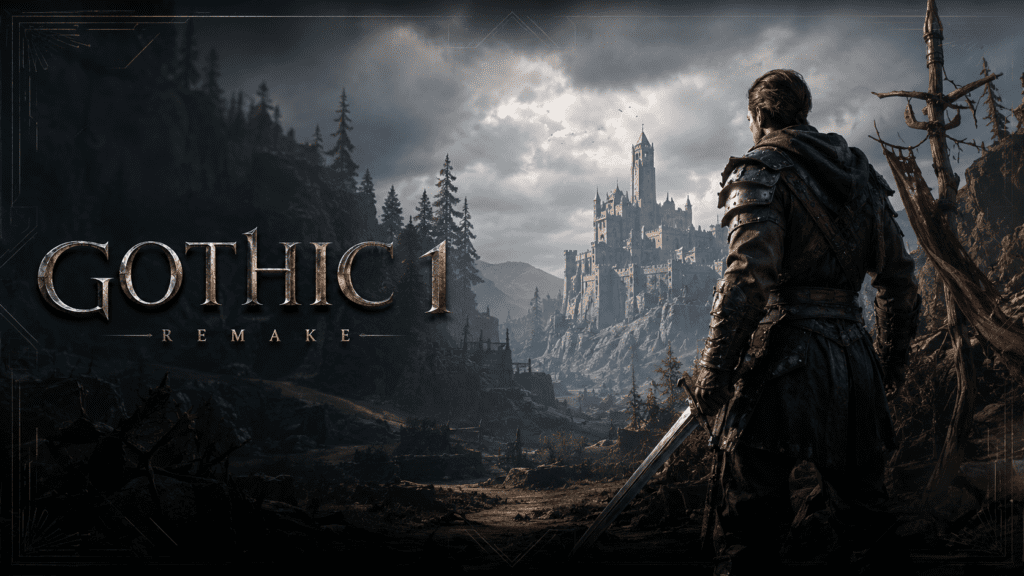
Gothic 1 Remake Could Be the RPG Revival Fans Have Waited Decades For
For many role-playing game enthusiasts, few titles carry the same legendary status as Gothic. Released in 2001, the original game became a cult classic thanks to its immersive world, unforgiving progression system, memorable factions, and player freedom that felt years ahead of its time.
More than two decades later, the Gothic 1 Remake is preparing to bring that experience to a new generation while preserving the elements that made the original so beloved. The project represents far more than a graphical upgrade. It is an ambitious attempt to modernize one of the most influential European RPGs without sacrificing its identity.
That balance is notoriously difficult to achieve. Many remakes either cling too tightly to nostalgia or change so much that they lose what made the original special. Gothic 1 Remake sits directly in the middle of that challenge.
Veteran players want authenticity. Newcomers expect modern gameplay standards. Developers must satisfy both audiences while rebuilding a classic from the ground up.
The result could become one of the most significant RPG remakes in recent years.
This comprehensive guide covers everything known so far about Gothic 1 Remake, including gameplay changes, story details, factions, graphics improvements, release expectations, developer goals, and why the project matters to RPG fans worldwide.
What Is Gothic 1 Remake?
Gothic 1 Remake is a complete reimagining of the original Gothic role-playing game.
Rather than simply enhancing textures or increasing resolution, the remake rebuilds the experience using modern technology while retaining the original story, setting, and core progression systems.
The game is being developed by Alkimia Interactive and published by THQ Nordic, with a strong emphasis on preserving the atmosphere that helped establish Gothic as a cult phenomenon.
At its core, players once again step into the role of the Nameless Hero, a prisoner thrown into a dangerous penal colony surrounded by a magical barrier.
Inside the colony, survival is determined by power, alliances, and reputation rather than laws.
Every decision matters.
Every faction offers unique opportunities.
And every step outside a safe camp can become a life-threatening encounter.
Why the Original Gothic Became a Cult Classic
Understanding the excitement surrounding the remake requires understanding what made the original game special.
While many RPGs of the early 2000s relied on traditional fantasy formulas, Gothic approached world-building differently.
Players were not treated as heroes destined to save the world.
Instead, they began as weak, insignificant prisoners struggling to survive.
This seemingly simple design choice created a powerful sense of progression.
Key Features That Made Gothic Unique
| Feature | Why It Stood Out |
|---|---|
| Harsh Progression | Players started weak and earned power gradually |
| Living World | NPCs followed schedules and reacted to events |
| Meaningful Factions | Choices significantly impacted gameplay |
| Organic Exploration | Minimal hand-holding encouraged discovery |
| Real Consequences | Decisions shaped relationships and outcomes |
The world felt dangerous because it genuinely was dangerous.
A single wolf could kill an inexperienced player.
Venturing into the wrong area too early often resulted in disaster.
That sense of vulnerability became one of Gothic’s defining strengths.
The Story: Returning to the Valley of Mines
The remake follows the original narrative.
The kingdom depends on magical ore mined from a penal colony known as the Valley of Mines.
A magical barrier surrounds the colony, trapping prisoners inside.
When the barrier malfunctions, it expands unexpectedly, imprisoning not only criminals but also the mages responsible for maintaining it.
Society within the barrier collapses.
Power shifts into the hands of inmates.
Various factions emerge.
Violence becomes routine.
Trade becomes essential.
Trust becomes scarce.
Players arrive as a newly sentenced prisoner with no status, no allies, and no influence.
From there, the journey unfolds through faction politics, ancient mysteries, and increasingly dangerous threats hidden beneath the colony.
A Complete Visual Transformation
One of the most obvious differences between the original game and the remake is visual quality.
The early screenshots and gameplay footage demonstrate a dramatic leap in environmental detail, lighting technology, character modeling, and animation systems.
Visual Improvements Include:
- High-resolution environments
- Modern lighting and shadows
- Advanced weather effects
- Detailed facial animations
- Improved character models
- Realistic vegetation systems
- Enhanced particle effects
- More immersive environmental storytelling
The Valley of Mines appears darker, more atmospheric, and significantly more believable than ever before.
Importantly, the art direction remains faithful to the original’s gritty identity.
This is not a colorful fantasy playground.
It remains a brutal prison colony where survival comes first.
Combat Has Been Completely Reworked
Combat represented both a strength and weakness of the original Gothic.
Many fans appreciated its unique rhythm and learning curve.
Others found it clunky and difficult to master.
The remake introduces a modernized combat system while attempting to preserve the tactical nature of encounters.
Expected Combat Improvements
| Original Gothic | Gothic 1 Remake |
| Stiff animations | Fluid combat transitions |
| Limited feedback | Better hit reactions |
| Basic movement | More responsive controls |
| Dated camera systems | Modern camera handling |
| Simpler animations | Advanced motion capture |
The challenge for developers is preserving the feeling that combat is dangerous rather than transforming it into a fast-paced action game.
Every preview suggests they understand that distinction.
The Three Major Factions Explained
One of Gothic’s most celebrated features is its faction system.
Players eventually choose between competing groups that offer different philosophies, quests, rewards, and progression paths.
Old Camp
The Old Camp represents stability and power.
Its leaders control trade with the outside world and maintain influence through force and hierarchy.
Joining the Old Camp often appeals to players seeking structure and political influence.
Strengths
- Strong leadership
- Access to resources
- Established economy
- Powerful allies
New Camp
The New Camp rejects the existing power structure.
Its members seek freedom from the barrier and challenge the authority of the Old Camp.
This faction appeals to players who prefer independence and rebellion.
Strengths
- Alternative ideology
- Unique questlines
- Resourceful leadership
- Strong community focus
Sect Camp
The Sect Camp follows a spiritual path centered around a mysterious force known as the Sleeper.
Its members live differently from other camps and possess unique beliefs.
This faction offers one of the most distinctive experiences in the game.
Strengths
- Unique culture
- Exclusive abilities
- Distinctive progression
- Deep lore connections
How Exploration Defines the Experience
Modern RPGs often fill maps with markers, icons, and navigation aids.
Gothic takes a different approach.
Exploration is driven by curiosity.
Players discover secrets because they investigate strange locations, not because a map tells them where to go.
This design philosophy remains central to the remake.
Exploration Rewards
- Hidden equipment
- Secret caves
- Rare resources
- Unique NPC interactions
- Optional quests
- Lore discoveries
The Valley of Mines becomes more than a backdrop.
It becomes an active participant in the player’s journey.
Why RPG Fans Are Watching This Remake Closely
The RPG genre has changed dramatically since 2001.
Open worlds are larger.
Graphics are more advanced.
Quest systems are more sophisticated.
Yet many players feel modern RPGs sometimes sacrifice immersion in favor of accessibility.
Gothic represents an alternative philosophy.
It trusts players to learn through experimentation.
It rewards patience.
It embraces consequences.
That design approach has become increasingly rare.
As a result, Gothic 1 Remake isn’t merely appealing to nostalgic fans.
Many younger RPG players are curious to experience a style of game design that influenced countless titles that followed.
Expert Analysis: The Biggest Challenge Facing Gothic 1 Remake
Remaking Gothic involves more than technology.
The real challenge is preserving identity.
Many modern RPGs focus heavily on convenience:
- Fast travel everywhere
- Constant quest markers
- Simplified progression
- Minimal risk
Gothic succeeded because it resisted these trends before they even existed.
The remake must decide how much friction to preserve.
Too much modernization could erase the original’s personality.
Too little modernization could alienate new players.
The most promising previews suggest the developers are pursuing a middle path:
- Modern controls
- Enhanced visuals
- Improved accessibility
- Preserved world design
- Retained faction depth
- Meaningful progression
If successful, the remake could serve as a blueprint for future RPG remasters.
Practical Example: How Progression Feels Different From Modern RPGs
Imagine entering the world for the first time.
In many contemporary RPGs, players quickly gain powerful abilities.
Enemies scale automatically.
Equipment upgrades arrive frequently.
In Gothic:
- You begin weak.
- Basic creatures are dangerous.
- Every weapon upgrade matters.
- Learning new skills feels significant.
- Reputation must be earned.
This creates a stronger emotional connection to progression.
When players eventually become powerful, they remember how vulnerable they once were.
That transformation is one of Gothic’s greatest strengths.
Common Misconceptions About Gothic 1 Remake
Myth 1: It’s Just a Graphics Upgrade
Reality: The game is being rebuilt from the ground up with modern systems and technology.
Myth 2: It’s Only for Nostalgic Players
Reality: Many younger RPG fans are discovering Gothic for the first time through the remake.
Myth 3: It Will Become a Generic Action RPG
Reality: Developers have repeatedly emphasized preserving the original RPG identity.
Myth 4: The Story Is Being Replaced
Reality: The core narrative remains rooted in the original game.
Tips for New Players
If Gothic 1 Remake becomes your first experience with the series, these strategies will help.
Beginner Checklist
Talk to everyone
Join a faction carefully
Explore methodically
Save frequently
Learn combat timing
Invest skill points wisely
Avoid dangerous regions early
Pay attention to dialogue
Build reputation gradually
Experiment with different approaches
Gothic 1 Remake vs Modern Open-World RPGs
| Feature | Gothic 1 Remake | Typical Modern RPG |
| Player Guidance | Limited | Extensive |
| Progression | Slow and rewarding | Faster |
| Difficulty | Higher | Often scalable |
| Exploration | Discovery-driven | Marker-driven |
| Faction Impact | Significant | Sometimes limited |
| Immersion | Extremely high | Varies widely |
This distinction explains why longtime fans remain passionate about the franchise decades after its debut.
What Success Could Mean for the Gothic Franchise
A successful remake could have major implications.
Potential outcomes include:
- Renewed interest in Gothic as a franchise
- Additional remakes of later entries
- New RPG projects inspired by Gothic’s design philosophy
- Increased recognition for classic European RPGs
The project could also introduce millions of players to a game that helped shape role-playing design long before open-world RPGs became mainstream.
Final Thoughts
Gothic 1 Remake occupies a rare position in gaming.
It is simultaneously a preservation project, a modernization effort, and a test of whether classic RPG design principles still resonate with contemporary audiences.
Everything revealed so far suggests that the developers understand what made Gothic special. The oppressive atmosphere, meaningful faction choices, demanding progression, and immersive world-building remain central to the experience.
For veteran fans, the remake offers a chance to revisit one of gaming’s most influential cult classics through a modern lens.
For newcomers, it may become the perfect introduction to a style of RPG design that values discovery, consequence, and earned progression over convenience.
If the final release delivers on its ambitions, Gothic 1 Remake could stand as one of the most successful RPG revivals of the decade.
Frequently Asked Questions
When will Gothic 1 Remake be released?
The developers have confirmed active development, but players should follow official announcements for the most current release schedule.
Is Gothic 1 Remake a full remake or a remaster?
It is a full remake rebuilt using modern technology rather than a simple remaster.
Will the original story remain intact?
Yes. The core narrative and world structure remain based on the original Gothic.
Which platforms will Gothic 1 Remake support?
The game is expected to launch on PC and modern gaming platforms.
Do I need to play the original Gothic first?
No. New players can begin directly with the remake.
Are the original factions returning?
Yes. The Old Camp, New Camp, and Sect Camp are central to the experience.
Will combat be different from the original game?
Yes. Combat has been modernized while aiming to preserve the original’s tactical feel.
Why is Gothic considered a cult classic?
Its immersive world, meaningful choices, challenging progression, and faction-driven storytelling helped it stand apart from other RPGs of its era.
Is Gothic 1 Remake an open-world game?
It features an interconnected open environment focused on exploration and player freedom.
What makes Gothic 1 Remake different from other RPG remakes?
The project seeks to preserve the original game’s design philosophy rather than simply updating visuals, making it one of the most ambitious RPG revival efforts in recent years.