
 By
By
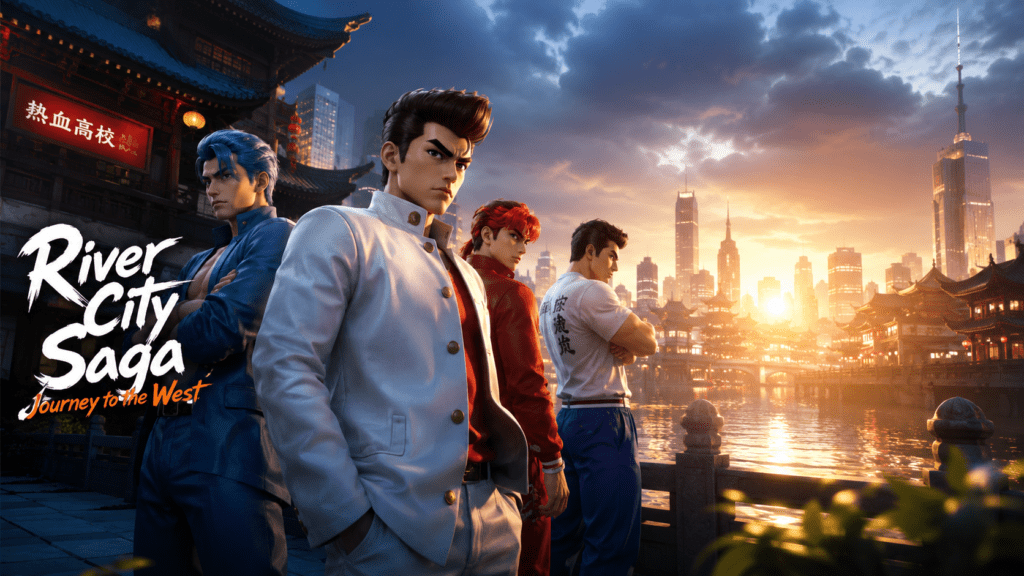
Why River City Saga: Journey to the West Is One of the Most Unusual Beat ’Em Ups Ever Made
The beat ’em up genre has produced countless classics over the decades, but very few games have managed to blend mythology, comedy, role-playing mechanics, and street-fighting action quite like River City Saga: Journey to the West.
At first glance, it appears to be another entry in the long-running Kunio-kun franchise. Spend a few minutes with it, however, and the game reveals itself as something much stranger and more ambitious. It takes inspiration from the legendary Chinese novel Journey to the West, reimagines beloved River City characters as mythical heroes, and wraps everything in a colorful side-scrolling adventure filled with humor, exploration, and RPG progression.
For longtime fans of River City titles, it offers a fascinating alternative take on familiar characters. For newcomers, it provides an accessible entry point into one of gaming’s most enduring franchises.
This guide explores the game’s story, gameplay systems, characters, strengths, weaknesses, and the reasons it continues to attract attention years after its original release.
What Is River City Saga: Journey to the West?
River City Saga: Journey to the West is an action RPG beat ’em up developed by Technōs Japan’s spiritual successor, Arc System Works, and published as part of the broader River City franchise.
Unlike traditional River City games that take place in modern urban environments, this title transports players into a fantasy interpretation of ancient China inspired by the famous literary masterpiece Journey to the West.
Players control Kunio, who assumes the role of Sun Wukong—the Monkey King. Along the way, he joins companions modeled after other iconic River City characters, each representing legendary figures from Chinese folklore.
The result is a surprisingly unique crossover between:
- Classic side-scrolling combat
- Action RPG progression
- Mythological storytelling
- Character customization
- Cooperative gameplay
- River City humor
Rather than focusing exclusively on fighting, the game encourages exploration, character development, equipment management, and quest completion.
The Story: A River City Twist on a Chinese Classic
One of the game’s biggest attractions is its creative adaptation of Journey to the West.
The original novel follows the monk Xuanzang and his companions as they travel westward in search of sacred Buddhist scriptures. Along the way they encounter demons, monsters, gods, and supernatural challenges.
River City Saga reimagines this legendary adventure through the lens of the Kunio universe.
Instead of presenting a serious historical narrative, the game injects:
- Comedic dialogue
- Exaggerated personalities
- Lighthearted storytelling
- Playful references to franchise history
Kunio steps into the role of the Monkey King, embarking on a quest that gradually expands into a larger battle involving mystical forces and dangerous enemies.
The writing never attempts to be a strict retelling of the source material. Instead, it serves as a playful reinterpretation that balances respect for the original story with the quirky charm fans expect from River City games.
Gameplay Overview
At its core, River City Saga: Journey to the West combines beat ’em up action with RPG mechanics.
Core Gameplay Loop
Players typically:
- Explore towns and overworld locations
- Accept quests
- Battle enemies
- Gain experience points
- Upgrade characters
- Purchase equipment
- Learn new abilities
- Progress through the story
This structure creates a more substantial experience than many traditional arcade-style beat ’em ups.
Rather than simply moving from stage to stage, players engage in a continuous adventure where character growth plays a major role.
Combat System Explained
Combat remains the heart of the experience.
Players engage enemies in real-time battles using:
- Punches
- Kicks
- Throws
- Special attacks
- Magic abilities
- Team-based strategies
The controls are accessible enough for beginners while still providing room for experimentation.
What Makes Combat Different?
Many beat ’em ups rely purely on reflexes.
River City Saga introduces RPG elements that influence combat effectiveness:
- Character level
- Equipment quality
- Skill upgrades
- Party composition
- Resource management
This creates a satisfying sense of progression.
Enemies that once felt overwhelming eventually become manageable as players improve their characters and unlock stronger abilities.
RPG Progression System
One reason players remain invested throughout the campaign is the progression system.
As characters gain experience, they become noticeably stronger.
Key progression features include:
| Feature | Purpose |
|---|---|
| Experience Points | Increase character levels |
| Equipment | Boost combat statistics |
| Skills | Unlock powerful techniques |
| Items | Provide healing and utility |
| Character Growth | Improves survivability and damage |
Unlike purely linear beat ’em ups, the game rewards exploration and investment in character development.
Players who enjoy RPG mechanics often find this aspect particularly appealing.
Characters and Party Members
The game features several memorable characters based on both River City personalities and Journey to the West figures.
Kunio (Sun Wukong)
Kunio serves as the primary protagonist.
His role mirrors the Monkey King’s legendary combination of:
- Strength
- Agility
- Courage
- Mischief
He remains the centerpiece of the adventure and embodies the energetic spirit that defines the franchise.
Supporting Characters
Various allies join throughout the journey, each bringing unique abilities and combat styles.
This party-based structure adds strategic depth because players can experiment with different character combinations and approaches.
Rather than controlling a single fighter throughout the entire game, players gain access to a broader roster with distinct strengths.
Visual Style and Presentation
River City Saga embraces retro aesthetics while incorporating modern refinements.
The visual design features:
- Detailed pixel art
- Colorful environments
- Animated character sprites
- Expressive combat effects
- Distinct fantasy settings
The game’s art direction successfully blends:
- Ancient Chinese mythology
- River City character design
- Traditional RPG elements
This creates a visual identity unlike most entries in the franchise.
Many players consider the artwork one of the game’s most memorable strengths.
Soundtrack and Audio Design
Music plays an important role in establishing the game’s atmosphere.
The soundtrack combines:
- Adventurous themes
- Energetic battle music
- Lighthearted melodies
- Retro-inspired compositions
Audio cues also help communicate combat actions, skill usage, and character interactions.
While it may not be the most famous soundtrack in gaming history, it complements the experience effectively and reinforces the game’s charming personality.
Cooperative Multiplayer Experience
A major appeal of River City games has always been cooperative play.
River City Saga continues this tradition.
Co-op gameplay allows friends to:
- Explore together
- Complete quests
- Defeat bosses
- Share progression experiences
The RPG elements create additional opportunities for teamwork.
Players can experiment with complementary character builds and strategies, making cooperative sessions feel more dynamic than traditional button-mashing beat ’em ups.
For many fans, multiplayer significantly enhances replay value.
What Makes River City Saga: Journey to the West Unique?
Several factors distinguish it from other beat ’em ups.
1. Mythological Setting
Most River City games focus on delinquent street fights.
This title embraces fantasy adventure and Chinese mythology.
2. RPG Depth
Leveling systems, equipment, and character progression create a deeper experience than standard arcade brawlers.
3. Humor
The game balances action with comedic storytelling.
4. Franchise Creativity
Few spin-offs reinterpret source material as boldly as this one.
5. Exploration
The world encourages players to venture beyond the main path and discover additional content.
Strengths of the Game
Engaging Character Progression
Players consistently feel rewarded for investing time into leveling and upgrading.
Creative Storytelling
The Journey to the West adaptation feels fresh and entertaining.
Strong Visual Identity
Pixel-art environments remain attractive years after release.
Accessible Gameplay
New players can quickly understand the mechanics.
Replay Value
Multiple character builds and cooperative play encourage additional runs.
Weaknesses and Limitations
No game is perfect.
Some players may encounter challenges with:
Repetitive Combat
Extended play sessions can occasionally reveal repetition in enemy encounters.
Grinding Requirements
Certain sections may require additional leveling before progression feels comfortable.
Niche Appeal
Players expecting a traditional River City experience might initially be surprised by the fantasy-focused direction.
Technical Simplicity
Compared with modern action RPGs, some systems appear relatively basic.
These limitations rarely overshadow the game’s strengths but are worth considering.
Expert Analysis: Why the Game Has Developed a Cult Following
Many games release to modest attention and fade away.
River City Saga followed a different path.
Its audience has gradually grown because it occupies a rare niche.
It successfully appeals to multiple groups:
- Beat ’em up enthusiasts
- Retro gaming fans
- Action RPG players
- River City followers
- Mythology enthusiasts
This crossover appeal gives the game longevity.
Players often discover it years after release and are surprised by how much depth exists beneath its retro appearance.
The game demonstrates an important design principle:
Unique identity often matters more than technical ambition.
Rather than competing directly with blockbuster RPGs, River City Saga embraces its eccentricity and becomes memorable because of it.
Common Misconceptions
“It’s Just Another River City Game”
Not exactly.
The mythological setting fundamentally changes the experience.
“It’s Only for Franchise Fans”
Newcomers can enjoy it without extensive knowledge of previous entries.
“It’s a Pure Beat ’Em Up”
The RPG systems play a significant role throughout the adventure.
“The Story Doesn’t Matter”
The narrative provides much of the game’s charm and personality.
Tips for New Players
Focus on Character Growth
Regular upgrades make combat significantly easier.
Explore Every Area
Hidden opportunities and rewards often exist off the main path.
Experiment With Equipment
Different gear combinations can dramatically affect performance.
Save Resources
Healing items become especially valuable during difficult encounters.
Play Co-op When Possible
The experience becomes more enjoyable and strategic with a partner.
Is River City Saga: Journey to the West Worth Playing Today?
For players who appreciate retro-inspired action RPGs, the answer is often yes.
The game offers:
- Charming storytelling
- Satisfying progression
- Unique world-building
- Cooperative gameplay
- Distinct visual style
While it may not match the scale of contemporary RPGs, it delivers a focused experience packed with personality.
Its combination of mythology and River City humor remains surprisingly uncommon even in today’s gaming landscape.
As a result, the game continues to stand out among both indie-inspired retro releases and classic franchise entries.
Quick Pros and Cons
| Pros | Cons |
| Unique mythology-inspired setting | Some repetitive encounters |
| Fun RPG progression | Occasional grinding |
| Strong pixel-art visuals | Simpler systems than modern RPGs |
| Cooperative gameplay | Niche appeal |
| Memorable characters | Limited complexity for hardcore RPG fans |
Final Verdict
River City Saga: Journey to the West succeeds because it refuses to play things safe.
It takes a beloved beat ’em up franchise, merges it with one of the most influential works of Chinese literature, and builds an action RPG that feels both familiar and refreshingly different.
The combat is enjoyable, the progression systems are rewarding, and the whimsical adaptation of Journey to the West gives the adventure a personality few games can match. Its retro presentation may not appeal to every player, but those willing to embrace its unconventional approach often discover one of the most distinctive entries in the broader River City series.
For fans of side-scrolling action, character progression, cooperative play, and mythological storytelling, River City Saga: Journey to the West remains a surprisingly compelling adventure that deserves far more attention than it typically receives.
Frequently Asked Questions (FAQ)
What is River City Saga: Journey to the West?
It is an action RPG beat ’em up that reimagines the classic Chinese novel Journey to the West using characters from the River City (Kunio-kun) franchise.
Is River City Saga: Journey to the West connected to other River City games?
Yes. It is part of the broader River City universe but features an alternate setting and story inspired by Chinese mythology.
How long does it take to beat the game?
Most players can complete the main story in roughly 10–20 hours, depending on exploration, leveling, and side activities.
Does the game have multiplayer?
Yes. Cooperative multiplayer is one of the game’s major features and enhances replayability.
Is the game beginner-friendly?
Yes. The controls are accessible, and RPG progression helps players gradually overcome challenges.
What genre is River City Saga: Journey to the West?
It combines beat ’em up action, action RPG mechanics, character progression, exploration, and cooperative gameplay.
Is prior knowledge of Journey to the West required?
No. Familiarity with the original novel can enhance appreciation, but the game is enjoyable without it.
What makes the game unique?
Its combination of River City characters, Chinese mythology, RPG systems, cooperative gameplay, and retro beat ’em up action creates a distinctive experience that few games replicate.