
 By
By
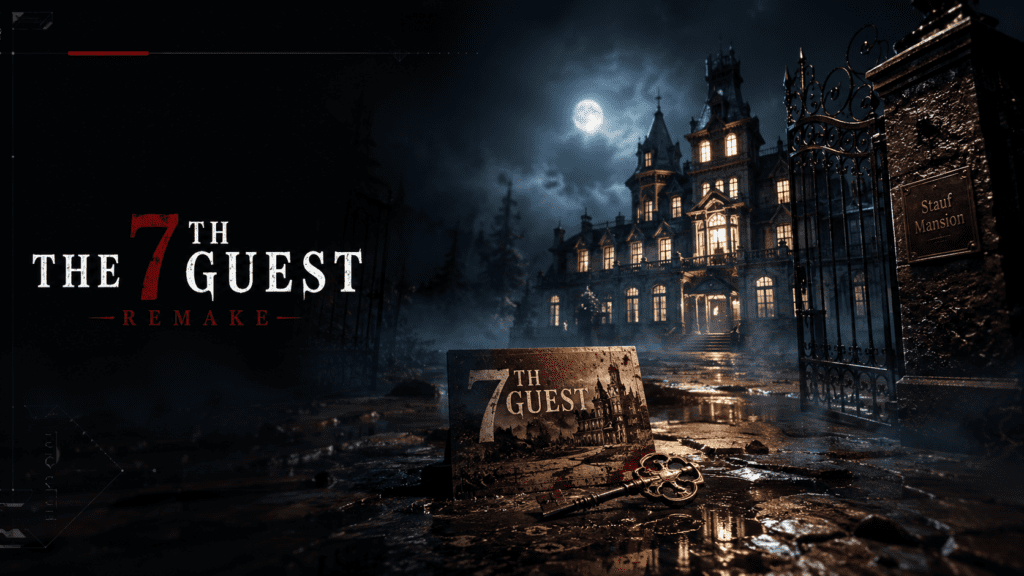
The 7th Guest Remake: A Faithful Resurrection of a Horror Gaming Legend
Introduction
Few games occupy a place in gaming history quite like The 7th Guest. Released in 1993, it arrived during a period when personal computers were rapidly evolving and developers were experimenting with technologies that felt revolutionary at the time. Its blend of live-action performances, pre-rendered environments, eerie storytelling, and challenging puzzles transformed it into one of the defining horror experiences of the CD-ROM era.
Three decades later, the arrival of The 7th Guest Remake sparked both excitement and skepticism. Could a beloved classic known for its technological innovation and nostalgic charm survive a modern reinterpretation? More importantly, could it appeal to players who never experienced the original?
The remake answers those questions with surprising confidence. Rather than simply updating graphics, developers rebuilt the experience around contemporary virtual reality technology while preserving the atmosphere, mystery, and puzzle-focused design that made the original memorable. The result is a fascinating blend of nostalgia and innovation that demonstrates how classic horror can evolve without losing its identity.
For longtime fans, the remake offers a chance to revisit Stauf Mansion in a way that feels startlingly fresh. For newcomers, it provides an accessible entry point into one of gaming’s most influential horror adventures. Understanding why this remake matters requires examining both the legacy of the original game and the ambitious design choices behind its modern revival.
What Is The 7th Guest Remake?
The 7th Guest Remake is a modern reimagining of the 1993 horror puzzle adventure developed specifically for contemporary virtual reality platforms.
The game places players inside the infamous Stauf Mansion, a sprawling estate filled with supernatural mysteries, ghostly guests, and intricate puzzles. Players investigate the events surrounding six guests invited to the mansion by the enigmatic toymaker Henry Stauf while uncovering the identity and fate of the mysterious seventh guest.
Unlike traditional horror games focused on combat or survival mechanics, The 7th Guest Remake centers on exploration, environmental storytelling, and puzzle-solving. The tension comes not from fighting monsters but from unraveling a sinister narrative hidden within the mansion’s walls.
Core Gameplay Elements
| Feature | Description |
|---|---|
| Exploration | Investigate rooms throughout Stauf Mansion |
| Puzzle Solving | Solve logic, spatial, and environmental challenges |
| Narrative Discovery | Uncover the mansion’s dark history |
| Ghost Interactions | Witness supernatural events and character stories |
| VR Immersion | Experience environments in first-person virtual reality |
This design philosophy remains remarkably faithful to the original while leveraging modern hardware to deepen immersion.
The Legacy of the Original 1993 Game
To understand why the remake generated so much interest, it’s important to appreciate what made the original game special.
When The 7th Guest launched in 1993, it became one of the first major CD-ROM success stories. At a time when many PC games relied on simple sprites and limited audio, it featured:
- Full-motion video performances
- Digitized actors
- High-quality voice acting
- Detailed pre-rendered environments
- Cinematic presentation
These features were groundbreaking for the era.
Many consumers reportedly purchased CD-ROM drives specifically to experience games like The 7th Guest. Its success helped demonstrate that multimedia storytelling could become a major part of gaming’s future.
Why It Became a Classic
Several factors contributed to the game’s enduring reputation:
Atmospheric Horror
The mansion itself became a character.
Dark corridors, unsettling music, and supernatural imagery created tension without relying heavily on violence.
Memorable Villain
Henry Stauf remains one of horror gaming’s most recognizable antagonists. His combination of charisma, mystery, and malevolence left a lasting impression.
Puzzle-Centric Design
Rather than emphasizing action, the game challenged players intellectually. Many puzzles became legendary for their complexity.
Technological Innovation
At launch, few games looked or sounded anything like The 7th Guest.
This combination of storytelling, technology, and horror helped secure its place in gaming history.
Why a Remake Was Needed
The original game remains beloved, but several aspects had aged significantly.
Technical Limitations
Modern players often struggle with:
- Low-resolution visuals
- Outdated interfaces
- Legacy compatibility issues
- Slow navigation systems
Accessibility Challenges
Many puzzle solutions reflected design philosophies from the early 1990s, when experimentation and player frustration were often accepted parts of gameplay.
Contemporary audiences generally expect:
- Better usability
- Improved feedback systems
- More intuitive controls
Evolving Horror Standards
The horror genre has changed dramatically over the last three decades.
Players now expect stronger immersion, environmental storytelling, and dynamic presentation.
A remake offered an opportunity to preserve the original experience while adapting it for modern expectations.
How the Remake Reinvents Stauf Mansion
One of the remake’s greatest achievements lies in how it reconstructs the mansion itself.
Rather than presenting static backgrounds, the remake transforms environments into fully explorable spaces.
Every hallway, staircase, and room gains new presence through virtual reality.
Environmental Detail
The mansion feels alive in ways impossible in 1993.
Players can:
- Examine objects closely
- Observe subtle visual clues
- Experience room scale naturally
- Discover hidden environmental storytelling
The result creates a stronger sense of place and immersion.
Enhanced Visual Fidelity
Modern rendering technologies dramatically improve:
- Lighting
- Shadows
- Textures
- Character models
- Environmental effects
Yet the artistic direction remains faithful to the gothic aesthetic of the original.
This balance between modernization and preservation is one of the remake’s strongest qualities.
Virtual Reality Changes Everything
The shift to VR is arguably the most significant transformation.
In the original game, players viewed events through a screen. In the remake, they physically inhabit the mansion.
That distinction fundamentally changes how horror works.
Increased Presence
Walking through dark corridors in VR creates a sense of vulnerability impossible to replicate on a traditional monitor.
Players feel:
- More exposed
- More curious
- More connected to environments
- More affected by atmospheric details
Stronger Puzzle Engagement
Many puzzles benefit enormously from VR interaction.
Players manipulate objects directly, examine clues from multiple angles, and engage with challenges using natural movements.
This tactile involvement makes puzzle-solving more satisfying.
Enhanced Storytelling
Ghostly encounters become significantly more impactful when they occur within a player’s perceived physical space.
Scenes that once felt theatrical now feel personal.
Puzzle Design: Preserving the Heart of the Experience
The puzzles remain the core of The 7th Guest.
Fortunately, the remake understands this.
Rather than discarding classic challenges, developers carefully reinterpreted many of them for modern audiences.
Types of Puzzles Players Encounter
| Puzzle Category | Examples |
| Logic Puzzles | Pattern recognition and deduction |
| Spatial Challenges | Object arrangement and positioning |
| Mathematical Problems | Numerical reasoning |
| Environmental Puzzles | Clue-based exploration |
| Interactive Mechanics | VR-focused interactions |
Improved Accessibility
The remake generally offers:
- Clearer visual communication
- Better interaction systems
- Reduced frustration
- Improved puzzle readability
Importantly, it avoids oversimplifying challenges.
Veteran puzzle enthusiasts still encounter meaningful obstacles requiring patience and critical thinking.
Narrative Analysis: The Mystery of Henry Stauf
At its core, The 7th Guest Remake remains a mystery story.
The mansion serves as a stage for examining greed, temptation, ambition, and corruption.
Who Is Henry Stauf?
Henry Stauf is a toymaker whose rise to wealth appears linked to supernatural forces.
His mansion becomes the focal point of increasingly disturbing events involving invited guests.
As players uncover fragments of the story, they learn:
- Why the guests were invited
- What motivates Stauf
- How the mansion became cursed
- The significance of the seventh guest
Themes Beneath the Horror
The narrative explores several deeper ideas:
Temptation
Characters are repeatedly drawn toward opportunities that appear beneficial but carry hidden costs.
Moral Corruption
Many guests reveal flaws that make them vulnerable to manipulation.
Consequences
Actions taken throughout the story carry lasting repercussions.
These themes help elevate the narrative beyond simple haunted-house horror.
What the Remake Does Better Than the Original
While nostalgia often favors older versions, the remake improves numerous aspects of the experience.
Stronger Immersion
VR creates an unprecedented sense of presence.
Improved Visual Storytelling
Environmental details communicate information more effectively.
Modernized Interaction
Players engage naturally with puzzles and objects.
Refined User Experience
Navigation and controls feel considerably smoother.
Better Character Presentation
Modern technology allows performances and ghostly encounters to feel more convincing.
These improvements collectively enhance rather than replace the original vision.
Areas Where Some Players May Prefer the Original
No remake can satisfy everyone.
Certain fans may still prefer aspects of the 1993 release.
Nostalgic Presentation
The original FMV performances possess a unique charm tied to early multimedia gaming.
Historical Significance
Experiencing the original provides insight into gaming’s technological evolution.
Different Atmosphere
Some players argue that older visual limitations contributed to a dreamlike quality difficult to replicate.
These preferences are understandable and largely reflect differing player expectations rather than flaws in the remake.
Common Misconceptions About The 7th Guest Remake
“It’s Just a Graphics Upgrade”
This is inaccurate.
The remake fundamentally reimagines exploration, interaction, and immersion.
“You Need Nostalgia to Enjoy It”
Newcomers can appreciate the game without prior knowledge of the original.
The narrative remains accessible and engaging.
“It’s a Traditional Horror Game”
Players expecting constant jump scares may be surprised.
The experience focuses more on atmosphere, mystery, and intellectual challenge.
“The Puzzles Are Easy”
Many puzzles remain demanding and require careful observation and reasoning.
Who Should Play The 7th Guest Remake?
The remake appeals to several audiences.
Ideal For:
Horror fans who enjoy atmosphere over action
Puzzle enthusiasts seeking meaningful challenges
VR owners looking for immersive adventures
Retro gaming fans interested in modern reinterpretations
Narrative-focused players who enjoy mystery stories
Less Suitable For:
Players seeking fast-paced combat
Fans of action-heavy survival horror
Those who dislike puzzle-centric gameplay
Understanding these expectations helps ensure players approach the experience with the right mindset.
Expert Perspective: Why The 7th Guest Remake Matters
The remake demonstrates an important lesson about preserving gaming history.
Many remasters focus primarily on visual upgrades. The 7th Guest Remake takes a more ambitious route.
It asks a deeper question:
How can a classic game be translated for a completely different generation of technology?
The answer lies in identifying the original’s core strengths:
- Mystery
- Atmosphere
- Exploration
- Puzzle-solving
- Psychological horror
Rather than replacing these elements, the remake amplifies them.
This approach respects both longtime fans and newcomers.
It also highlights how virtual reality can serve as a meaningful storytelling medium rather than a simple technical gimmick.
For the broader industry, the remake stands as a compelling example of how classic titles can be preserved through thoughtful reinvention rather than strict replication.
Practical Tips for New Players
1. Explore Thoroughly
Important clues are often hidden in environmental details.
2. Take Notes
Some puzzles become easier when observations are recorded.
3. Resist Looking Up Solutions
Many puzzles deliver their greatest satisfaction when solved independently.
4. Pay Attention to Story Fragments
Narrative details frequently provide context for puzzle mechanics.
5. Use VR Comfort Settings
Adjust movement and accessibility options to maximize enjoyment.
Pros and Cons
| Pros | Cons |
| Exceptional atmosphere | Some puzzles remain challenging |
| Faithful adaptation | VR requirement limits audience |
| Strong environmental storytelling | Slower pacing may not suit everyone |
| Excellent immersion | Certain nostalgia elements are different |
| Engaging mystery narrative | Puzzle-heavy design isn’t universal |
Final Verdict
The 7th Guest Remake succeeds because it understands what made the original memorable in the first place. It doesn’t chase modern horror trends or transform itself into an action game. Instead, it embraces mystery, puzzle-solving, and atmospheric storytelling while leveraging virtual reality to create a more immersive experience than the original technology could ever achieve.
For longtime fans, it offers a fascinating return to one of gaming’s most iconic haunted mansions. For newcomers, it serves as an excellent introduction to a landmark horror adventure that helped shape an entire era of PC gaming.
Few remakes manage to balance preservation and innovation so effectively. The 7th Guest Remake earns its place not merely as a tribute to a classic, but as a compelling horror experience in its own right.
Frequently Asked Questions
Is The 7th Guest Remake faithful to the original game?
Yes. While it modernizes visuals, controls, and immersion through VR, it retains the core story, atmosphere, and puzzle-focused design that defined the original.
Do I need to play the 1993 version first?
No. New players can enjoy the remake without prior knowledge of the original game.
Is The 7th Guest Remake scary?
The game emphasizes psychological tension, mystery, and atmosphere rather than constant jump scares or graphic horror.
How long does it take to complete?
Most players can expect a playtime ranging from roughly 8 to 15 hours depending on puzzle-solving ability.
Is it primarily a puzzle game or a horror game?
It combines both genres, but puzzle-solving forms the foundation of the experience.
Does the remake improve the original puzzles?
Many puzzles have been redesigned or refined for modern gameplay while preserving their core concepts.
Can casual players enjoy it?
Yes, although players who dislike challenging puzzles may find certain sections demanding.
What makes the remake different from other horror VR games?
Its emphasis on intellectual challenges, narrative mystery, and classic gothic atmosphere distinguishes it from combat-focused or jump-scare-driven horror titles.
Why is The 7th Guest considered historically important?
The original game was one of the defining CD-ROM releases of the early 1990s and helped showcase the potential of multimedia storytelling in video games.
Is The 7th Guest Remake worth playing today?
For horror fans, puzzle enthusiasts, VR users, and anyone interested in gaming history, it remains one of the most distinctive modern reinterpretations of a classic adventure game.