
 By
By
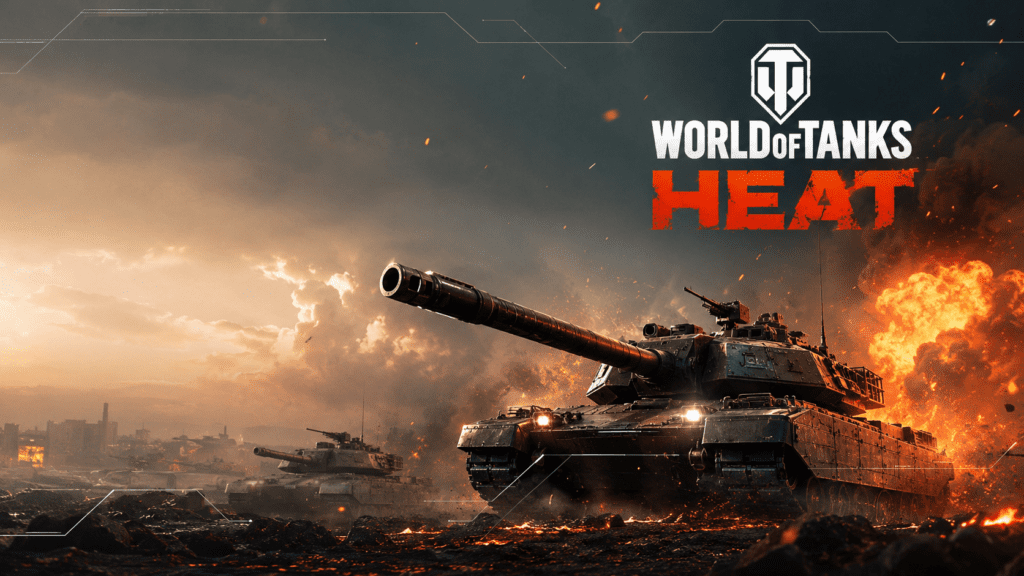
World of Tanks: HEAT Is Not the Tank Game Most Players Expected
For more than a decade, the World of Tanks franchise built its reputation around methodical armored warfare, positioning, map awareness, and historical military vehicles. Then came World of Tanks: HEAT, a title that takes many of those familiar foundations and reimagines them through the lens of modern hero shooters.
The result is one of the most ambitious projects Wargaming has launched in years.
Rather than simply updating the classic formula, HEAT introduces a completely new direction. Tanks now share the battlefield with unique Agents, specialized abilities, faster movement systems, and highly dynamic combat scenarios. The game blends traditional vehicle warfare with mechanics commonly associated with competitive shooters.
For longtime World of Tanks veterans, this shift may feel surprising.
For newcomers, however, it could be the easiest entry point the franchise has ever offered.
The bigger question is whether this bold reinvention successfully balances accessibility, competitive depth, and long-term replayability.
Let’s examine exactly what World of Tanks: HEAT brings to the battlefield.
Search Intent Analysis: Why Are Players Interested in World of Tanks: HEAT?
People searching for World of Tanks: HEAT are typically looking for one of several answers:
- What exactly is World of Tanks: HEAT?
- How is it different from traditional World of Tanks?
- Is it worth playing?
- Is it free-to-play?
- What are the gameplay modes?
- Which Agents and tanks are available?
- Does the game support cross-platform progression?
- Is the game pay-to-win?
- Can casual players compete successfully?
There is also considerable confusion surrounding HEAT because many players initially assume it is an expansion or update to the original World of Tanks.
It is not.
HEAT is a standalone title built around a different gameplay philosophy, different pacing, and a different target audience.
What Is World of Tanks: HEAT?
World of Tanks: HEAT is a free-to-play multiplayer tactical vehicle shooter developed by Wargaming. Unlike the classic World of Tanks experience, HEAT focuses on fast-paced team battles, hero-based abilities, customizable vehicles, and modern competitive gameplay.
The game is set within an alternate post-World War II timeline where scientific innovation dramatically accelerated military technology. Instead of historical accuracy being the central focus, HEAT embraces experimental vehicles, futuristic concepts, and specialized battlefield roles.
At launch, players gain access to:
- Multiple unique Agents
- Specialized combat roles
- Customizable tanks
- Competitive PvP modes
- Cross-platform progression
- Cross-platform multiplayer
- A newly developed game engine designed specifically for HEAT
How HEAT Differs From Traditional World of Tanks
The easiest way to understand HEAT is to imagine a hybrid between:
- World of Tanks
- Hero shooters
- Team-based objective games
- Modern competitive multiplayer titles
Traditional World of Tanks rewards patience.
HEAT rewards momentum.
Traditional World of Tanks often revolves around armor angles, penetration values, and deliberate engagements.
HEAT adds:
- Character abilities
- Active skills
- Faster combat pacing
- Frequent team fights
- Objective-focused gameplay
- More aggressive battlefield movement
Comparison Table
| Feature | World of Tanks | World of Tanks: HEAT |
|---|---|---|
| Combat Pace | Slow to Moderate | Fast |
| Vehicle Focus | Historical Tanks | Hero Tanks |
| Gameplay Style | Tactical Simulation | Tactical Action |
| Abilities | Limited | Agent-Based Skills |
| Match Flow | Methodical | Dynamic |
| Learning Curve | Steep | More Accessible |
| Progression | Traditional Tech Trees | Agent + Vehicle Progression |
The Hero Shooter Influence
One of the most discussed aspects of HEAT is its adoption of hero shooter mechanics.
Instead of simply selecting a vehicle, players choose an Agent.
Each Agent introduces unique combat tools, battlefield strengths, and tactical advantages.
These Agents are divided into battlefield roles such as:
Defender
Built around protection, area control, and survivability.
Ideal for players who enjoy holding objectives and creating defensive positions.
Assault
Focused on aggressive engagement and front-line pressure.
Suitable for players who prefer direct combat and active map control.
Marksman
Designed around precision, positioning, and ranged effectiveness.
A strong choice for players who value accuracy and tactical awareness.
This system creates significantly more strategic variety than traditional tank-only gameplay.
Gameplay Modes Explained
HEAT launches with multiple PvP modes that emphasize teamwork and objective control.
Hardpoint
Teams fight to secure and hold rotating objectives.
Success depends on coordination, timing, and positioning.
Control
Map dominance becomes the primary objective.
Maintaining territorial control creates scoring opportunities.
Kill Confirmed
Eliminations alone are not enough.
Teams must actively secure battlefield confirmations to score.
Conquest
A larger-scale strategic mode emphasizing map pressure and objective management.
The diversity of modes helps prevent repetitive gameplay loops and encourages different tactical approaches.
Tank Customization and Progression
Customization remains one of the franchise’s strongest features.
HEAT expands this concept by allowing players to modify tanks with advanced modules and equipment.
Players can tailor vehicles toward:
- Mobility
- Firepower
- Defense
- Utility
- Specialized battlefield roles
This creates a meaningful layer of strategic depth.
Two players using the same base vehicle may perform very differently depending on their chosen setup.
The system encourages experimentation rather than forcing a single dominant meta.
Graphics, Engine, and Visual Technology
A major technical talking point is HEAT’s proprietary engine.
Wargaming built the game from the ground up using new technology designed specifically for modern hardware.
Benefits include:
- Enhanced lighting
- Improved particle effects
- More detailed explosions
- Better environmental destruction effects
- Higher visual fidelity
- Smoother performance across platforms
The visual presentation is noticeably more cinematic than previous entries in the franchise.
Large-scale battles feel energetic and visually impactful without sacrificing battlefield readability.
Cross-Platform Support
Modern multiplayer players expect flexibility.
HEAT responds by offering:
- Cross-platform play
- Cross-progression
- Shared account progression
- Support across PC and consoles
This means players can switch between devices without losing progress.
For competitive communities, this significantly increases player population and matchmaking health.
Is World of Tanks: HEAT Pay-to-Win?
This remains one of the most important questions.
Historically, discussions around monetization have followed many free-to-play multiplayer games.
Wargaming has positioned HEAT around a “free-to-win” philosophy focused on skill-based competition while emphasizing cosmetics, battle passes, and progression accelerators.
At the time of writing, long-term monetization balance will ultimately depend on future updates and community feedback.
Players should monitor:
- Premium content advantages
- Progression speed differences
- Competitive fairness
- Seasonal reward structures
The early perception suggests that skill remains a central factor in success.
Why Some Players Love HEAT
Several factors have generated positive reactions.
Faster Matches
Players spend less time waiting and more time engaging.
More Action
Frequent battles create a stronger sense of momentum.
Better Accessibility
New players can become competitive faster.
Strategic Variety
Agent abilities introduce new tactical layers.
Modern Multiplayer Design
HEAT feels designed for current competitive gaming expectations rather than legacy mechanics.
Common Misconceptions About World of Tanks: HEAT
“It’s Just World of Tanks With Better Graphics”
Not accurate.
HEAT changes core gameplay systems, pacing, progression, and battlefield design.
“Traditional Tank Skills Don’t Matter”
Also incorrect.
Positioning, map awareness, timing, and target prioritization remain critical.
“Hero Abilities Replace Strategy”
Abilities enhance strategy rather than replacing it.
Poor positioning cannot be fixed by ability usage alone.
“The Game Is Only for Casual Players”
While more accessible than traditional World of Tanks, HEAT still offers substantial competitive depth.
Expert Analysis: Wargaming’s Strategic Gamble
HEAT represents something larger than a new game.
It represents Wargaming’s attempt to future-proof one of gaming’s most recognizable armored warfare brands.
The multiplayer market has changed dramatically.
Modern players increasingly expect:
- Faster matches
- Strong progression systems
- Distinct character identities
- Cross-platform functionality
- Live-service support
HEAT directly targets these expectations.
The challenge will be maintaining the tactical DNA that made World of Tanks successful while attracting a younger audience accustomed to hero shooters and objective-based competitive games.
If Wargaming successfully balances those two audiences, HEAT could become a major long-term pillar of the franchise.
Best Beginner Tips for World of Tanks: HEAT
1. Learn Your Agent Before Switching Frequently
Mastering one role creates faster improvement than constantly changing characters.
2. Play Objectives First
Many new players focus exclusively on eliminations.
Objective control often wins matches.
3. Build Around Your Playstyle
Avoid copying builds blindly.
Experiment with modules and equipment.
4. Communicate Constantly
HEAT rewards coordinated teams.
5. Study Map Flow
Understanding engagement routes often matters more than raw mechanical skill.
6. Avoid Solo Charging
Aggressive plays succeed when supported by teammates.
Pros and Cons
| Pros | Cons |
| Fast-paced combat | May alienate traditionalists |
| Modern visuals | Balance concerns may emerge |
| Cross-platform support | New player learning curve |
| Agent variety | Meta shifts likely |
| Free-to-play accessibility | Monetization remains under scrutiny |
| Strategic customization | Long-term content cadence remains unknown |
Final Verdict
World of Tanks: HEAT is not trying to replace traditional World of Tanks.
It is trying to redefine what tank combat can look like in a modern multiplayer environment.
By combining hero-based gameplay, objective-focused combat, customizable vehicles, and fast-paced action, Wargaming has created a product that feels distinctly different from its predecessor while still retaining elements of strategic armored warfare.
The game will not appeal to every veteran tanker. Some players will always prefer the slower, more methodical pace of the original experience.
Yet for players seeking a modern competitive shooter built around tanks rather than infantry, HEAT offers something surprisingly rare: a genuinely fresh interpretation of a genre that has remained largely unchanged for years.
Its long-term success will depend on balance, monetization, content updates, and community support, but its foundation is undeniably ambitious.
Frequently Asked Questions (FAQ)
Is World of Tanks: HEAT free-to-play?
Yes. World of Tanks: HEAT is available as a free-to-play multiplayer title.
Is HEAT the same game as World of Tanks?
No. HEAT is a standalone game with different mechanics, pacing, and progression systems.
How many players are in a match?
The game features team-based battles, including larger 10v10 formats.
Does World of Tanks: HEAT support cross-platform play?
Yes. Cross-platform multiplayer and progression are supported.
What platforms can run World of Tanks: HEAT?
The game is available on PC, PlayStation 5, Xbox Series X|S, and supports Steam Deck compatibility.
What are Agents in HEAT?
Agents are specialized characters with unique abilities that influence combat and team strategy.
Is HEAT competitive?
Yes. Team coordination, positioning, objective control, and tactical decision-making all play major roles in winning matches.
Is World of Tanks: HEAT worth playing?
Players who enjoy hero shooters, tactical team games, and vehicle combat are likely to find HEAT one of the most distinctive multiplayer releases of 2026.