
 By
By
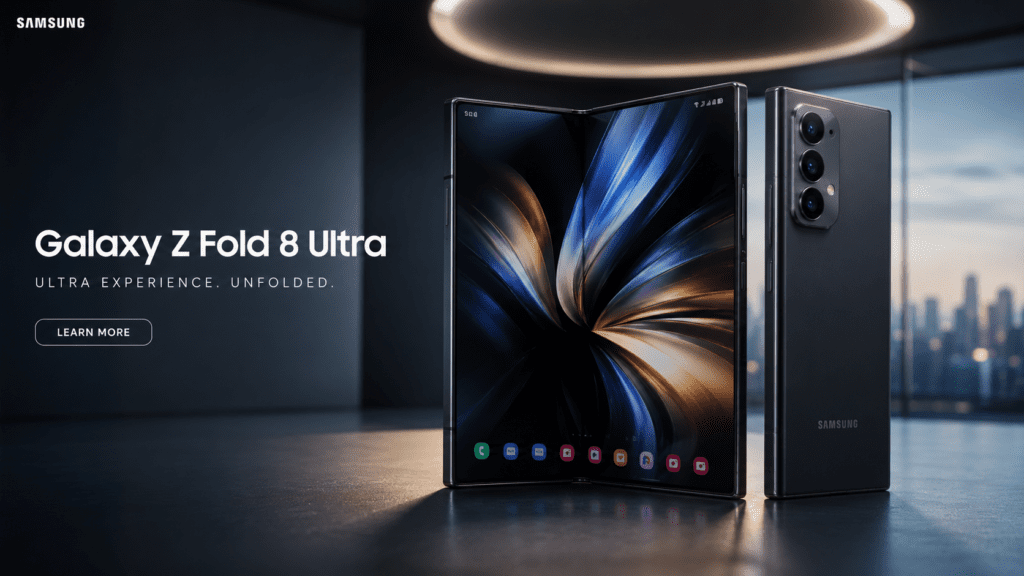
Foldable phones are no longer experimental gadgets for early adopters. They’ve become a serious category in the flagship smartphone market, and Samsung still sits at the center of that conversation. Every new Fold release carries a familiar question: has Samsung finally built the foldable that feels completely uncompromised?
That question now surrounds the rumored Samsung Galaxy Z Fold 8 Ultra.
Even before Samsung officially confirms the device, expectations are unusually high. Users no longer want a foldable that merely looks futuristic. They want a device that performs like a true ultra-premium flagship in every category: camera quality, battery life, durability, multitasking, AI features, gaming, productivity, thermal management, and day-to-day comfort.
The challenge is bigger than hardware specs alone. Samsung’s foldable lineup has reached a turning point. Chinese competitors are making thinner foldables with larger batteries and less visible creases. Traditional slab phones are becoming more powerful with AI-driven software ecosystems. Meanwhile, buyers spending ultra-premium money expect near perfection.
That’s why the Galaxy Z Fold 8 Ultra matters.
This device is expected to represent Samsung’s attempt to close the remaining gaps between foldables and traditional flagship phones while pushing the category forward again. If Samsung gets the formula right, the Fold 8 Ultra could become the first foldable that genuinely replaces a tablet, laptop, and flagship phone for a large segment of users.
The interest surrounding this phone is driven by more than hype. Consumers are searching for answers to practical questions:
- Will the Fold 8 Ultra finally deliver flagship-level cameras?
- Can Samsung make the crease nearly invisible?
- Will battery life improve enough for power users?
- Is foldable durability finally reliable long term?
- Will the software experience justify the price?
- Can foldables become mainstream productivity devices?
This article breaks down everything currently expected from the Samsung Galaxy Z Fold 8 Ultra, including likely specifications, design evolution, AI features, software upgrades, camera expectations, durability improvements, competitive positioning, pricing predictions, and the real-world implications for buyers.
Samsung’s Foldable Strategy Has Changed
Samsung’s early foldables focused on proving the technology worked. That era is over.
The company is now trying to build foldables that feel mature, refined, and practical enough for everyday users. The rumored “Ultra” branding signals something important: Samsung may be preparing to separate its foldable lineup the same way it split the Galaxy S series into standard, Plus, and Ultra variants.
That changes expectations dramatically.
The word “Ultra” carries weight in Samsung’s ecosystem. Buyers associate it with:
- best-in-class cameras
- premium materials
- maximum performance
- advanced AI features
- productivity-focused hardware
- top-tier displays
If Samsung uses the Ultra branding on a Fold device, consumers will expect zero compromises.
And honestly, Samsung needs that shift.
For years, Fold devices impressed users with innovation while frustrating them with trade-offs. Cameras often lagged behind Galaxy S Ultra phones. Battery life felt merely acceptable. Charging speeds remained conservative. Some users disliked the narrow cover screen. Others worried about hinge longevity.
The Fold 8 Ultra is expected to address these pain points directly.
Expected Samsung Galaxy Z Fold 8 Ultra Design
A Thinner and Lighter Foldable
One of the biggest criticisms of older Fold devices was thickness. Foldables naturally require more engineering space because they contain two displays, hinge systems, cooling components, and reinforced internal structures.
But competitors have changed user expectations.
Brands like Honor, Vivo, Huawei, and OnePlus have shown that ultra-thin foldables are possible. Samsung can no longer rely purely on brand trust. The Fold 8 Ultra will likely focus heavily on reducing thickness and improving ergonomics.
Expected improvements include:
- slimmer hinge mechanism
- lighter titanium or advanced aluminum frame
- reduced display crease visibility
- better weight distribution
- wider outer display
A thinner foldable matters more than many people realize. Foldables are handled differently than standard phones. Thickness affects:
- pocket comfort
- one-handed use
- typing experience
- fatigue during long sessions
- perceived luxury
A foldable that feels too bulky constantly reminds users they are making a compromise.
Samsung understands that perception problem.
Improved Hinge Engineering
The hinge remains the most important component in any foldable phone.
The Fold 8 Ultra is expected to introduce:
- stronger dust resistance
- smoother opening mechanism
- improved flex durability
- reduced internal stress points
- tighter display closure
Durability is still the psychological barrier preventing many consumers from switching to foldables. People may admire foldables in stores, but long-term trust remains limited.
Samsung’s engineering challenge isn’t only making the device durable. It’s making users feel emotionally confident using it daily.
That distinction matters.
A phone can technically survive years of use, but if users constantly worry about damaging it, the experience still feels fragile.
Display Expectations: Samsung’s Biggest Advantage
Samsung Display remains one of the strongest advantages Samsung Electronics has over competitors.
The Fold 8 Ultra is expected to feature:
- brighter AMOLED panels
- improved adaptive refresh rates
- stronger ultra-thin glass
- better anti-reflective coating
- reduced crease depth
- higher outdoor visibility
Why the Cover Display Matters More Than Ever
Many Fold users actually spend more time on the outer display than the inner screen.
That creates a strange paradox:
the outer display determines convenience, while the inner display delivers the “wow factor.”
Samsung has gradually widened its cover displays because users complained about cramped typing experiences on earlier Fold generations.
The Fold 8 Ultra will likely continue this trend with a more traditional smartphone aspect ratio.
That matters for:
- messaging
- social media
- quick photography
- navigation
- one-handed operation
A poor outer display can make a foldable feel awkward throughout the day, even if the internal screen is excellent.
The Internal Display Could Become a Real Productivity Tool
Samsung wants foldables to replace tablets for many users.
The internal screen is expected to focus heavily on:
- multitasking
- AI workflows
- note-taking
- document editing
- gaming
- content creation
- media consumption
Samsung’s One UI software has steadily improved split-screen productivity, floating windows, and app continuity. The Fold 8 Ultra may introduce even deeper desktop-style workflows powered by Galaxy AI.
Galaxy AI Could Become the Core Selling Point
AI is no longer optional in flagship smartphones.
Samsung has already integrated Galaxy AI features across its ecosystem, but the Fold 8 Ultra could become the company’s most advanced AI-focused device yet.
Expected AI features may include:
- live translation
- AI note summarization
- intelligent multitasking suggestions
- AI image editing
- advanced voice transcription
- contextual productivity automation
- generative writing assistance
- smarter DeX workflows
Why Foldables and AI Fit Together Perfectly
There’s a deeper reason AI matters more on foldables than traditional phones.
Foldables create more screen space for simultaneous workflows.
For example:
- AI summarizes a meeting while notes stay open beside it
- translation appears alongside video calls
- AI photo editing tools operate with larger previews
- research windows remain visible during writing tasks
Traditional phones often feel physically constrained for advanced productivity. Foldables remove some of those limitations.
Samsung is likely positioning the Fold 8 Ultra as an “AI workstation” rather than simply a smartphone.
That positioning could significantly reshape the premium phone market.
Camera Expectations: Samsung Can No Longer Compromise
This is probably the most important area for buyers.
Previous Fold models often disappointed camera-focused users because Samsung reserved its absolute best sensors for Galaxy S Ultra devices.
That strategy may no longer work.
Consumers paying Fold Ultra prices will expect:
- flagship-level image quality
- advanced zoom
- excellent low-light photography
- improved video stabilization
- better portrait processing
- professional-grade recording tools
Rumored Camera Improvements
Expected upgrades may include:
- larger primary sensor
- improved periscope zoom
- enhanced AI photography
- better night mode processing
- upgraded front-facing cameras
- improved under-display camera technology
The under-display selfie camera remains controversial because image quality typically suffers compared to standard punch-hole cameras.
Samsung faces a difficult balancing act:
- immersive display aesthetics
vs - front camera quality
The Fold 8 Ultra could introduce a major leap in computational photography to compensate for hardware limitations.
Real-World Camera Priorities Have Changed
Consumers increasingly judge cameras by consistency rather than occasional impressive shots.
Users want:
- reliable skin tones
- natural HDR
- strong indoor performance
- stable video
- social-media-ready output
- fast shutter response
Samsung’s image processing has historically leaned toward vibrant, high-contrast results. The company may continue refining its software to produce more natural images while preserving Samsung’s recognizable visual identity.
Performance and Hardware Expectations
The Fold 8 Ultra will almost certainly target elite flagship performance.
Expected specifications may include:
- next-generation Snapdragon flagship chipset
- advanced vapor chamber cooling
- 12GB or 16GB RAM
- faster UFS storage
- larger battery
- Wi-Fi 7 support
- improved thermal efficiency
Why Thermal Management Matters on Foldables
Foldables are harder to cool than regular smartphones.
The thin chassis and compact internal layout create heat management challenges, especially during:
- gaming
- multitasking
- AI processing
- video editing
- long camera sessions
Poor thermal control can ruin premium experiences.
Samsung’s engineering improvements in cooling systems may become one of the Fold 8 Ultra’s hidden strengths.
Users often focus on benchmark numbers, but sustained performance matters more in real-world usage.
Battery Life Could Decide the Phone’s Success
Battery anxiety remains one of the biggest foldable concerns.
Foldables power:
- two displays
- larger screen surfaces
- multitasking systems
- AI features
- advanced cooling
- desktop-like software experiences
That creates enormous power demands.
What Samsung Needs to Improve
Users increasingly expect:
- all-day heavy use
- faster charging
- better standby efficiency
- reduced thermal drain
- smarter adaptive power management
Competitors have already pushed battery technology aggressively using silicon-carbon battery advancements.
Samsung may finally respond with:
- denser battery cells
- improved charging speeds
- AI-driven battery optimization
- more efficient display controllers
A foldable that dies early feels fundamentally impractical, no matter how advanced its features are.
Software Will Matter More Than Hardware
Samsung’s biggest long-term advantage may not be hardware.
It may be software maturity.
Samsung’s foldable software ecosystem is significantly more refined than many competitors, especially outside China.
Expected One UI Fold Features
The Fold 8 Ultra could introduce:
- better app continuity
- enhanced split-screen controls
- drag-and-drop multitasking
- desktop-style task management
- advanced stylus support
- AI-assisted workflows
- optimized third-party app scaling
The Productivity Argument Is Becoming Stronger
Foldables used to feel like luxury gadgets.
Now they’re slowly becoming legitimate productivity devices.
The Fold 8 Ultra could appeal strongly to:
- business users
- remote workers
- creators
- multitaskers
- travelers
- digital professionals
Samsung DeX integration may also evolve further, turning the Fold 8 Ultra into a lightweight workstation replacement for some users.
That’s where foldables become truly disruptive.
Not because they fold.
Because they reduce dependency on multiple devices.
Samsung Galaxy Z Fold 8 Ultra vs Traditional Flagships
Why Some Users Still Prefer Slab Phones
Despite foldable innovation, traditional flagship phones still dominate global sales.
Reasons include:
- lower prices
- simpler durability
- better battery efficiency
- lighter designs
- stronger camera consistency
- easier repairs
Samsung must convince buyers the Fold 8 Ultra offers enough practical value to justify:
- higher cost
- additional complexity
- different usage habits
Where Foldables Win
Foldables excel in:
- multitasking
- media consumption
- document handling
- productivity
- immersive gaming
- portable tablet experiences
The Fold 8 Ultra’s success depends on whether Samsung can make those advantages feel essential rather than niche.
Potential Pricing Strategy
The biggest obstacle to foldable mainstream adoption remains pricing.
Foldables still sit firmly in the ultra-premium category.
Expected pricing could place the Fold 8 Ultra among the most expensive mainstream smartphones Samsung has ever released.
That creates a difficult challenge:
users compare foldables not only against phones, but also against combinations of:
- phones
- tablets
- lightweight laptops
Samsung’s marketing strategy may increasingly frame the Fold 8 Ultra as a “three-in-one” productivity ecosystem device.
Common Foldable Misconceptions
“Foldables Break Easily”
Modern foldables are significantly more durable than early generations.
Samsung has improved:
- hinge reliability
- water resistance
- display protection
- structural integrity
That said, foldables still require more careful handling than traditional slab phones.
“The Crease Ruins the Experience”
The crease remains visible under certain lighting conditions, but most long-term Fold users adapt quickly.
In practical daily use, many users stop noticing it after several days.
“Foldables Are Just Gimmicks”
This argument was more valid years ago.
Today, foldables offer legitimate workflow advantages for:
- multitasking
- reading
- media consumption
- productivity
- remote work
The category is evolving beyond novelty.
Who Should Actually Buy the Galaxy Z Fold 8 Ultra?
Ideal Buyers
The Fold 8 Ultra may be perfect for:
- productivity-focused users
- power multitaskers
- business professionals
- mobile creators
- frequent travelers
- early technology adopters
- users replacing both phone and tablet
Users Who May Prefer Traditional Phones
A traditional flagship may still be better if you prioritize:
- maximum battery efficiency
- lower price
- minimal thickness
- rugged simplicity
- conventional ergonomics
Foldables remain a premium lifestyle and productivity choice rather than a universal solution.
Expert Analysis: Why the Fold 8 Ultra Matters Beyond Samsung
The Fold 8 Ultra represents more than another smartphone release.
It reflects the industry’s broader shift toward post-smartphone-era computing experiences.
Smartphones have matured. Annual upgrades no longer feel revolutionary. Foldables create one of the few remaining areas where hardware genuinely changes user behavior.
Samsung’s long-term goal appears increasingly clear:
transform smartphones from single-screen communication tools into adaptable personal computing devices.
The Fold 8 Ultra may become a crucial step toward that future.
If Samsung succeeds, future premium devices may look less like traditional phones and more like modular computing platforms.
That transition won’t happen overnight.
But foldables are clearly becoming central to the next phase of mobile innovation.
Biggest Challenges Samsung Still Faces
Even if the Fold 8 Ultra launches successfully, Samsung still faces several major challenges.
App Optimization
Not every Android app fully utilizes foldable displays.
Poor scaling or awkward layouts can reduce the premium experience.
Repair Costs
Foldable repairs remain expensive compared to standard smartphones.
That continues to concern mainstream buyers.
Market Education
Many consumers still don’t fully understand:
- why foldables matter
- how they improve workflows
- what real-world benefits they offer
Samsung must continue educating users beyond flashy marketing.
What Samsung Absolutely Needs to Get Right
For the Fold 8 Ultra to become a category-defining device, Samsung likely needs to deliver:
| Area | What Users Expect |
|---|---|
| Cameras | True flagship Ultra quality |
| Battery | Reliable all-day endurance |
| Durability | Strong long-term confidence |
| Weight | Noticeably lighter design |
| Crease | Less visible and less tactile |
| Software | Seamless multitasking |
| AI | Practical daily usefulness |
| Value | Justifiable premium pricing |
Missing even one major category could weaken the device’s reputation.
At this price tier, consumers expect excellence everywhere.
Final Thoughts
The Samsung Galaxy Z Fold 8 Ultra could become one of the most important foldables Samsung has ever released.
Not because foldables are new anymore.
Because expectations finally are.
Consumers no longer judge foldables by novelty. They judge them by practicality, refinement, longevity, and real-world usefulness.
That changes everything.
Samsung now competes in an environment where buyers expect:
- premium cameras
- desktop-like productivity
- reliable durability
- sophisticated AI integration
- all-day battery life
- refined industrial design
The Fold 8 Ultra has the potential to push foldables closer to mainstream adoption than any previous Galaxy Fold device.
But Samsung cannot rely on brand dominance alone anymore.
The next generation of foldables will be decided by experience quality, ecosystem integration, and whether these devices genuinely improve daily life.
If the Fold 8 Ultra delivers on its rumored ambitions, it may finally become the foldable that feels less like the future…
and more like the new standard for premium smartphones.
FAQs About Samsung Galaxy Z Fold 8 Ultra
When is the Samsung Galaxy Z Fold 8 Ultra expected to launch?
Samsung typically unveils Fold devices during its summer Galaxy Unpacked events. While no official date is confirmed, industry expectations point toward a mid-to-late 2026 launch window.
Will the Galaxy Z Fold 8 Ultra have better cameras than previous Fold models?
Most leaks and industry expectations suggest Samsung will significantly improve camera hardware and AI photography processing to compete more directly with Ultra flagship phones.
Is the Fold 8 Ultra expected to support the S Pen?
Samsung is likely to continue S Pen support, especially because productivity remains a major focus of the Fold lineup.
Will the Fold 8 Ultra be more durable?
Expected hinge redesigns, stronger materials, and improved display protection indicate Samsung is prioritizing durability improvements heavily.
How expensive will the Galaxy Z Fold 8 Ultra be?
The Fold 8 Ultra is expected to sit in the ultra-premium category and may become one of Samsung’s highest-priced mainstream smartphones.
Will the crease disappear completely?
Completely eliminating the crease remains technically difficult, but Samsung is expected to reduce its visibility and tactile feel significantly.
Is the Fold 8 Ultra good for gaming?
Yes. The large internal display, flagship chipset, and multitasking capabilities should make it highly attractive for mobile gaming and cloud gaming experiences.
Can the Fold 8 Ultra replace a tablet?
For many users, especially travelers and professionals, the Fold 8 Ultra could realistically replace a compact tablet thanks to its large internal display and productivity software.
Will Galaxy AI features improve the foldable experience?
Very likely. Foldables benefit more from multitasking AI workflows because larger displays allow simultaneous productivity tasks and AI-assisted actions.
Should average users buy a foldable phone?
That depends on usage habits. Foldables are best suited for users who value multitasking, media consumption, and productivity enough to justify the premium price.