
 By
By
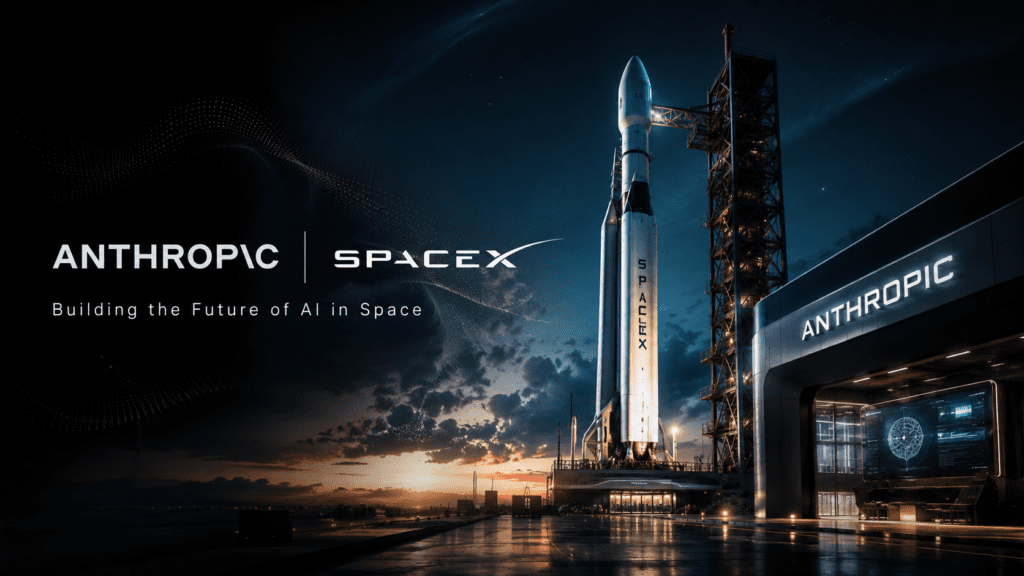
Search Intent Analysis
People searching “Anthropic SpaceX deal” are usually trying to understand several things at once:
Primary intent
- What happened between Anthropic and SpaceX?
- Why did the companies partner?
- How big is the agreement?
Secondary intent
- What does it mean for Claude AI users?
- How does it affect the broader AI industry?
- How does this compare to infrastructure moves by competitors?
Emotional intent
- Curiosity about a surprising alliance.
- Concern over AI power concentration.
- Interest in which AI company is “winning” the infrastructure race.
Information gaps users often have
- Confusion about whether SpaceX itself is providing compute or whether its AI infrastructure division is involved.
- Uncertainty around the scale of the deal.
- Lack of understanding about why AI companies are spending enormous amounts on computing capacity.
This article addresses those gaps while explaining why this partnership matters far beyond two companies signing a commercial agreement.
The Anthropic–SpaceX Deal at a Glance
The agreement between Anthropic and SpaceX is not a traditional software partnership. It is fundamentally an AI infrastructure deal—the kind increasingly determining which AI companies can compete at the frontier.
Reports indicate Anthropic secured access to major compute resources connected to SpaceX infrastructure, including the Colossus compute ecosystem in Memphis, Tennessee. Anthropic is expected to use more than 300 megawatts of compute capacity, supported by over 220,000 NVIDIA GPUs, to power Claude AI systems and future model development.
More recent reporting suggests the relationship expanded dramatically.
According to disclosures tied to SpaceX financial filings, Anthropic agreed to pay approximately $1.25 billion per month through May 2029 for compute capacity associated with Colossus infrastructure, potentially making it one of the largest AI compute agreements ever disclosed publicly.
That scale changes how analysts think about the AI race.
The competition is no longer only about model quality.
It is increasingly about who controls compute.
Why Anthropic Needed SpaceX
Anthropic has grown rapidly because of strong demand for Claude products, coding systems, enterprise AI tools, and developer infrastructure.
Growth creates a problem.
Advanced AI systems require extraordinary computational resources.
Training frontier AI models involves:
- Massive GPU clusters
- Data center capacity
- Electrical infrastructure
- Cooling systems
- Networking architecture
- Inference capacity for serving millions of users
Building that infrastructure from scratch can take years.
Anthropic appears to have decided waiting was too expensive.
Instead of slowing model development, the company secured access to existing large-scale compute infrastructure.
Reports indicate Anthropic will utilize capacity from the Colossus system, giving Claude substantial new computing resources almost immediately.
That matters because AI capability increasingly depends on three inputs:
| AI Advantage Driver | Why It Matters |
|---|---|
| Talent | Researchers build better models |
| Data | Models improve with quality training data |
| Compute | Compute determines scale and capability |
The compute layer has become the hardest bottleneck.
Anthropic appears determined not to lose ground there.
Why SpaceX Benefits
From SpaceX’s perspective, the agreement opens an entirely different growth avenue.
Historically, SpaceX revenue has centered around:
- Launch services
- Satellite operations
- Starlink connectivity
- Aerospace systems
AI infrastructure creates another business category.
Reports suggest SpaceX can monetize unused compute capacity while positioning itself as a serious infrastructure provider for advanced AI companies.
That creates strategic advantages:
Diversified Revenue
Large infrastructure contracts create recurring income streams.
A multibillion-dollar compute agreement provides predictable cash flow.
AI Ecosystem Positioning
Infrastructure providers often gain strategic leverage.
Cloud providers demonstrated this years ago.
AI compute providers may become equally influential.
Infrastructure Monetization
Building enormous compute systems is expensive.
External customers improve utilization economics.
Reports indicate SpaceX’s AI infrastructure operations have incurred substantial costs while scaling. Major enterprise contracts help offset those investments.
Why Compute Has Become the New Oil in AI
A decade ago, AI companies competed primarily on algorithms.
Today, compute infrastructure shapes competitive outcomes.
Large language models demand extraordinary hardware resources.
Training frontier systems can require:
- Hundreds of thousands of GPUs
- Gigawatts of power
- Specialized cooling
- High-bandwidth networking
- Massive capital expenditure
This changes industry dynamics.
The companies with access to infrastructure move faster.
The companies waiting for infrastructure often fall behind.
Anthropic’s move signals something broader:
AI infrastructure scarcity is becoming a defining constraint.
The industry’s largest players are securing compute years in advance.
That includes long-term agreements involving hyperscale cloud providers, dedicated AI infrastructure builders, and specialized compute ecosystems.
Claude Users May Already Feel the Impact
Infrastructure decisions sound abstract until they affect products.
Anthropic indicated expanded compute availability would directly improve Claude capacity.
Reported improvements include:
- Higher Claude Code limits
- Reduced peak-hour constraints
- Expanded API availability
- Increased operational headroom for advanced Claude models
For developers, infrastructure translates into user experience.
More compute can mean:
- Faster responses
- Higher availability
- Larger context handling
- Better reliability
- Expanded enterprise usage
AI users rarely think about data center capacity.
They notice performance.
The Surprising Strategic Angle: Competition and Cooperation Coexisting
One of the most interesting dimensions of this partnership is strategic complexity.
Modern AI competition increasingly looks like this:
Competitors collaborate where infrastructure overlaps.
Anthropic competes in frontier AI.
SpaceX has expanding AI ambitions.
Yet infrastructure economics create incentives to cooperate.
Technology history offers parallels.
Major cloud providers sometimes host competing products.
Chip companies supply rivals.
Infrastructure and competition increasingly overlap.
The Anthropic–SpaceX arrangement highlights a broader reality:
AI competition is becoming an ecosystem battle rather than a company-versus-company contest.
The Scale Is Difficult to Overstate
Consider reported figures tied to the partnership:
| Metric | Reported Scale |
|---|---|
| Compute capacity | 300+ megawatts |
| GPU count | 220,000+ NVIDIA processors |
| Monthly payment figure | ~$1.25 billion |
| Contract timeline | Through May 2029 |
| Potential annual spend | ~$15 billion |
Those numbers illustrate something critical.
Frontier AI is becoming infrastructure-intensive at unprecedented levels.
The barrier to competing at the highest level continues rising.
Why This Matters Beyond Anthropic and SpaceX
This partnership reflects broader AI industry shifts.
AI Development Is Becoming Capital Intensive
Early software startups could scale efficiently.
Frontier AI increasingly resembles heavy industry.
Power systems matter.
Supply chains matter.
Real estate matters.
Energy procurement matters.
Hardware access matters.
Compute Scarcity Is Strategic
Companies securing infrastructure now may gain multi-year advantages.
Waiting may become increasingly costly.
Infrastructure Providers Gain Influence
Cloud companies already demonstrated infrastructure power.
AI compute providers could become equally important.
The companies building infrastructure may shape who leads AI.
Industry-Level Expert Analysis
The Anthropic–SpaceX agreement highlights three strategic trends.
Vertical Integration Pressure
AI companies increasingly want control over:
- Hardware
- Data centers
- Networking
- Energy access
- Compute allocation
Dependency creates risk.
Control creates resilience.
AI Economics Are Changing
For years, people debated model quality.
Now CFOs and infrastructure teams increasingly shape competitive outcomes.
Capital deployment matters.
Infrastructure execution matters.
Operational efficiency matters.
Energy Is Becoming an AI Constraint
Compute growth requires electricity growth.
Large AI facilities increasingly resemble industrial energy projects.
Reports tied to this partnership suggest power requirements at extraordinary scale.
The next AI breakthroughs may depend not only on algorithms.
They may depend on megawatts.
Common Misconceptions About the Anthropic–SpaceX Deal
Misconception 1: “Anthropic bought SpaceX”
False.
This is a compute infrastructure arrangement, not an acquisition.
Misconception 2: “AI companies only compete on software”
Increasingly inaccurate.
Infrastructure access is becoming central.
Misconception 3: “More GPUs automatically means smarter AI”
Compute matters enormously.
But model architecture, research quality, safety alignment, and data quality remain essential.
Misconception 4: “This only affects enterprise users”
Infrastructure improvements can flow down to everyday users through availability, speed, and reliability improvements.
Practical Lessons Businesses Can Learn
Organizations watching AI closely can extract several lessons.
Infrastructure Planning Matters
Companies adopting AI should think beyond model selection.
Questions matter:
- Can systems scale?
- Is capacity reliable?
- What happens during demand spikes?
AI Strategy Requires Operational Thinking
The strongest AI deployments increasingly combine:
- Model quality
- Infrastructure resilience
- Cost discipline
- Long-term planning
Competitive Advantages Shift Quickly
The Anthropic–SpaceX partnership shows strategic advantages increasingly come from ecosystem decisions.
Technology leadership is no longer just software leadership.
What Happens Next
Several developments will determine how significant this agreement becomes.
Watch for:
Expanded Claude capabilities
Additional compute capacity could support increasingly sophisticated Claude systems.
New infrastructure partnerships
Major AI companies may accelerate similar agreements.
Greater AI industry consolidation
Infrastructure concentration may influence competitive dynamics.
More experimentation with large-scale compute models
Reports have even referenced long-term interest in orbital compute concepts—a signal of how aggressively frontier AI companies are thinking about infrastructure limits.
Key Takeaways
- Anthropic secured major compute capacity tied to SpaceX infrastructure to support Claude AI growth.
- Reported agreements involve enormous financial commitments and long-term compute access.
- AI leadership increasingly depends on infrastructure, not only software innovation.
- Compute scarcity is emerging as one of the defining challenges of frontier AI.
- Infrastructure partnerships may become one of the most important competitive advantages in artificial intelligence.
The Anthropic–SpaceX agreement reveals a changing reality.
AI competition is no longer happening solely inside research labs.
It is happening inside power grids, data centers, GPU supply chains, and infrastructure agreements worth billions.
The next generation of AI leaders may not simply build better models.
They may build—or secure—better compute.
FAQ
What is the Anthropic–SpaceX deal?
Anthropic entered a compute infrastructure agreement tied to SpaceX systems, giving Anthropic access to substantial AI computing resources for Claude products and model development.
How much is Anthropic reportedly paying?
Recent reporting indicates Anthropic agreed to approximately $1.25 billion per month through May 2029 under expanded compute arrangements.
Why does Anthropic need so much compute?
Advanced AI systems require enormous infrastructure resources for training, inference, reliability, and scaling user demand.
What is Colossus?
Colossus refers to major AI compute infrastructure associated with the partnership, including large GPU clusters designed for AI workloads.
Will Claude users benefit?
Anthropic has indicated additional compute capacity supports increased limits and improved service availability.
Why is compute becoming so important in AI?
Modern AI models require massive computational resources. Access to infrastructure increasingly determines development speed and competitive capability.
Could other AI companies pursue similar deals?
Very likely. Infrastructure scarcity is pushing AI companies toward long-term compute agreements across the industry.
Does this make SpaceX an AI company?
Not directly, but it positions SpaceX infrastructure operations as a potentially important player in the AI ecosystem.