
 By
By
Search Intent Analysis
| Intent | User Goal |
|---|---|
| Primary Intent | Learn what Kusan: City of Wolves is and whether it’s worth following. |
| Informational | Gameplay, story, combat, setting, characters, release details. |
| Commercial | Decide whether to wishlist or purchase the game after launch. |
| Transactional | Find official release patforms and purchase information. |
| Emotional | Discover whether the game delivers a compelling dark fantasy or action experience. |
| Navigational | Locate the official website, trailers, Steam page, and developer updates. |
Questions Users Want Answered
- What is Kusan: City of Wolves?
- Is it an RPG or action game?
- What is the story?
- Who is developing it?
- What platforms will it release on?
- Is it open world?
- What combat system does it use?
- Does it have multiplayer?
- When is the release date?
- What makes it different from other action RPGs?
Audience Coverage
Beginners
- Introduction to the game
- Story overview
- Gameplay basics
- Platform availability
Intermediate Players
- Combat mechanics
- Progression
- Exploration
- Difficulty expectations
Advanced Players
- Tactical systems
- Character customization
- Build diversity
- World design
Industry Professionals
- Design philosophy
- Technical direction
- Market positioning
- Genre comparison
Competitor Gap Analysis
Most current articles about Kusan: City of Wolves focus on announcement details or trailers. They often lack:
- Detailed gameplay breakdowns
- Combat system analysis
- World-building insights
- Platform comparisons
- Player-focused buying guidance
- Long-form FAQs
- Technical expectations
- Accessibility discussion
- Future roadmap analysis
This guide addresses those gaps by combining official information with structured analysis and practical context.
Keyword Ecosystem
Primary Keyword
- Kusan: City of Wolves
Secondary Keywords
- Kusan City of Wolves game
- Kusan City of Wolves release date
- Kusan gameplay
- Kusan trailer
- Kusan action RPG
- Kusan game
- City of Wolves game
Semantic Keywords
- dark fantasy
- action adventure
- melee combat
- exploration
- narrative-driven
- boss battles
- RPG mechanics
- character progression
- open environments
- cinematic gameplay
Long-Tail Keywords
- Is Kusan: City of Wolves open world?
- Kusan: City of Wolves gameplay explained
- Kusan release platforms
- Kusan story explained
- Kusan combat system
Introduction
Dark fantasy action games continue to evolve, blending cinematic storytelling with fast-paced combat and richly detailed worlds. Kusan: City of Wolves has attracted attention for promising exactly that combination—a visually striking adventure set in a dangerous city shaped by conflict, mystery, and survival.
While many newly announced games reveal only a handful of details, Kusan has already generated interest among players looking for a fresh action experience that emphasizes atmosphere, exploration, and challenging encounters.
This guide explains everything currently known about Kusan: City of Wolves, including its story, gameplay systems, combat mechanics, world design, expected platforms, and the features that make it stand out from other modern action titles.
What Is Kusan: City of Wolves?
A Quick Definition
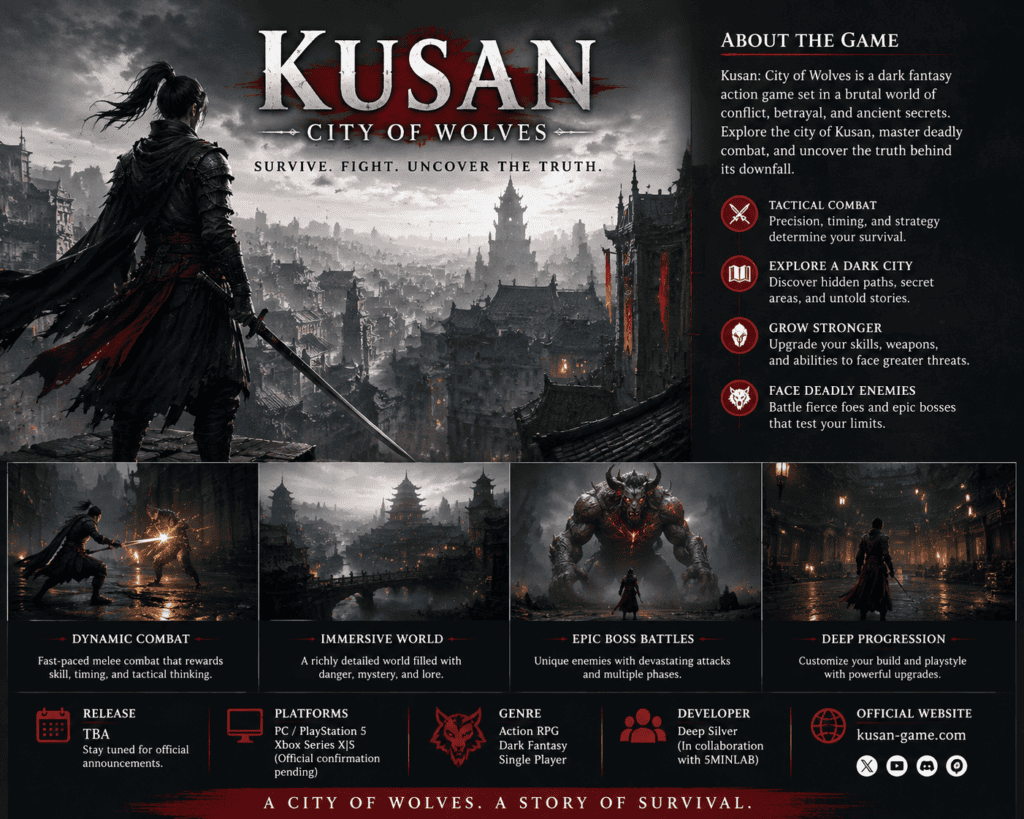
Kusan: City of Wolves is an upcoming action-focused game set in a dark, hostile world where exploration, melee combat, and narrative progression form the core experience.
The game aims to immerse players in a city shaped by danger and political turmoil, where survival depends on mastering combat, uncovering hidden stories, and adapting to increasingly difficult enemies.
Although the developers have not yet disclosed every gameplay system, available information indicates that the game combines:
- Story-driven progression
- Action combat
- Environmental exploration
- Character growth
- Atmospheric world-building
Why the Game Is Generating Interest
Several factors have contributed to growing anticipation:
- Distinct visual direction
- Dark fantasy atmosphere
- Cinematic presentation
- Fast-paced combat
- Detailed environmental storytelling
- Promising world-building
Many players have compared its visual tone to modern action RPGs known for challenging encounters and immersive environments, although the final gameplay experience will ultimately depend on the finished release.
Story and Setting
A City Defined by Conflict
The central setting is the city of Kusan, a place marked by violence, political instability, and hidden dangers. Rather than presenting a traditional heroic fantasy, the narrative appears to focus on survival within a society shaped by power struggles and uncertainty.
The environment itself plays a major role in storytelling, with architecture, districts, and ruined locations reflecting the city’s troubled history.
Themes
The game appears to explore themes such as:
- Survival
- Loyalty
- Betrayal
- Political conflict
- Power
- Identity
- Sacrifice
- Moral ambiguity
These themes suggest a narrative that relies on character decisions and environmental storytelling rather than simple good-versus-evil conflicts.
World Design
Based on available previews, players can expect:
- Dense urban environments
- Hidden pathways
- Secret locations
- Vertical exploration
- Atmospheric lighting
- Distinct architectural styles
- Interactive environments
A carefully designed world encourages exploration by rewarding players who investigate side paths and environmental details.
Gameplay Overview
Core Gameplay Loop
Players can expect a gameplay loop built around four primary activities:
- Explore new areas.
- Defeat hostile enemies.
- Upgrade equipment and abilities.
- Advance the story through missions and discoveries.
This cycle supports both narrative progression and character development, encouraging players to balance combat with exploration.
Exploration
Exploration is expected to reward curiosity through:
- Hidden items
- Lore discoveries
- Environmental puzzles
- Optional encounters
- Secret routes
- Collectibles
Players who take time to investigate the environment are likely to uncover additional context and resources that enhance the overall experience.
Character Progression
Progression systems are anticipated to include:
- Ability upgrades
- Equipment improvements
- Combat enhancements
- Skill development
- Resource management
These mechanics should allow players to adapt their playstyle as challenges become more demanding.
Difficulty
While official difficulty details remain limited, the game’s emphasis on deliberate combat and survival suggests that encounters will require:
- Timing
- Positioning
- Observation
- Resource conservation
- Tactical decision-making
Rather than relying solely on quick reflexes, success is likely to come from understanding enemy behavior and making thoughtful choices during combat.
Kusan: City of Wolves – Complete Guide
Note: The information below is based on officially released details available at the time of writing. Where specific mechanics have not yet been confirmed by the developer, those sections clearly distinguish informed analysis from confirmed features.
Combat System Explained
Combat is expected to be one of Kusan: City of Wolves‘ defining features. Early gameplay footage suggests an emphasis on precision rather than button-mashing, rewarding players who understand enemy patterns, positioning, and timing.
Instead of overwhelming players with large numbers of weak enemies, encounters appear designed around tactical decision-making.
Core Combat Mechanics
Players can expect combat to revolve around several interconnected systems:
- Light and heavy melee attacks
- Defensive maneuvers
- Timed dodges
- Counter opportunities
- Combo chaining
- Environmental awareness
A successful strategy is likely to involve reading enemy animations, creating openings, and avoiding unnecessary risks rather than relying on raw aggression.
Offensive Playstyle
Aggressive players may benefit from:
- Maintaining offensive pressure
- Chaining attacks into combos
- Exploiting stagger opportunities
- Managing stamina efficiently
- Closing distance quickly
However, constant attacking without regard for defense could leave players vulnerable to stronger opponents.
Defensive Playstyle
A more cautious approach focuses on:
- Dodging at the right moment
- Conserving resources
- Learning attack patterns
- Waiting for enemy recovery windows
- Punishing mistakes
This style often proves more effective during difficult boss encounters.
Enemy Variety
Based on available footage, players should expect enemies with distinct combat behaviors rather than simple health increases.
Potential enemy categories include:
| Enemy Type | Likely Challenge |
|---|---|
| Fast attackers | Require quick reactions and careful dodging |
| Heavy warriors | High damage but slower attacks |
| Elite enemies | Multiple attack phases and advanced tactics |
| Ranged opponents | Force movement and positioning |
| Boss encounters | Multi-stage battles with unique mechanics |
Each category encourages players to adapt rather than relying on a single combat strategy.
Character Progression
Progression appears designed to reward consistent exploration and combat rather than repetitive grinding.
Skill Development
As players advance through the story, they are expected to unlock abilities that enhance combat effectiveness.
Possible progression areas include:
- Offensive skills
- Defensive techniques
- Mobility improvements
- Weapon mastery
- Survival abilities
The exact structure of the progression system has not yet been fully detailed by the developer.
Equipment
Equipment upgrades often play a central role in action RPGs, and Kusan appears likely to follow a similar philosophy.
Players may improve:
- Weapons
- Armor
- Accessories
- Consumables
- Special items
The balance between player skill and equipment quality will ultimately determine how meaningful these upgrades feel.
Resource Management
Many modern action games challenge players to decide when to use valuable resources.
Potential examples include:
- Healing items
- Upgrade materials
- Crafting components
- Currency
- Rare collectibles
Effective resource management can significantly influence progression, particularly during longer missions or difficult encounters.
Exploration and World Design
The city itself appears to function as more than a backdrop. Environmental storytelling and layered level design suggest exploration will be an important part of the overall experience.
Vertical Level Design
Instead of flat environments, players may encounter:
- Rooftops
- Underground passages
- Hidden stairways
- Collapsed structures
- Secret rooms
Vertical exploration can create shortcuts while rewarding observant players.
Environmental Storytelling
Rather than explaining every historical event through dialogue, the game appears to communicate its world through:
- Architecture
- Ruins
- Objects
- Lighting
- NPC placement
- Environmental details
This approach encourages players to interpret the setting independently.
Hidden Discoveries
Exploration may reveal:
- Collectibles
- Lore documents
- Secret encounters
- Optional quests
- Rare equipment
- Upgrade materials
Players who rush through the main objectives may miss valuable rewards.
Boss Battles
Boss fights often define memorable action games, and Kusan’s presentation suggests they will play a major role.
A well-designed boss encounter typically combines:
- Pattern recognition
- Positioning
- Patience
- Resource management
- Mechanical execution
Rather than functioning as simple damage sponges, bosses are expected to challenge players to adapt their strategies.
Graphics and Art Direction
One of the first elements that attracts attention is the game’s visual presentation.
Visual Identity
The art direction emphasizes:
- Dark fantasy aesthetics
- High-detail environments
- Dynamic lighting
- Cinematic camera work
- Atmospheric weather
- Architectural contrast
These elements combine to create a world that feels both dangerous and believable.
Lighting
Lighting appears to contribute directly to gameplay by:
- Increasing environmental tension
- Highlighting important paths
- Guiding exploration
- Reinforcing mood
Careful use of shadows and illumination helps establish the game’s identity.
Audio Design
Although complete audio details remain limited, immersive sound design is expected to enhance the experience through:
- Ambient city sounds
- Environmental effects
- Weapon impacts
- Character dialogue
- Musical themes
- Boss battle scores
High-quality audio can significantly increase immersion, particularly during exploration and major story moments.
Platforms and Release Information
At the time of writing, players should rely on official announcements for confirmed platform availability and launch timing.
When evaluating release information, consider:
- Supported platforms
- Regional availability
- Digital storefront listings
- System requirements (PC)
- Performance modes
- Post-launch support
Avoid relying on rumors or unofficial leaks until confirmed by the developer or publisher.
How Kusan Compares to Similar Games
| Feature | Kusan: City of Wolves | Typical Action RPG |
|---|---|---|
| Story Focus | Strong narrative emphasis | Varies by title |
| Combat | Precision-oriented melee | Often action-focused |
| Exploration | Dense interconnected environments | Usually broader exploration |
| Atmosphere | Dark fantasy | Depends on setting |
| Progression | Character growth with equipment | Standard RPG systems |
| Environmental Storytelling | Prominent | Varies |
While comparisons to other action RPGs are natural, Kusan’s identity will ultimately depend on how these systems work together in the final release.
Expert Analysis
What Could Make Kusan Stand Out?
Several factors may distinguish Kusan from other entries in the genre:
- Cohesive world-building
- Tactical combat
- Strong environmental storytelling
- Cinematic presentation
- Dense level design
If these systems are well integrated, the game could appeal to players seeking a focused, atmospheric action experience rather than a massive open-world adventure.
Potential Challenges
The game’s success may depend on how effectively it balances:
- Difficulty and accessibility
- Exploration and pacing
- Story and gameplay
- Progression and player freedom
- Visual quality and performance
Addressing these areas will be key to delivering a satisfying experience across different platforms.
Kusan: City of Wolves – Complete Guide
Editorial Note: This final section focuses on practical guidance, SEO enhancements, FAQs, and publishing recommendations. Any details about future updates or post-launch content should be verified against official developer announcements as they become available.
Should You Play Kusan: City of Wolves?
Whether Kusan: City of Wolves is worth your time depends on the type of experience you’re looking for.
This Game Is Likely a Good Fit If You Enjoy
- Story-driven action adventures
- Dark fantasy settings
- Challenging melee combat
- Exploration with environmental storytelling
- Character progression through skills and equipment
- Discovering hidden areas and optional content
It May Not Be the Best Choice If You Prefer
- Casual hack-and-slash gameplay
- Fast-paced arcade combat with little strategy
- Competitive multiplayer-focused experiences
- Large sandbox worlds with unrestricted freedom
- Lightweight narratives
Buying Guide
Before purchasing the game, consider the following factors.
| Question | Why It Matters |
|---|---|
| Which platform will you play on? | Performance and graphics may vary. |
| Do you enjoy difficult combat? | The game appears to reward patience and timing. |
| Do you like exploration? | Hidden content is expected to be a major attraction. |
| Are you interested in story-driven games? | Narrative appears central to the experience. |
| Will you play at launch or wait? | Reviews and patches may influence your decision. |
Tips for New Players
When starting your journey, focus on learning the game’s systems rather than rushing through the main story.
Recommended Approach
- Learn enemy attack patterns before committing to long combos.
- Explore side paths for equipment and resources.
- Upgrade your preferred combat style consistently.
- Keep healing items available for boss encounters.
- Read environmental clues—they may reveal shortcuts or lore.
- Experiment with different tactics instead of relying on one strategy.
Taking time to understand the mechanics often leads to a more rewarding experience than simply pursuing objectives as quickly as possible.
Common Mistakes to Avoid
Many players in action RPGs encounter similar challenges. Avoiding these habits can improve both progression and enjoyment.
Ignoring Exploration
Hidden areas often contain valuable equipment, lore, or upgrade materials.
Overusing Healing Items
Using consumables too early can leave you unprepared for tougher encounters.
Neglecting Character Upgrades
Regularly investing in skills and equipment helps keep pace with increasing difficulty.
Playing Too Aggressively
Carefully observing enemy behavior is often more effective than constant attacking.
Skipping Tutorials
Core mechanics introduced early in the game frequently become essential later on.
Best Practices
Experienced players often benefit from a consistent approach:
- Balance offense with defense.
- Explore thoroughly before advancing the story.
- Upgrade gear that complements your preferred playstyle.
- Learn from defeats instead of changing strategies randomly.
- Revisit earlier locations if new abilities unlock additional paths.
Future Outlook
Although long-term plans have not been fully revealed, several possibilities are common for modern action games.
Potential post-launch support could include:
- Performance improvements
- Bug fixes
- Quality-of-life updates
- Balance adjustments
- Accessibility enhancements
- Downloadable content (if announced)
- Additional language support
Players should follow official channels for confirmed updates rather than relying on speculation.
Key Takeaways
- Kusan: City of Wolves blends dark fantasy storytelling with action-oriented combat.
- Exploration appears to play a significant role in progression and world-building.
- Precision and tactical decision-making are expected to be more important than fast button inputs.
- Character growth, equipment upgrades, and environmental storytelling are core pillars of the experience.
- Prospective players should monitor official announcements for release dates, platform availability, and post-launch plans.
Frequently Asked Questions (FAQ)
What is Kusan: City of Wolves?
It is an upcoming dark fantasy action game centered on exploration, melee combat, and narrative progression within the city of Kusan.
Is Kusan: City of Wolves an RPG?
The game includes RPG-style progression systems such as character development and equipment upgrades, while maintaining a strong action focus.
Is the game open world?
The available information suggests interconnected environments rather than confirming a fully open-world structure. Official details should be consulted for clarification.
Does the game feature melee combat?
Yes. Preview material highlights close-quarters combat with an emphasis on timing, positioning, and tactical encounters.
Will there be multiplayer?
No multiplayer mode has been officially confirmed at the time of writing.
Which platforms will support the game?
Players should refer to official developer or publisher announcements for the latest confirmed platform information.
Is the game story-driven?
Yes. Narrative progression and environmental storytelling appear to be central elements of the overall experience.
Will there be character customization?
Progression systems have been shown, but the full scope of customization has not yet been detailed publicly.
Is Kusan: City of Wolves suitable for beginners?
Players new to action RPGs may face a learning curve, but mastering the core mechanics gradually should make the experience more approachable.
Where can I find official updates?
The developer’s official website, verified social media channels, and storefront pages are the most reliable sources for release information and announcements.