
 By
By
Introduction
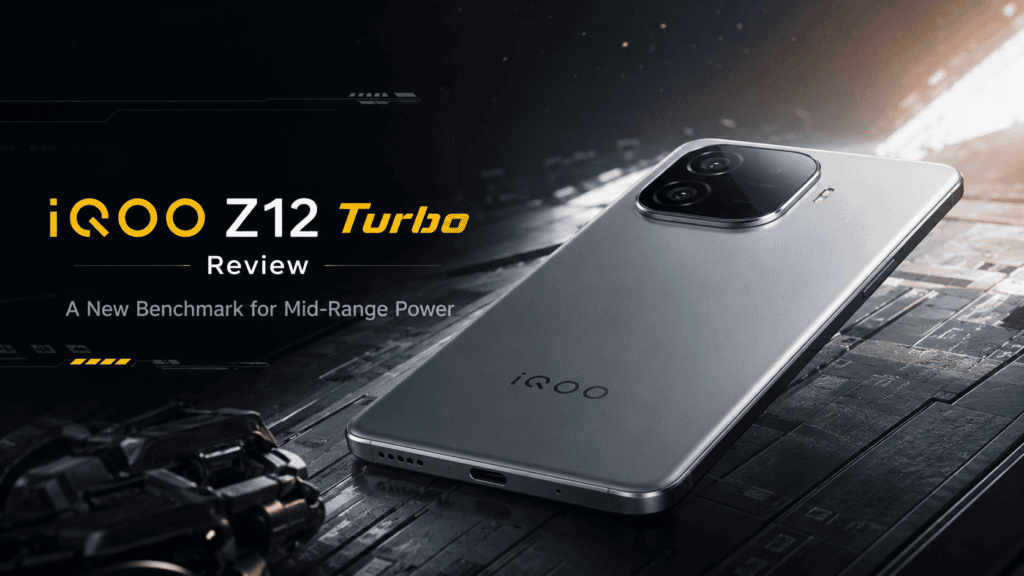
For years, selecting a mid-range smartphone meant accepting clear, non-negotiable trade-offs. You could have a brilliant display, an elongated battery life, or a flagship-tier processor, but rarely all three in a single device. The iQOO Z12 Turbo explicitly challenges this paradigm. By combining premium silicone architecture with an unprecedented power cell, this device shifts expectations of what sub-flagship hardware can deliver.
This technical deep dive explores how the device balances raw processing throughput against complex thermal demands, structural constraints, and power efficiency targets.
Core Architecture and Processing Power
The defining element of the iQOO Z12 Turbo internal design is its processing subsystem. Instead of utilizing the stepped-down “s-series” chipsets common to this price category, the device integrates Qualcomm’s premium Snapdragon 8 Elite platform.
Silicon Configuration
Built on a TSMC 3nm process node, the chipset departs from standard Arm architecture by deploying customized Oryon CPU cores. The octa-core setup features a dual-prime configuration reaching frequencies up to 4.32 GHz, paired with six performance cores operating at 3.53 GHz. By omitting traditional efficiency cores, the system relies on dynamic micro-architecture scheduling to manage idle tasks without inducing parasitic battery drain.
Co-Processing Framework
Graphics processing is handled by the Adreno 830 GPU, augmented by a proprietary Q3 discrete e-sports display chip. The dual-chip layout divides computational duties: the primary SoC handles game logic and geometry rendering, while the Q3 processor runs frame interpolation and super-resolution algorithms hardware-side. This unloads significant pixel-generation strain from the main processor, limiting thermal throttling during sustained workloads.
Thermal Management and Sustained Workloads
Sustaining flagship performance within a mid-range chassis requires sophisticated heat dissipation. The device incorporates a high-capacity vapor chamber system tailored to mitigate localized hot spots.
The multi-layered structure routes heat away from the primary logic board toward the outer aluminum mid-frame. Capillary internal structures within the vapor chamber accelerate the fluid phase-change cycle, lowering skin temperatures by several degrees during peak computational strain. Consequently, the device avoids aggressive thermal throttling, ensuring structural components remain within safe operating thresholds during prolonged gaming or video rendering sessions.
Display Dynamics and Visual Output
Visual output is anchored by a 6.59-inch 1.5K OLED flat display panel designed to balance speed, accurate color representation, and ocular safety.
-
Adaptive Refresh Technology: The display utilizes an LTPO backplane capable of scaling natively from a battery-conserving low frequency up to a fluid 165Hz peak. This rapid refresh adaptation reduces latency in fast-paced scenarios while conserving power when rendering static text or images.
-
Luminance and Outdoor Readability: With a localized peak brightness reaching 3000 nits, the panel retains clear readability and accurate contrast ratios under direct sunlight.
-
Pulse-Width Modulation (PWM): For low-light environments, high-frequency 2160Hz PWM dimming minimizes sub-perceptual display flicker. This approach prevents the eye strain and headaches typically caused by lower-frequency DC or PWM dimming techniques used on older OLED panels.
Power Infrastructure and Energy Density
The most significant structural feat of the iQOO Z12 Turbo is its 9000mAh silicon-carbon battery.
Silicon-Carbon Chemistry
Traditional lithium-ion batteries are limited by graphite anodes, which cap energy density. By shifting to a silicon-carbon matrix, the battery stores significantly more lithium ions within the same physical footprint. This advancement allows the phone to pack 9000mAh of capacity into a slim chassis that remains comfortable for daily use.
Charging Dynamics
replenishment is managed by a dual-cell charging system supporting up to 120W wired flash charging. A split-cell layout divides the incoming current across two independent pathways, reducing internal resistance and minimizing thermal buildup during high-amp charging cycles.
Technical Specification Matrix
Real-World Performance Scenarios
Scenario A: High-Fidelity 3D Gaming
Under demanding workloads—like open-world 3D titles running at maximum graphic presets—the dual-chip configuration unloads processing strain by generating intermediate frames via the hardware scaler. The phone maintains steady frame rates with minimal drops, while the large vapor chamber keeps the chassis comfortably cool over hours of continuous play.
Scenario B: Extended Mobile Productivity
For everyday tasks like multitasking across navigation, document editing, and background background video rendering, the silicon-carbon battery easily provides multi-day longevity. The LTPO display drops its refresh rate down during static reading tasks, further stretching battery life.
Common Implementation Mistakes & Best Practices
-
Avoid Using Low-Quality Charging Accessories: Relying on third-party chargers that lack proper communication protocols can disable the dual-cell flash charging system, reverting the device to slower, less efficient charging speeds. Always stick to the included original adapter or verified USB-PD PPS alternatives.
-
Keep High-Performance Modes Toggled Off When Not Needed: Keeping the phone permanently locked into its maximum performance mode prevents the Oryon cores from stepping down to energy-saving states during simple tasks, unnecessarily draining the battery. Let the system’s automated scaling manage performance dynamically.
-
Don’t Safe-Keep the Battery in Extreme Heat: Leaving the phone exposed to intense heat, like sitting on a car dashboard under direct sunlight, accelerates battery degradation over time. Even advanced silicon-carbon cells degrade faster when subjected to sustained high temperatures.
Future Outlook and Industry Trajectory
The iQOO Z12 Turbo marks a notable shift in mid-range smartphone design. By bringing premium processing chips and dense silicon-carbon batteries to a more affordable price point, it pushes the entire industry forward. As manufacturing processes refine, expect competing brands to adopt similar high-density battery chemistries and advanced co-processors to keep pace in this highly competitive category.
Key Takeaways
-
Flagship-Tier Silicone Subsystem: Integrating the Snapdragon 8 Elite brings top-tier processing power to a mid-range price bracket.
-
High-Density Battery Design: Shifting to silicon-carbon chemistry packs a massive 9000mAh cell into a slim, pocketable body.
-
Smart Thermal Management: The phone’s advanced vapor chamber and dedicated display chip effectively keep heat in check during intense workloads.
-
Fluid, Responsive Screen: The 165Hz LTPO OLED display delivers rich visuals and excellent outdoor visibility while intelligently protecting your eyes.
Technical SEO Deliverables
Image Optimization Guide
-
Image Placement: Position a high-resolution exploded view diagram immediately under the “Thermal Management” section.
-
Filename:
iqoo-z12-turbo-vapor-chamber-cooling.webp -
Alt Text: Internal layout of the iQOO Z12 Turbo highlighting its multi-layer vapor chamber and thermal management system.
-
Caption: The internal cooling design uses an expanded vapor chamber to effectively pull heat away from the primary processor during intensive tasks.
Structural Schema Recommendations
Integrating Product and FAQPage JSON-LD schema into the page markup tells search crawlers exactly what the page is about. This structured data explicitly defines key details like processor type, battery capacity, and display parameters, which helps search engines parse the review data more effectively and can earn the page rich results in search.
Frequently Asked Questions
How long does it take to fully charge the 9000mAh battery?
Using the included 120W flash charger, the dual-cell system replenishes the 9000mAh silicon-carbon battery from zero to half capacity in roughly 10 to 12 minutes, with a full charge completing in around 25 minutes.
Does the high-frequency display significantly drain the battery?
No, the built-in LTPO backplane dynamically scales the screen’s refresh rate down during static tasks, reserving the full 165Hz fluid refresh rate for fast-paced gaming and system animations to save power.
Can the phone sustain high-performance gaming without overheating?
Yes, the combination of a dedicated Q3 graphics chip and an expanded vapor chamber cooling system effectively shares the processing load and dissipates heat, preventing thermal throttling during long gaming sessions.
What are the main benefits of a silicon-carbon battery over traditional ones?
Silicon-carbon chemistry packs significantly higher energy density into less space, allowing the phone to house a massive 9000mAh capacity without making the chassis bulky or heavy.
Does the device support adjustable eye protection modes?
Yes, the display uses 2160Hz high-frequency PWM dimming to reduce screen flicker in low light, accompanied by hardware-level blue light filtering to minimize eye strain during evening use.